
Seven hundred years ago, Quanzhou was one of the largest ports on earth. When Marco Polo passed through in the late thirteenth century, he called it one of the two greatest ports in the world, a place where the harbour was so crowded with ships that, as he put it, a hundred times more pepper arrived here than in Alexandria. Arab merchants, Persian traders, Indian sailors and Chinese officials walked the same streets. A mosque stood a few minutes’ walk from a Buddhist temple, and the stone pillars of a Hindu shrine ended up holding up the roof of a Mahavira Hall. The world came to Quanzhou, and Quanzhou let it in.
Today almost nobody comes. The port silted up, the ships went elsewhere, and the city settled back into the quiet life of a Fujian prefecture town. That is exactly why it is worth your time. Quanzhou is the most underrated old town I have visited in China — not because it has a single unmissable sight, but because it has a whole way of life that the famous cities have mostly lost. The temples are still working temples. The streets are still lived in. The food is still cooked for locals, not for cameras. You do not come here to tick boxes. You come here to slow down, walk, eat, and let a city that once ran the world’s sea trade show you what it became when the ships left.
This guide is built on three days, which is the sweet spot. Two days cover the old town but feel rushed; three give you the old town properly and one day on the coast. If you only have two, cut Day Three and keep Days One and Two intact.
A port the world forgot
Quanzhou’s golden age was the Song dynasty (960–1279) and the Yuan dynasty that followed it. When the Song court moved its capital south to Hangzhou, the sea became the empire’s lifeline, and Quanzhou — on the Taiwan Strait, at the mouth of the Jin River — became the eastern end of the Maritime Silk Road. The Silk Road that began overland in Xi’an ended here, at the sea. Arab and Persian merchants settled in such numbers that the city had whole foreign quarters, and the traveller Ibn Battuta, who visited in the fourteenth century, described a harbour with a hundred junks and a city where every religion seemed to have a house of worship. The stone evidence is still everywhere: the Qingjing Mosque, the oldest surviving Islamic temple in China; the Hindu stone pillars inside Kaiyuan Temple; the Nestorian Christian carvings now in the Maritime Museum; the Song-dynasty shipwreck raised from the bay.
The fall was as dramatic as the rise. The Ming dynasty banned private sea trade, the harbour silted up, and the great port became a backwater. Quanzhou never rebuilt itself as a showcase city, and that accident is now its gift. Unlike the old towns that were rebuilt for tourists, Quanzhou’s old town was never rebuilt at all — it simply kept going. In 2021 UNESCO listed the city as “Quanzhou: Emporium of the World in Song-Yuan China”, which is a fine title and also a fair summary: this was once the world’s emporium, and the city still carries that history in its streets.
At a Glance
- How long: Three days. Two days for the old town, one day for the coast. Two days work if you must, but you will leave feeling you rushed it.
- Where to stay: In the old town, in Licheng district (鲤城), but not on West Street itself. The best streets are Zhongshan Road (中山路), Tumen Street (涂门街), Jiuyi Street (九一街) and Yanzhi Lane (胭脂巷) — walkable to everything, quiet at night, and cars can reach the door so you are not dragging luggage down a pedestrian street. West Street itself is the unanimous warning: thin walls, damp rooms, noise after midnight, and you carry your bags in by hand.
- Shape of the trip: Day One on foot in the old town; Day Two on the sea story — the Mazu temple, the Maritime Museum and the puppet theatre; Day Three a choice between two coasts.
- Book ahead: The puppet show and the Maritime Museum both need advance booking, and the puppet show sells out — book it the moment your dates are fixed, a week ahead if you can.
- Getting around: There is no metro in Quanzhou. The old town is on foot, plus the little white tourist cars (小白车) that run around the old town core. Wear flat shoes: the old streets are stone slabs.
- When to go: Spring and autumn are the kindest seasons. Summer is hot and the coast is fully exposed. Winter is damp and cold, and the old-house guesthouses can be chilly — a chain hotel with proper heating is the better choice then.
- My verdict: Quanzhou is not a city of blockbuster sights. It is a city of atmosphere, and it rewards the traveller who walks slowly, eats locally and lets the place set the pace. If you want a checklist, go elsewhere. If you want to feel what a Chinese old town was like before the tour buses arrived, come here.
Day One: The Old Town on Foot
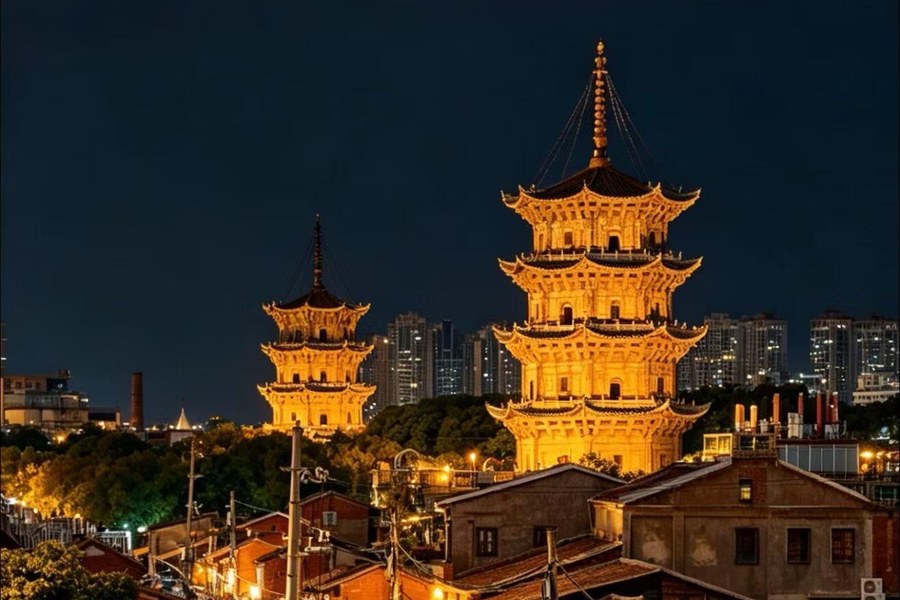
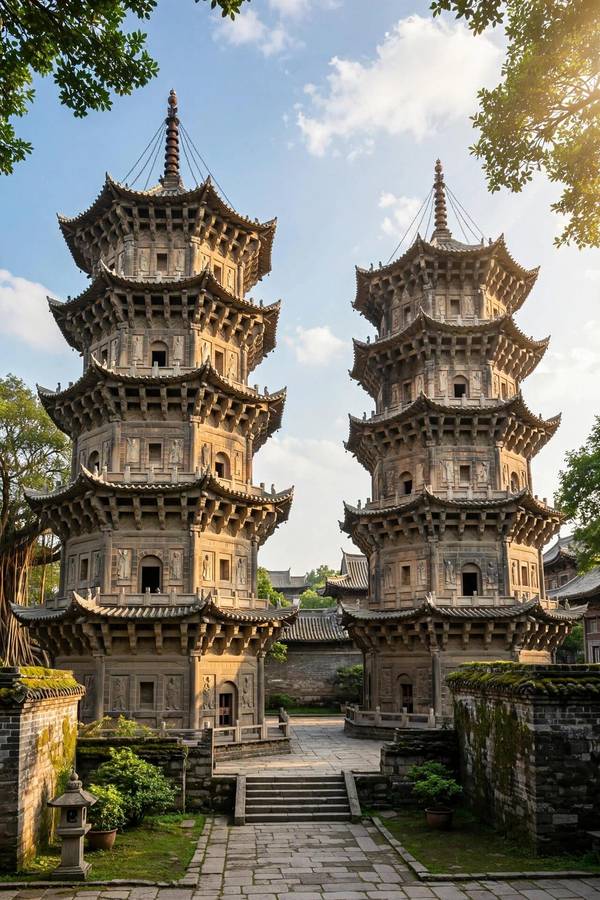
Start at Kaiyuan Temple (开元寺), the landmark of the old town, and go early in the morning. The temple is free, and the light is at its best before the crowds arrive. The Twin Pagodas dominate the skyline: the East Pagoda (镇国塔) and the West Pagoda (仁寿塔), both more than eight hundred years old, stone towers that have stood through earthquakes and dynasties. Enter by the West Gate and leave by the East Gate, which drops you straight onto West Street — the natural route through the temple. Inside the Mahavira Hall (大雄宝殿), look up: the pillars holding the roof are carved Hindu stone pillars, brought here centuries ago, a reminder that this temple has always been part of a much wider world. The Sweet Dew Ordination Platform (甘露戒坛) at the back of the temple is one of the most beautiful structures in the old town, and it is easy to miss if you rush. Allow an hour and a half to two hours, and do not be put off by the touts at the gate: anyone claiming there is a ticket, or trying to sell you expensive incense, is running a scam. Entry is free, and the incense inside is free too.
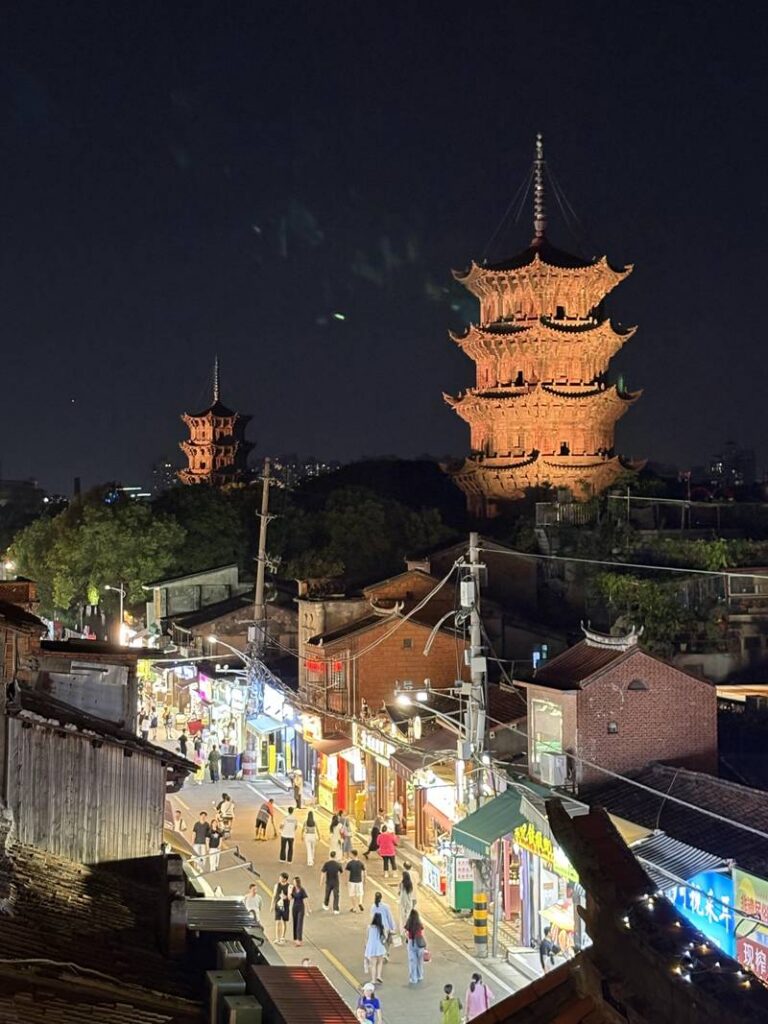
From the East Gate you step onto West Street (西街), the old town’s main street and the spine of your day. West Street is more than thirteen hundred years old, and it is still a living street: more than half of the people who live here are locals, not shopkeepers. Walk it slowly. The Bell Tower (钟楼) at the junction with Zhongshan Road is the classic photo spot and the natural start of an evening walk. The side lanes are where the street comes alive: Shuimen Lane (水门巷) and Pei Lane (裴巷) hold the small local shops that the main street lost to souvenir stalls. And here is the first hard truth about West Street, which every local blogger repeats: it was never a food street. The real old shops are in the alleys off Zhongshan Road and along Liuguan Road (六灌路). Do not eat on West Street itself — the food section below explains why, and it is not a small matter.
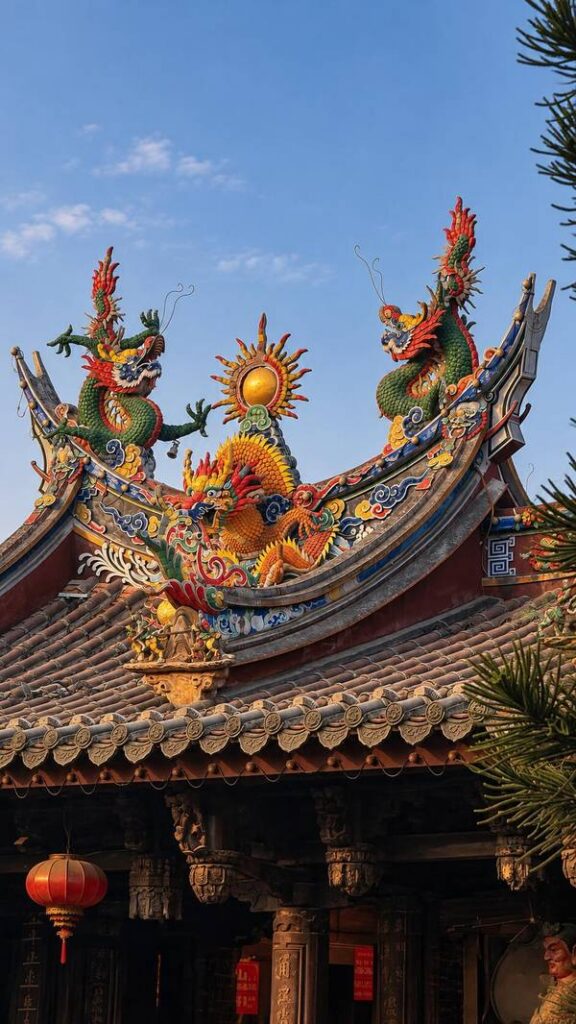
Turn south down Tumen Street (涂门街) in the late morning, and you reach the two temples that anchor the southern end of the old town. Guandi Temple (关帝庙), properly the Tonghuai Guan-Yue Temple (通淮关岳庙), is the busiest temple in the old town — the place locals come to pray for wealth and career — and its roof is one of the most photographed in Quanzhou: two green-and-gold ceramic dragons face each other across a flaming pearl on the upturned swallow-tail ridge. Go early if you can; by midday it is crowded.
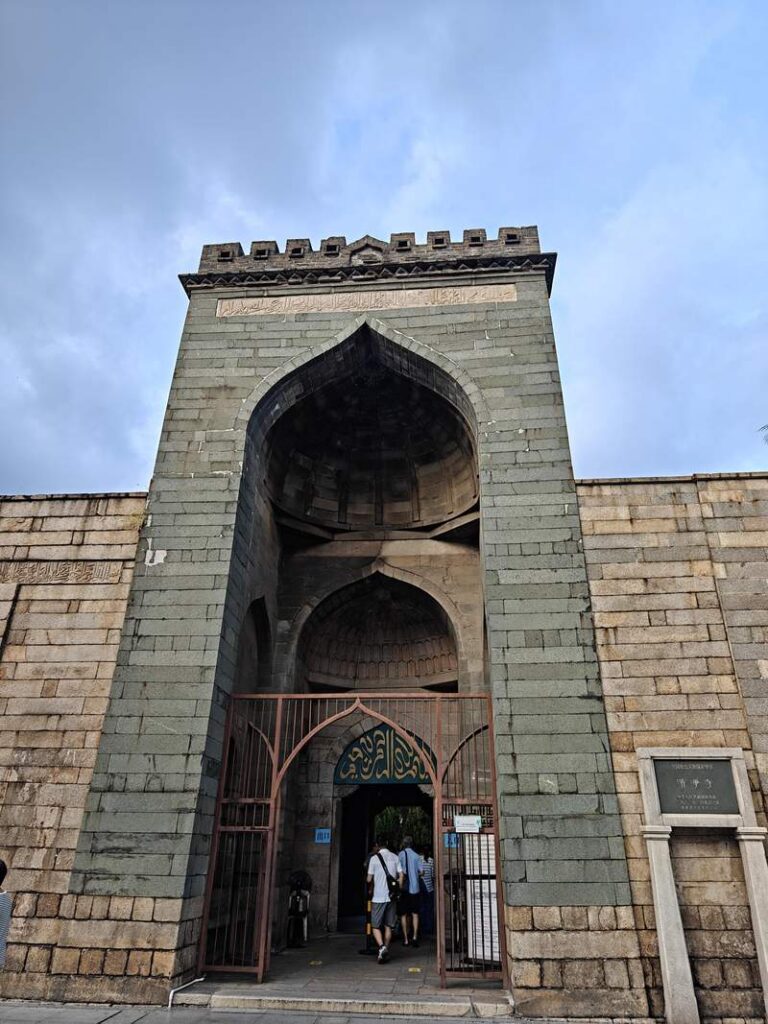
A few minutes further down the street stands the Qingjing Mosque (清净寺), China’s oldest surviving Islamic temple, founded in 1009 and rebuilt in 1310. It is small, mostly roofless, and still an active mosque, so dress accordingly — long trousers or a skirt, no bare shoulders — and remember that the new prayer hall is for Muslims only, and that photography is without flash. The mosque is closed all day on Fridays, so do not plan your visit for a Friday. The gate tower, with its moon-viewing platform on top, is the sight; the artefacts that once filled the mosque now live in the Maritime Museum, which you will visit tomorrow. Some visitors find the mosque underwhelming and say it is only worth a few minutes; others say half an hour is right. Go with low expectations and let the stones speak for themselves — they have been here for a thousand years.
From Tumen Street, loop back north through the quieter temples that most visitors miss. Chengtian Temple (承天寺) is the quiet temple — the one to go to when the main sights feel crowded — and the Confucius Temple (府文庙) and the Yuanmiao Temple (元妙观) sit on the same easy loop. This is the walk that the best local guides recommend, and it is the walk I would take: Guandi Temple, then the small streets to the Confucius Temple and Yuanmiao Temple, then Chengtian Temple, then back along Zhongshan Middle Road to the Bell Tower, and into Kaiyuan Temple from the other side if you want a second look in different light. It is a full day on foot — the old town is walkable, but expect a long day of steps — and it ends best where it began, on West Street in the evening, when the lights come on, the pagodas glow, and the street fills with people out for a stroll. Do not plan a late night on West Street, though: it empties after the evening, and the last community bus leaves early. If you are lucky, you will hear Nanyin (南音), the ancient Minnan music that is Quanzhou’s living heritage, drifting from a teahouse or a small performance space — the sound of the city at rest.
Day Two: The Sea That Made Quanzhou
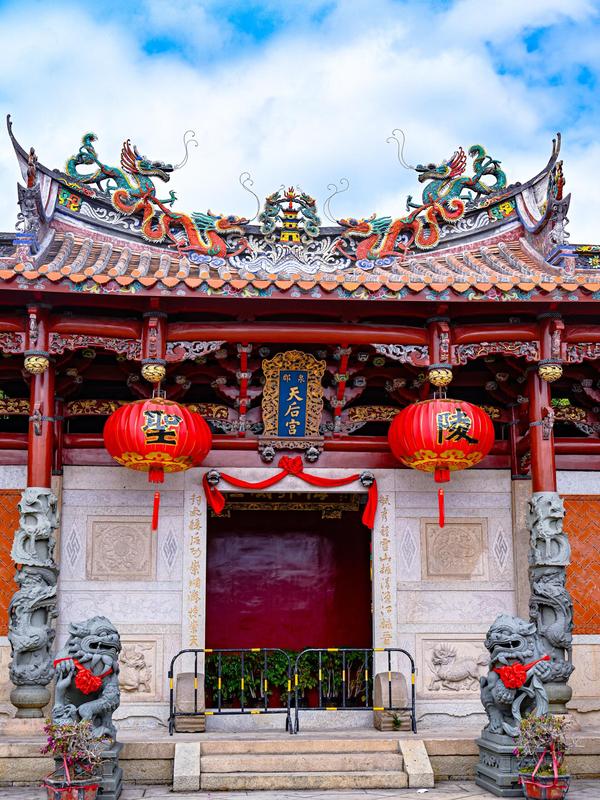
Day Two is the day that explains why Quanzhou mattered, and it starts at the southern end of the old town, at Tianhou Palace (天后宫), the Mazu temple. Mazu (妈祖) is the goddess of the sea, the protector of sailors, and this temple was the highest-ranking Mazu temple in the empire — the one the court itself honoured. Do not confuse it with the ancestral temple on Meizhou Island in Putian, which is Mazu’s home; Quanzhou’s was, as the locals say, her workplace. The temple itself is small and takes half an hour, and it is hard to appreciate without a guide, so go with the story in mind rather than expecting a spectacle. The bigger sight is just outside the gate: the ruins of Deji Gate (德济门), the Song-dynasty city gate, and the Song canal ruins beside it — part of the UNESCO listing, and easy to walk past without realising what you are looking at.
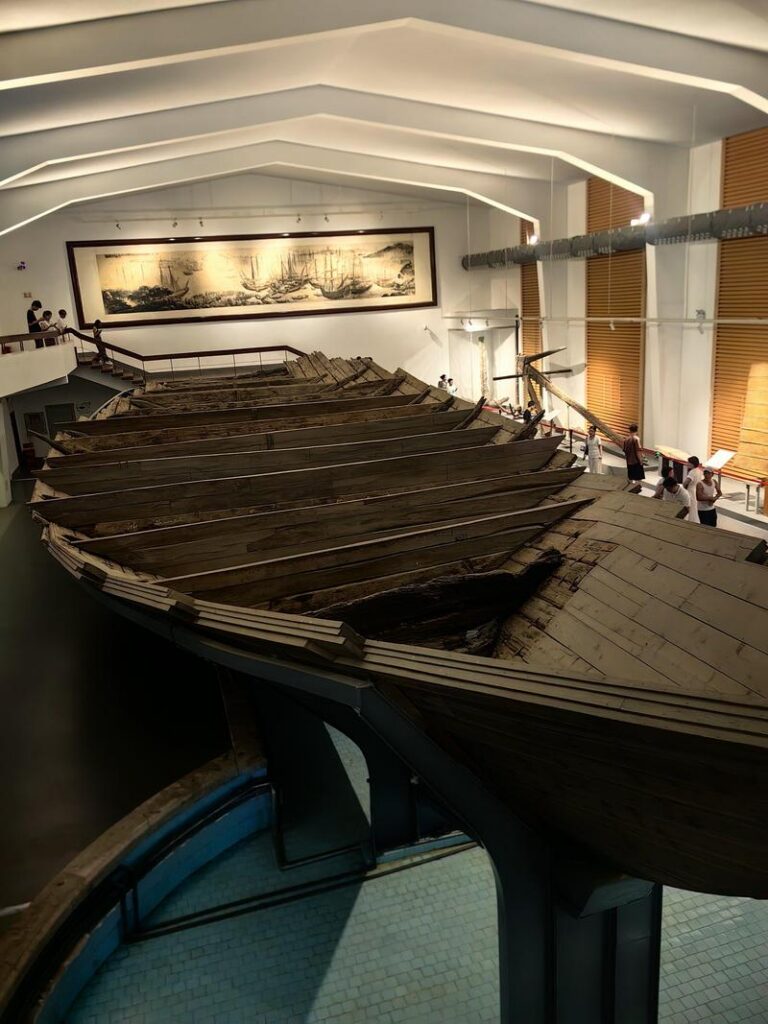
From the temple, walk to the Maritime Museum (海外交通史博物馆), the museum the bloggers call the place where you finally understand Quanzhou. It is free, but you must book ahead, and it closes one day a week, so check before you go. The star exhibit is the Song-dynasty ocean-going ship, raised from the bay and displayed in the ancient-ship hall behind Kaiyuan Temple’s East Pagoda — a hull that sailed the Maritime Silk Road eight centuries ago, with more than two hundred ship models around it and what the museum claims is the world’s most diverse collection of religious stone carvings. Allow two hours, and take a guide if you can: without one, it is easy to walk through the halls without really seeing them. The Non-Heritage Museum (非遗馆), a few hundred metres away, is the natural companion — go to both together. And if museums are your thing, Quanzhou has a whole cluster of them, and the museum fans are right that the cluster is the city’s hidden gem: the Min-Taiyuan Museum (闽台缘博物馆), on Minnan-Taiwan history, is either a hidden treasure or, thanks to its famously lifelike wax figures, the creepiest museum in Quanzhou, depending on who you ask. Book ahead for it too, and do not go if wax figures unsettle you.
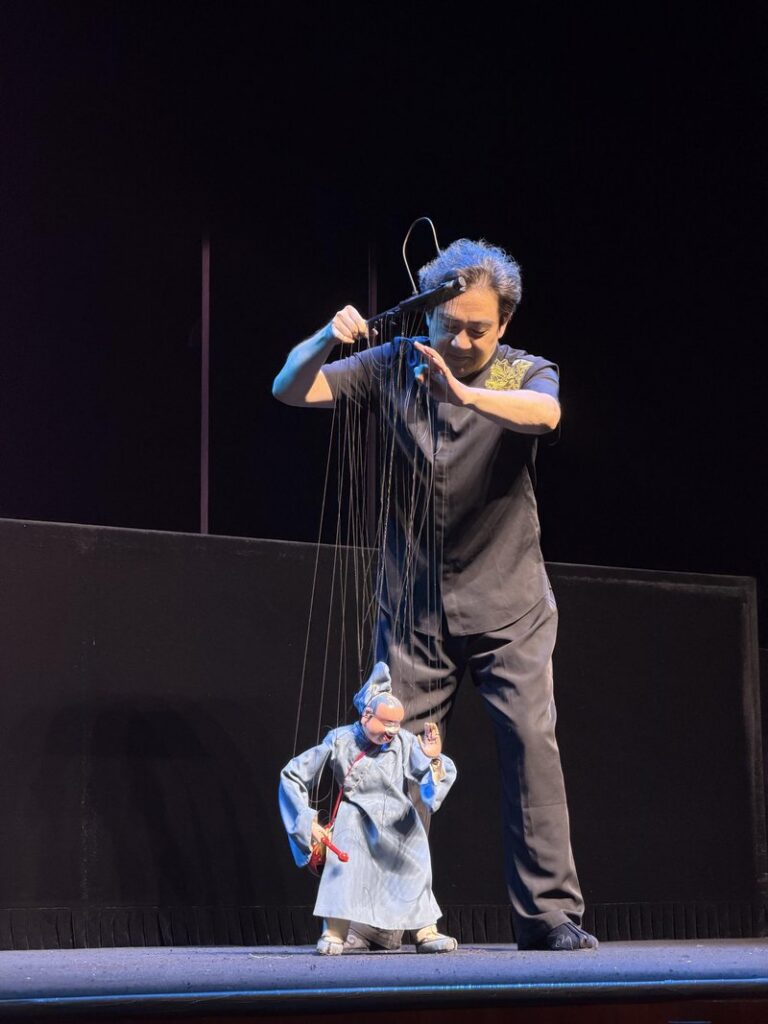
The afternoon belongs to the single most-recommended experience in Quanzhou: the puppet theatre. The Quanzhou marionette theatre (木偶剧院) is a living tradition, not a museum piece — puppeteers in dark shirts working strings so fine you can barely see them, bringing a small figure in a pale robe to life on a dark stage. Book a week ahead: tickets are released a week in advance and sell out, and the scalpers on second-hand platforms are not a plan. If you cannot get a ticket, do not despair — there are alternatives in the old town, from the Zhengyin Academy (正音书院) to the free Nanyin performances on weekend evenings — but the theatre itself is the experience to aim for. It is the one thing in Quanzhou I would tell a friend not to miss.
Day Three: Pick a Coast
On the third day, leave the old town and choose one of two coasts. Both need a car or a taxi, and both reward an early start. There is no wrong choice — but there is a wrong way to do either of them, which is to try to do both.
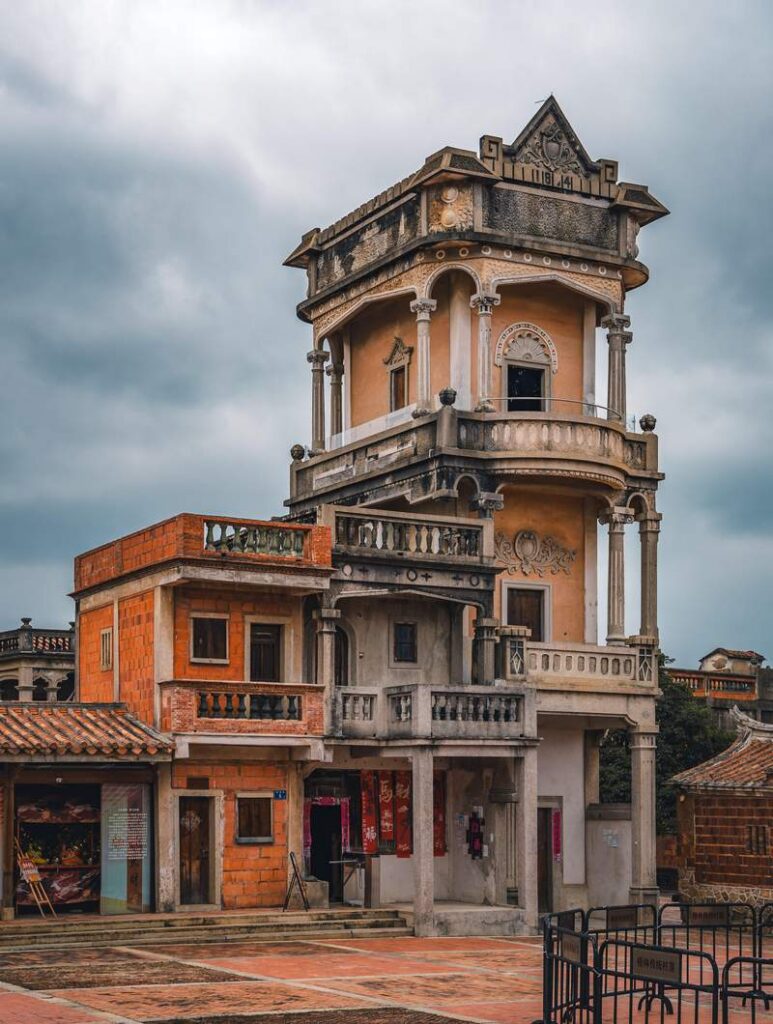
Option A: Wulin Village and the Shishi coast. Take a taxi to Wulin Village (梧林村), the overseas-Chinese village in Jinjiang, and give it time. The story is what matters here: villagers who made their money in the Philippines and Indonesia came home and built Nanyang mansions — red-brick fanzi lou (番仔楼) with Gothic gables and arched balconies — next to the old Minnan houses. Walk the route from the visitor centre to the Chaodong Building (朝东楼), the iconic mansion, then the Dewei House (德卫宅), where a banyan tree’s roots fill the courtyard, then the Qiaopi Museum (侨批馆), which tells the story of the remittance letters the overseas Chinese sent home. It is the one museum in Quanzhou that has moved visitors to tears. The Gun Tower (枪楼) is the climbable one, and the terrace of the Qiaopi Museum looks out over the whole red-brick village. A quick walk takes an hour; a slow one with a camera takes three. The light is best in the late afternoon, and getting a car out of Wulin is a known worry, so arrange your return before you leave — or, better, continue on to the coast, which is the natural next step.
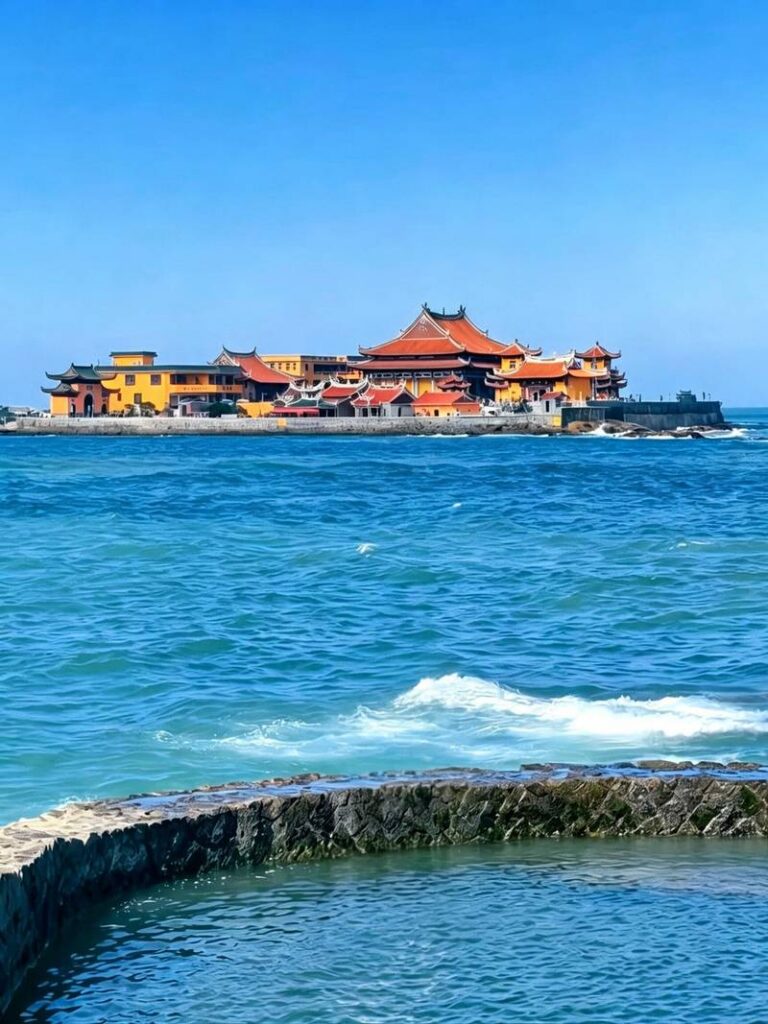
From Wulin, the Shishi coast runs in one clean line: Luojia Temple (洛伽寺), then the Golden Coast (黄金海岸), then Yongning Ancient City (永宁古城). Luojia Temple is a small temple on a rocky islet in the sea, and the tide is the whole experience — at high tide it sits in the sea and you can only watch from the shore; at low tide you walk across the rocks to it. Check the tide table that morning, because the times shift daily, and go in the late afternoon, when the light is best and the tide is usually in. Wear non-slip shoes: the rocks are slippery and the wind is strong. The Golden Coast is the beach beside it, best at sunset, a pleasant stop rather than a destination — do not make a special trip for the beach alone. Yongning is the end of the line: a six-hundred-year-old Ming coastal guard city, one of the three great Ming guard cities, with the red-brick-and-bluestone “brick-out, stone-in” houses and the fanzi lou of the returned overseas Chinese, and the least commercialised old town you will see. Two hours is plenty, and it is a stop on the way, not a destination in itself.
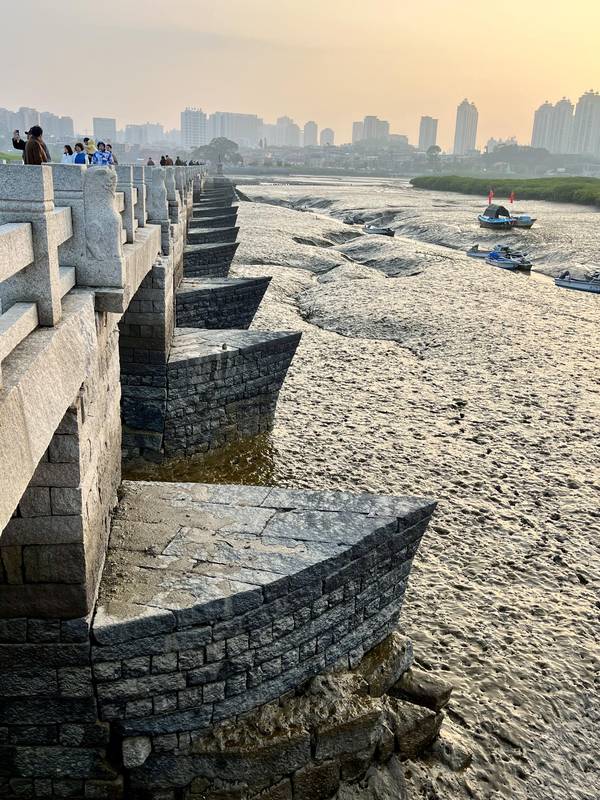
Option B: Luoyang Bridge and Chongwu. The other coast runs north, and it starts at Luoyang Bridge (洛阳桥), one of China’s four great ancient bridges, a Song-dynasty stone bridge that has carried travellers for nearly a thousand years. It is famous for its engineering — a raft foundation, and oyster beds cultivated to hold the piers firm — and the tide decides what you see: at low tide you can walk down and see the foundations and the mudflat life; at high tide and sunset it is at its most photogenic. Never go in the middle of the day in summer — it is fully exposed. And ignore anyone at the bridgehead shouting that the bridge is closed and you must take a boat: it is open, it is free to walk, and the boat is a scam. The two ends of the bridge have two different old streets, so do not confuse them — the southern end is in Luojiang, the northern end in Hui’an.
From the bridge, continue to Chongwu (崇武), the Ming stone coastal-defence city, and here is the most important thing in this whole guide: there are two Chongwus, and you want the free one. The real ancient city — the wall, the old town lanes, the sea — is free, entered through gaps in the wall. Navigate to the ancient city wall (崇武古城墙) or to Shuiguan Gate (水关门), not to the scenic area. The paid scenic area is a separate, later addition of modern stone sculptures, still partly under construction, and the bloggers who paid for it call it the worst value in Quanzhou. Half an hour on the wall is enough, and the real reason to come is the food: Chongwu fish rolls (崇武鱼卷), handmade from Spanish mackerel, springy and fresh, are the town’s signature and one of Quanzhou’s ten great snacks. Go for the fish rolls and the sea.
The early-bird alternative: if neither coast appeals, spend the morning on Qingyuan Mountain (清源山) instead — but do it the local way. The star is Laojun Rock (老君岩), the huge Song-dynasty stone statue of Laozi, and it stands about a hundred metres from the entrance: you do not need to climb for it, and the bloggers are unanimous that paying the full ticket and climbing the mountain is poor value. Go early in the morning or in the evening, when entry is free, and do what the locals do: go up at dawn to brew tea and eat a Minnan breakfast overlooking the city. The hub is the Nantai Rock (南台岩) area, where the tea stalls provide hot water and a tea set — bring your own tea leaves, the ones sold on the mountain are average — and the must-orders are braised tofu, braised pig’s blood and fried vegetable cakes. It is the slowest morning in Quanzhou, and one of the best.
What to Eat
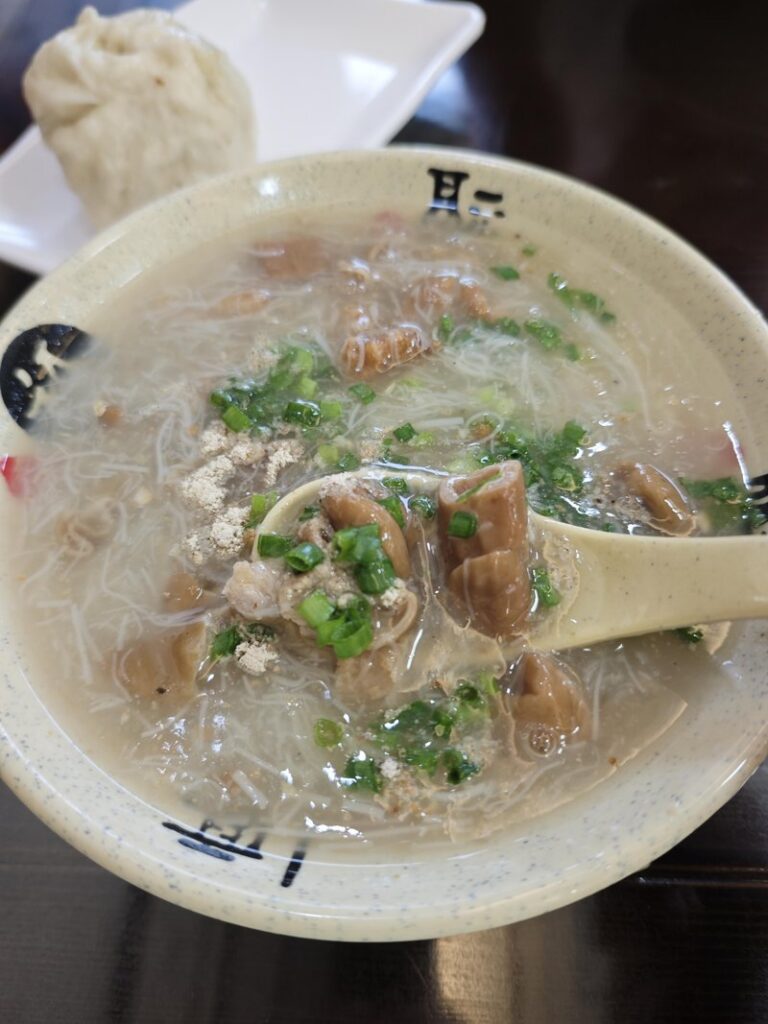
Quanzhou’s food is Minnan cuisine (闽南菜), one of the great regional cuisines of China, and it is the reason many travellers remember the city better than its temples. The flavours are light, fresh and a little sweet, with the sea never far away. Breakfast is the meal that matters most, and it is built on one dish: vermicelli paste (面线糊), fine vermicelli in a thick, cloudy broth, topped with vinegar pork, large intestine and a fried dough stick. The standard is two toppings — more is not better — and the best bowls are in the morning, from the old shops in the side lanes. The pork dumplings (肉粽) are the other breakfast pillar: salty, sticky rice with peanut and sweet chilli sauce, and the real shop is on East Street, not West Street — a shop of the same name opposite Kaiyuan Temple is a fake. Peanut soup (花生汤), fried cakes and steamed buns fill out the breakfast table, and the whole culture is summed up in a local phrase: breakfast here is a matter of whatever you can afford, simple or generous, and it is the soul of the city.
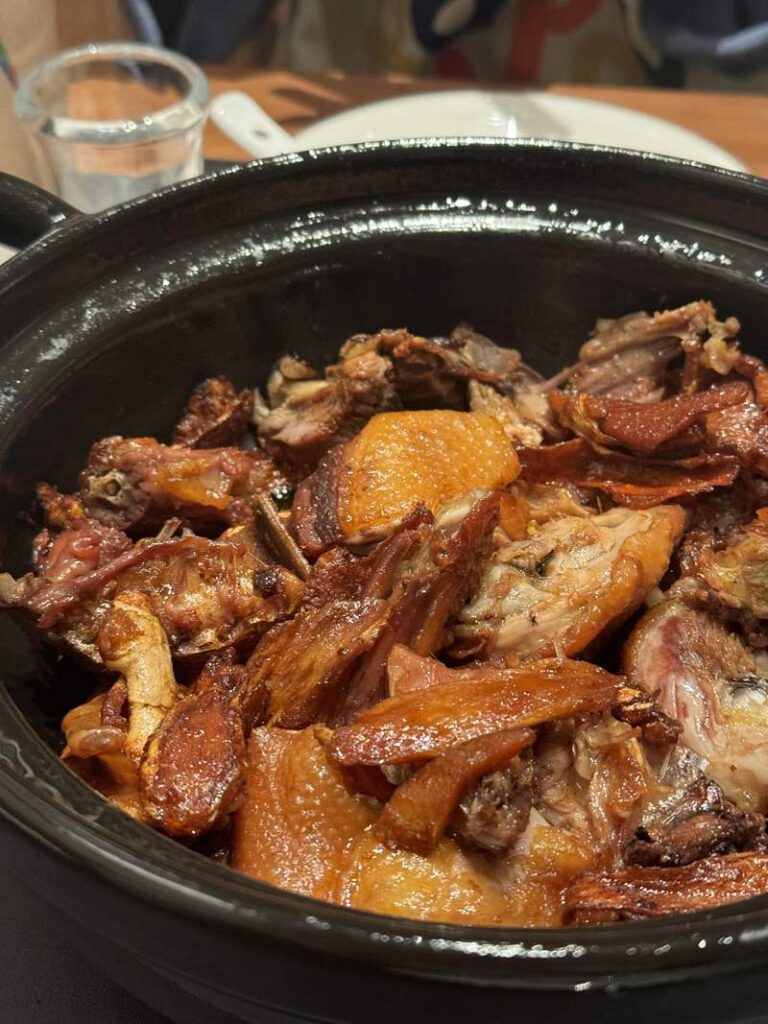
The two dishes that define Quanzhou for dinner are ginger duck (姜母鸭) and oyster omelette (海蛎煎). Ginger duck comes in two styles — one watery and tender, one dry and charred — and the locals have strong opinions about which shop does which, so go to the main shop of the name you choose, not a branch. The oyster omelette must be eaten hot: cold, it turns fishy, and the best ones are at the small local shops, not the tourist restaurants. Beef soup (牛肉羹) with salted rice, braised beef ribs — the dish the locals call Quanzhou beefsteak, which is not a Western steak at all — and braised noodles (卤面) with two seafood toppings round out the savoury list.
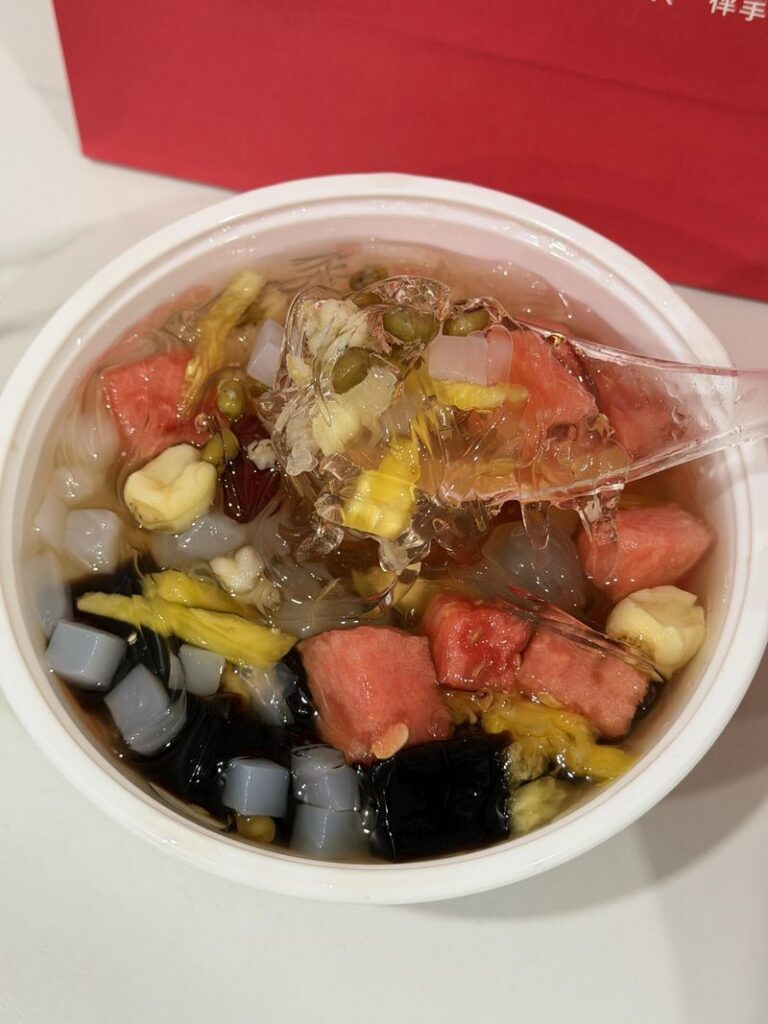
For something sweet, the iced desserts are the relief from the heat: four-fruit soup (四果汤), a colourful bowl of fruit and jellies over ice, and stone-flower jelly (石花膏), the translucent seaweed jelly that is Quanzhou’s own. The fried skewers (炸串) from the school-gate stalls, eaten with a bowl of stone-flower jelly or herbal jelly to cool down, are the city’s late-night habit.
And then there is the tea. Minnan kung fu tea (功夫茶) is not a performance for tourists — it is a daily culture, a small table, a tiny pot, and an unhurried hour. The etiquette is real and worth learning: the first brew is not drunk, the pour circles the cups like a general inspecting his troops, and a tap of two fingers on the table says thank you. Chinese tea culture runs deep in this city, and the trap is not the drinking — it is the buying. Never buy loose tea in a scenic area, and never buy from a shop that quotes you a price by the gram: the flower-tea shops on West Street are the biggest trap in the city, quoting a price per gram that works out to hundreds for a bag you have not agreed to buy. Ask the total price first, or walk away. Buy your tea in Anxi, the origin, not in the city.
The food traps, collected from the local bloggers who know the city best, are worth memorising. West Street was never a food street, and the main-street shops with the famous old names are mostly fakes — shops copying the names of real old shops that live in the side lanes. The internet-famous ginger duck on West Street is not the real one. The sandworm jelly (土笋冻) is the dish to be most careful with: the real thing is jelly-like and melts out of the fridge, made from sandworms in An Hai; a firm block you can pick up with a toothpick is not the real thing, and the tourist-area versions are best avoided — there is no trusted old-town shop for it, so do not let anyone sell you one. Sand tea noodles (沙茶面) are not Quanzhou food at all, however often they are sold to visitors. And the seafood dinner streets are honest only if you are careful: confirm the price per weight and the freshness before anything is cooked. If you want one safe sit-down meal, the Minnan restaurants the locals recommend — the old-fashioned ones, not the internet-famous ones — are the answer, and the best of them is the one the local bloggers themselves pick for visitors.
Booking, Honestly
Quanzhou is an easy city to travel independently, and that is the first thing to say: the old town’s sights are concentrated, no tour is needed at all, and the low-price one-day tours are the story of this city in miniature. They exist, they are cheap, and the shopping stops are the point — a promised two stops becomes three on arrival, the third a wood-carving and jade shop where the guide’s line is that you are only there so the teachers there can save face. Ask in advance whether a tour is a pure-play tour with no shopping, get the promises in writing, and know that the old town is walkable and the little white cars will take you anywhere in the core.
The bookings that matter are two. The puppet show: book a week ahead, as soon as your dates are fixed, through the theatre’s official account — tickets sell out, and the scalpers are not a plan. The Maritime Museum: book ahead through its official account, and remember it closes one day a week. The Non-Heritage Museum needs a reservation too.
The transport trap is the stations. Quanzhou has four, and they are not interchangeable. For the old town, go to Quanzhou Station (泉州站) — the main station, a taxi ride from West Street — and use the official ride-hailing point, ignoring the touts. Quanzhou South Station in Jinjiang is for Wulin Village and the Shishi coast only; Jinjiang Station is for Jinjiang city; Quanzhou East Station is for Hui’an and Chongwu. Buy the wrong ticket and you will spend your first hour in Quanzhou in a taxi. From Xiamen, buy to Quanzhou Station, and take the train from Xiamen Station if you can — part of the line runs along the sea. The airport is a taxi or bus ride from the old town, and there is a free cultural-tourism shuttle.
Inside the city, there is no metro. The old town is on foot, and the little white cars (小白车) run around the old town core for a small fare per person — hail and ride — but they do not go to the coast, to Luoyang Bridge or to the station, and a few decorated “custom” cars charge more, so check first. Do not take unlicensed cars at the station or the airport. And one practical note for foreign visitors: a brand hotel that accepts foreign guests registers you with your passport and is the least hassle. A guesthouse may not have foreign-guest qualification — confirm before you book, or you will be registering at a police station yourself. Chain front desks manage basic English; guesthouse owners mostly speak Chinese only. If you have heavy luggage, choose a hotel on a road that cars can reach.
What I’d Skip
Xunpu Village (蟳埔村), the hair-flower village, is the bloggers’ number one skip, and I agree with them. It is not a fishing village any more — it is a photo street, and the village itself has almost nothing to see. The hair-flower experience (簪花) is real and beautiful, but do it in the old town instead, from a local grandmother’s stall with transparent pricing, and walk two hundred metres into the lanes before choosing a shop: the price can halve. In Xunpu itself, the car-park touts hard-sell a partner shop and lie that cars cannot drive in — they can — and the package prices are a ladder of add-ons: the flower ring is hire-only, the hair costs extra, the make-up costs extra, and the photographer’s photos are charged separately. Always ask the all-in price first.
The climb up Qingyuan Mountain is the second skip. The mountain is ordinary, the summit view is ordinary, and the ticket is the complaint. Go to Laojun Rock at the gate, take your photo, and if you want the mountain at all, go at dawn for the tea and breakfast. The paid scenic area at Chongwu is the third skip: walk the free wall instead, and spend the money on fish rolls. The one-day tours are the fourth: the old town is concentrated, the coast is a taxi ride, and no tour is needed. And the temple tick-box tour is the fifth — the mistake every first-timer makes in Quanzhou is treating it as a list of temples. The temples look alike after the third one. Pick one or two, then walk the streets: that is where Quanzhou actually is.
The Min-Taiyuan Museum is a qualified skip. If you love history, it is the hidden treasure the museum fans say it is. If museums bore you, skip it — and if wax figures unsettle you, stay away entirely, because its lifelike wax-figure scenes are famously eerie. The Golden Coast as a destination is the last skip: it is a pleasant beach at sunset on the way to somewhere else, not a reason to travel.
Summary
Quanzhou is the city the world forgot, and that is its gift. It was once the greatest port on earth, and it kept the evidence — the mosque, the pagodas, the ship in the museum, the puppet theatre — without turning itself into a theme park. It is a city of working temples and lived-in streets, of breakfast bowls and tea tables, of a coast that rewards the traveller who checks the tide. If Suzhou is the old town China shows the world, Quanzhou is the old town China kept for itself. Go slowly, eat locally, book the puppet show early, and leave the tick-box list at home.
If you have more time in Fujian, the province has one more world-famous sight that pairs naturally with Quanzhou: the tulou (土楼), the great earthen fortresses of the Hakka people, a few hours inland. But do not rush Quanzhou to get there. The city rewards the traveller who stays.