
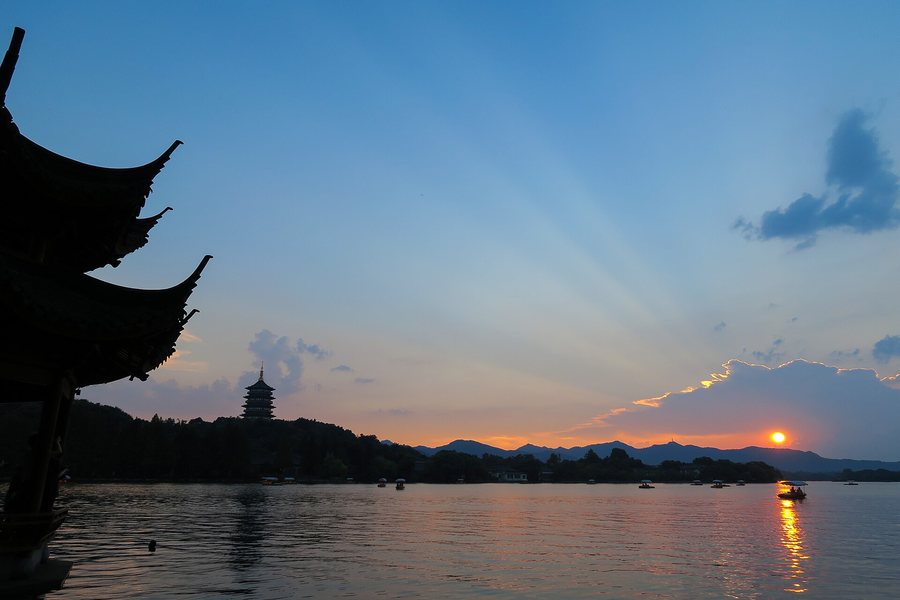
Hangzhou is the city I go back to when I want China to slow down. The lake sits at the centre of everything, the hills rise green behind it, and the whole place runs at a walking pace — or it would, if half of China were not trying to walk beside you. I have been coming here for years, and I still plan my days around the same rule: go early, pick a few places, and leave the rest for the next visit.
The city is the capital of Zhejiang (浙江) province, in the Yangtze Delta, and it was once the capital of all China south of the Yangtze. When the Song court fled the Jurchen armies in the north, it settled here, in the city then called Lin’an (临安), and stayed for a century and a half, from 1127 to 1279. That is why the old town still feels like an imperial capital in miniature. Marco Polo, who reached China along the Silk Road, called the city Quinsay and described it as one of the most splendid cities in the world. He was not exaggerating by much.
This guide covers three days: the lake, then the temples and tea gardens in the western hills, then a choice between the canal and the old town or a slow day in the wetlands. I do not print prices, opening times or timetables, because they change too fast to trust in print. What I do tell you is what is worth your time, what to book ahead, and where visitors most often go wrong.
At a Glance
- How long: Three full days. Two days covers the lake and the temples, but the third day is when the city starts to feel like yours.
- Where to stay: I stay near the Lakeside (湖滨) area for a first visit — close to the water, the metro and the food streets. For better value, the streets around Wushan Square (吴山广场) are my second choice: near the old town and quieter at night.
- Getting around: The metro and my own feet do nearly everything, and boats do the rest on the lake. Short bike rides along the shore are fine, but I would not plan a day around a bicycle.
- The lake: Go early, walk a few stretches, take a boat for the middle of the lake, and do not try to walk the whole loop. The famous views are all on the northern and western shores.
- The temples: The big temple in the western hills needs an advance reservation through the official platform. Check the official channels before you go — the rules change — and go early.
- Eating: Hangzhou cooking is light, delicate and sweeter than you may expect. Order one famous dish at a time, share everything, and eat your main meals away from the lakeside.
- Crowds: Weekends and holidays are a different city. Come on weekdays if you can, and keep the most famous sights for the early morning.
Day One: The Lake, the Causeways and the Pagoda
Start at the Broken Bridge (断桥), at the eastern end of the lake, and start early. The bridge is not broken at all. It gets its name from a winter trick of the light: after snow, the sun melts one side of the arch while the other stays white, so from a distance the bridge looks snapped in two. That view, lingering snow on the bridge, is one of the Ten Scenes of West Lake (西湖十景), the ten classic views poets and painters have returned to for centuries.
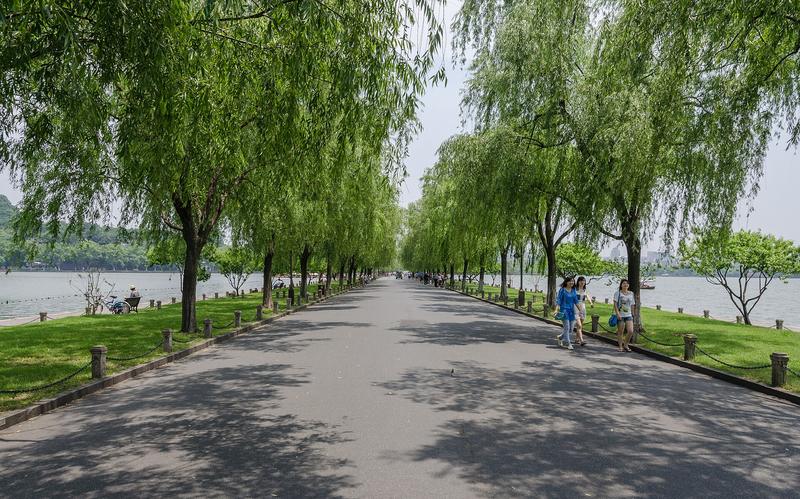
From the bridge, walk west along the Bai Causeway (白堤), the low embankment of willows and peach trees. It is named for Bai Juyi (白居易), the Tang dynasty poet who governed Hangzhou in the 820s and built embankments to manage the lake’s water. The causeway runs for about a kilometre to Solitary Hill (孤山). Su Shi (苏轼) found the lake half choked with silt, and in 1090 he had it dredged and piled the mud into a long embankment across the western side. That is the Su Causeway (苏堤), nearly three kilometres of willows crossed by six stone bridges, and walking its full length is the single best free pleasure in Hangzhou. I walk it from north to south, with the pagoda ahead across the water.
You need a boat sooner or later, because the best-known view sits in the middle of the lake. There are three kinds, and mixing them up is the easiest way to waste a morning. The island boat takes you to the little island with the three stone pagodas standing in the water — the Three Pools Mirroring the Moon (三潭印月), the scene on the back of the one-yuan note, its name brushed by the Kangxi Emperor (康熙). It is the only boat that lands on the island, so take it if the pagodas matter to you, and do not leave it late, because the last boats back fill up fast. The small public ferry charges by the stop and runs one way only, so check your boarding and landing stops before you sit down; the stretch from the northern shore to the fish ponds gives you the causeway and the pagoda in one ride. The wooden rowing boat is slow and quiet, best on the western inner lake where the crowds thin out. My rule for all three: use the official boats at the proper piers, and walk past anyone on the bank offering a private boat. Get off the island boat on the Flower Harbour (花港观鱼) side, which saves retracing your steps: the carp ponds are worth a look, and Quyuan Garden (曲院风荷) is a short walk away, its lotus ponds at their best in high summer.
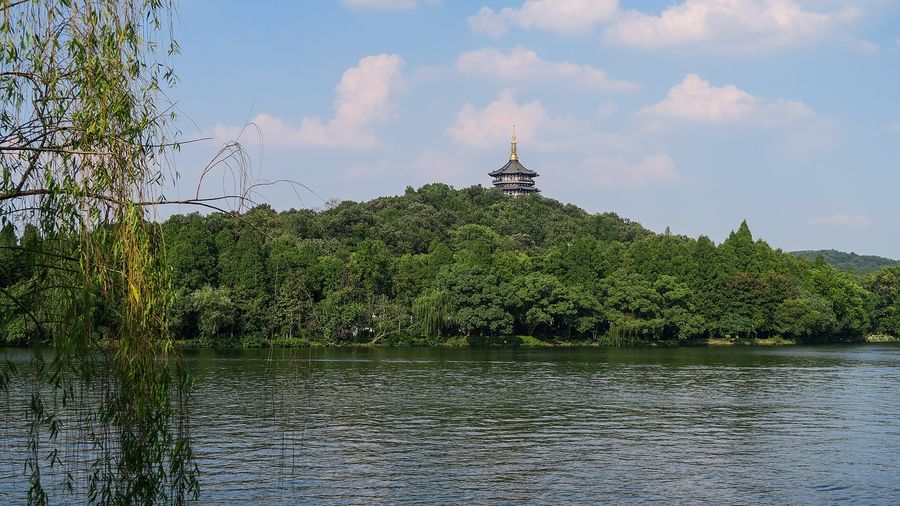
Leifeng Pagoda (雷峰塔) stands on its wooded hill on the southern shore. The original tower was first built in the 970s, under the Wuyue (吴越) kingdom, and it stood for nearly a thousand years before it collapsed in 1924, weakened by years of people prising bricks from its base, believing they warded off illness. What you climb today is a reconstruction, completed in 2002, built over the excavated foundations of the old tower. The White Snake legend says the monk Fahai (法海) imprisoned the snake spirit Bai Suzhen (白素贞) beneath it, separating her from her husband Xu Xian (许仙), and that she was freed only when the tower fell. I climb it for the view, which takes in the whole lake, and I photograph it from the far shore, where the tower shows whole against the hill; from the foot of the hill, trees and walls hide it almost completely. Go up in the late afternoon: the evening glow over the pagoda is another of the Ten Scenes.
If the crowds on the eastern shore wear you down, cross to the quiet side. The western shore, around Yuhu Bay (浴鹄湾) and along the Yangong Causeway (杨公堤), is where the tour groups thin out and the lake feels wilder: reed beds, wooded paths and long stretches with almost nobody on them. I do not try to walk the whole lake in one go. The full loop is long, the lakeside gardens repeat themselves, and some stretches are ordinary parkland. Pick your stretches and wear comfortable shoes.
Day Two: The Temple in the Hills and the Tea Gardens
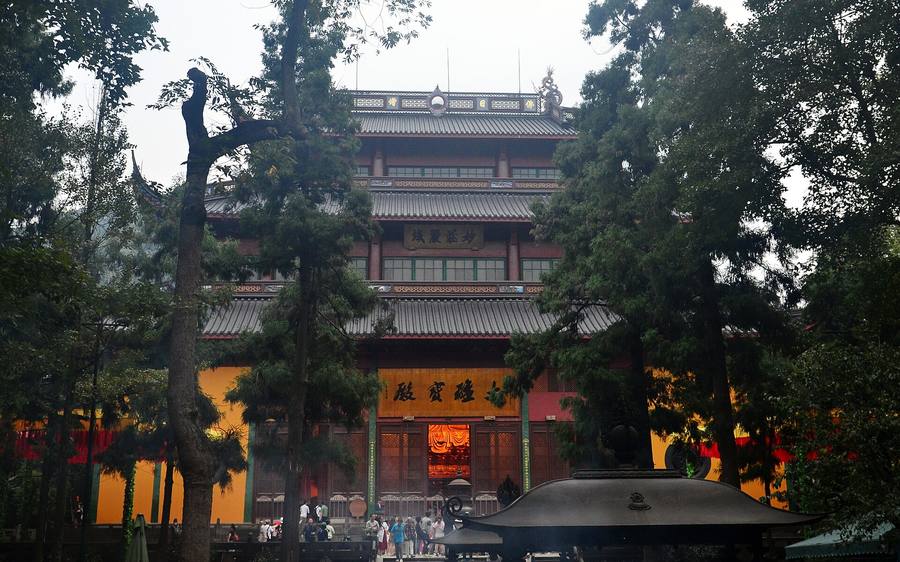
The second day goes west, into the forested hills behind the lake, to the oldest and greatest temple in the city. Lingyin Temple (灵隐寺), the Temple of the Soul’s Retreat, was founded in 326 by the Indian monk Huili (慧理). The story goes that Huili looked at the strange limestone crag in front of the site and declared that a spur of a holy mountain in India must have flown here — and so the crag is called Feilai Peak (飞来峰), the Peak That Flew Here. It grew rich and powerful under the Wuyue kings, and it is still the beating heart of Buddhism in Hangzhou. Go early, because the tour groups arrive in force by mid-morning.
Walk the grottoes before the temple. Feilai Peak is covered in Buddhist carvings cut into the rock across several centuries, from the Five Dynasties period through to the Yuan dynasty: Buddhas, bodhisattvas and arhats, with the great laughing Buddha sprawled in his grotto as the centrepiece. The temple is also tied to Jigong (济公), the famously unruly monk of legend, who is said to have lived here. Inside the temple, the Mahavira Hall holds a towering gilded Buddha worth the climb on its own. The temple gives out free incense, so there is no need to buy any, and photography is not welcome inside the halls. Bring water: the site is large and the paths climb.
A word of warning: this temple has the worst touting I know anywhere in China. Book through the official platform only — the one marked as a public institution — and ignore lookalike pages and apps, which sell you a tour you did not ask for. Ignore the friendly drivers and sellers on the approach road who tell you the temple has no incense and press flowers and candles on you; the temple has incense, it is free, and what is bought outside cannot be taken in. Skip the cheap guided tours, which leave you standing outside while the guide talks, then steer you into a shop. Skip the rented audio guides too: they are run by a private firm, not the temple, the content is thin and returning the device is troublesome. If you want to buy anything, buy it at the temple’s own counter inside. Reserve ahead through the official platform, checking the official channels for the current rules, because the temple turns away plenty of people who simply show up.
If Lingyin leaves you wanting quiet rather than more crowds, walk on to Faxi Temple (法喜寺) at Upper Tianzhu (上天竺), one of the three Tianzhu temples in the hills behind Lingyin. It dates to the 10th century, is dedicated to Guanyin (观音), the bodhisattva of compassion, and is famous for its long yellow-walled corridors. The Qianlong Emperor (乾隆) gave the temple its present name. It is smaller, calmer and far less visited than Lingyin. In the evening, Song City (宋城), the theme park with the famous Song-dynasty stage show, is worth it only if you still have energy after a full day in the hills — and book ahead, because it sells out.
The afternoon belongs to tea. Longjing (龙井) tea, Dragon Well tea, is the most celebrated green tea in China. Only tea grown inside a protected zone of about 168 square kilometres around West Lake may be called West Lake Longjing; within it, Shifeng (狮峰), Lion Peak, is the most prized of the five core growing areas. The tea is pan-fired by hand in iron woks, which gives the leaves their flat shape and chestnut flavour. The two villages to know are Longjing village itself and Meijiawu (梅家坞), further west, with tea gardens climbing every slope. I walk the terraces, sit in a village teahouse, and drink the new tea slowly — the calmest afternoon in this guide.
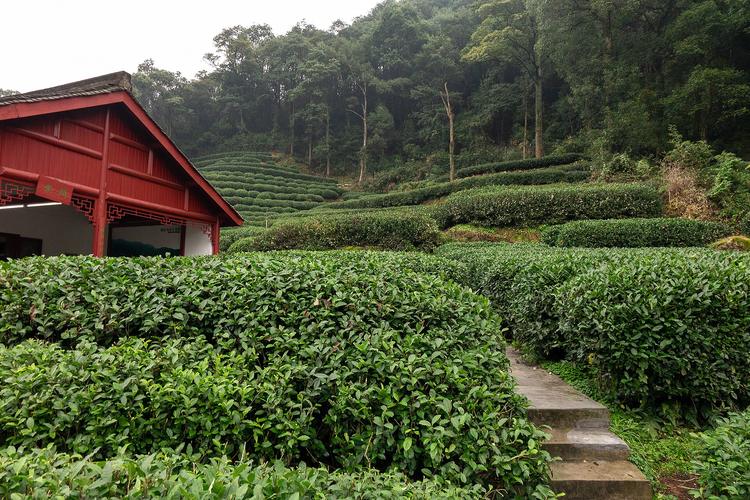
Tea is also where visitors lose the most money in Hangzhou, so I have rules. Do not walk into the first teahouse you see; walk past several, compare, and sit where the atmosphere feels right. A grand signboard means nothing. Before you order, ask how much tea is in the cup and what the cup costs, because a small cup of a top grade can cost a startling amount by weight. Do not buy expensive tea inside the scenic area without tasting it first and comparing it in more than one shop; a great deal of what is sold to visitors is lesser tea at top-grade prices. If you try a picking and roasting experience, choose one where a teacher guides you through the whole process — the good ones teach, the bad ones take your money. Stay on the paths: the gardens are working farms, and visitors who trample the plants risk a fine. If the tea villages feel too busy, Jiuxi (九溪), the Nine Creeks, is my fallback: a wooded valley of streams and tea gardens south of the lake. The National Tea Museum, between the lake and the tea villages, explains the whole story of Chinese tea culture.
Day Three: The Canal and the Old Town, or a Slow Day in the Wetlands — Pick One
The third day is a choice. The canal quarter and the wetlands sit in opposite directions, and trying to do both in one day, with a night market thrown in, is how good trips end in exhaustion. Pick the one that suits your mood: history and old streets, or water, reeds and almost nobody around.
Option One: The Canal and the Old Town
The Grand Canal ends in Hangzhou. It runs about 1,800 kilometres north to Beijing, was built to carry grain and goods to the capital, and was added to the UNESCO World Heritage list in 2014. Its southern end, in the north of the city, is the Hangzhou most visitors never see: a working waterway, old trading streets, and museums in converted factory buildings. The anchor is Gongchen Bridge (拱宸桥), built in 1631, in the Ming dynasty, a three-arched stone bridge that is the largest surviving stone arch bridge in the city. Stand on it and watch the barges pass underneath, going about their ordinary business on a waterway more than a thousand years old. In the evening the lights come on, and the canal turns into the prettiest scene in the city after the lake.
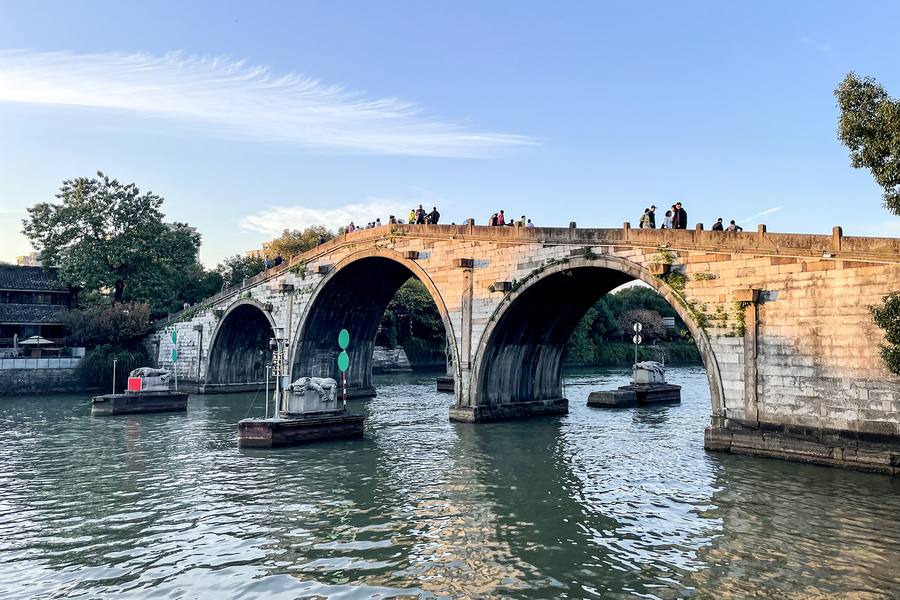
West of the bridge lies the Qiaoxi (桥西) quarter, the old trading district, its museums in converted industrial buildings: scissors and swords, umbrellas, fans and traditional crafts. The museums mostly close on Mondays, so check before you go, and on weekends it is worth reserving ahead. From there, walk south along the canal to Xiaohe Straight Street (小河直街) and Dadou Road (大兜路), two canal-side streets of white walls and grey tiles, quiet, with the water always beside you. The residential lanes behind the main streets are the best part: people still live here, and the quarter has not been polished into a theme park. Give yourself the afternoon: the museums by day, the bridge and the lanterns as the light goes. Take care on the stone lanes when it rains.
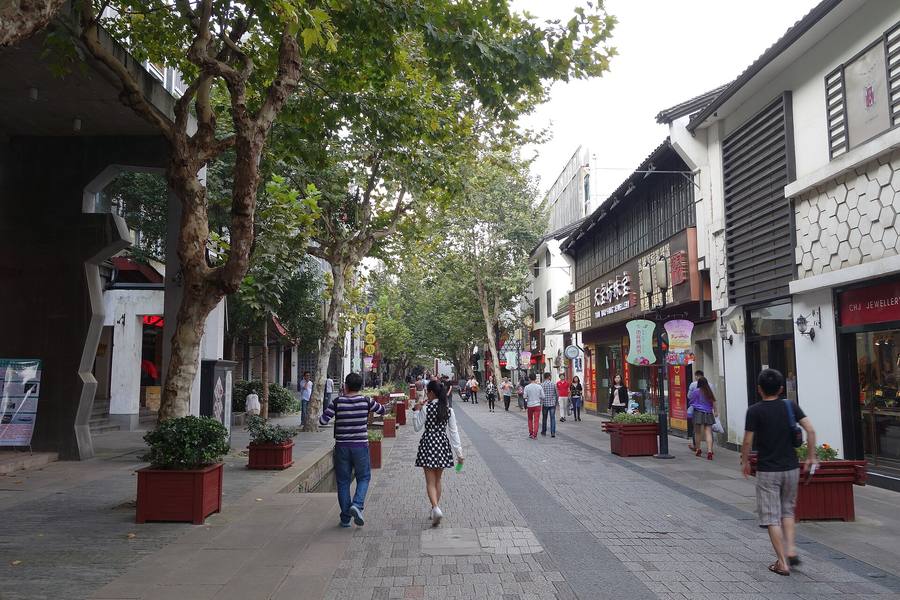
The old town, in the south of the city, is the other half of this day. Southern Song Imperial Street (南宋御街) was the ceremonial avenue of Lin’an, the capital of the Southern Song dynasty, and it still runs on its old line, stone-paved, lined with Song-style shopfronts and bookshops. I walk it slowly, ducking into the lanes on either side, where the old city survives: narrow, lived-in, full of small workshops and coffee shops.
Stop at Deshou Palace (德寿宫), the ruins museum of the palace where the retired Emperor Gaozong (高宗) lived after giving up the throne in 1162. The palace was damaged by fire in 1206 and gradually fell into ruin, the site was lost for centuries, excavations from 1984 onwards uncovered it, and the museum that now stands over the ruins opened in 2022. The great hall has been rebuilt from the archaeological evidence, and the original foundations are visible beneath the new buildings. It is the best place in the city to understand what the Song capital looked like, and far less crowded than the lake. Finish the day around Wu Hill (吴山), the small hill at the southern end of the old town. The Drum Tower (鼓楼) stands at the foot of the hill, and the lanes around it — Dajing Lane (大井巷) above all — are the most atmospheric streets in Hangzhou. Hefang Street (河坊街), the old commercial street at the foot of the hill, is the busiest of the old streets and the most touristic, good for an evening wander.
Option Two: The Wetlands, Slowly
Xixi Wetland (西溪湿地), west of the city, is the opposite of the lake: flat, green, watery, and quiet. A national wetland park of rivers, ponds, reed beds and small islands, it is where I send people who have had enough of crowds. Half of it is free. The embankment paths, the old street and the museum sit outside the ticketed area, and the scenery there is just as good as inside. Paying to enter is worth it for a rowing boat into the narrow channels, or if the reeds or plum blossom are in season. If you only want a walk, the free areas will do very well.
Use the main entrance at Zhoujiacun (周家村), where the boats are; the north gate is really the entrance for the eating street and will leave you walking in circles. The rowing boats are the heart of the place: small wooden boats that slide into the narrow waterways between the reed beds. The electric boats run a hop-on, hop-off loop between fixed stops. Go early: the boat queues grow long in the afternoon, and boats only take on as many passengers as get off. Bring your own water — it is hard to buy on the islands — and in summer bring insect repellent and long trousers, because the mosquitoes are serious, and wear shoes with grip for the damp paths. Late autumn, when the reeds turn silver and gold, is my favourite season. Hezhu Street (河渚街), the old street inside the wetland, is where I eat: snack stalls and small restaurants, best explored through the side lanes. And if it rains, do not cancel — rain on the boat canopy, with the drops dimpling the water, is one of the loveliest sounds in Hangzhou.
What to Eat
Hangzhou cooking is the quietest of China’s great cuisines. The flavours are light, the seasoning restrained, and the sweetness surprises people who expect the fire of Sichuan or the richness of the north. It rewards attention and punishes high expectations. The famous dishes are famous for a reason, and they are also the dishes most often done badly for tourists. My rule is to order one famous dish per meal, share it, and fill the table with the everyday dishes that the restaurants actually cook well. Judge the dish in front of you, not the signboard above it.
The Three Famous Dishes
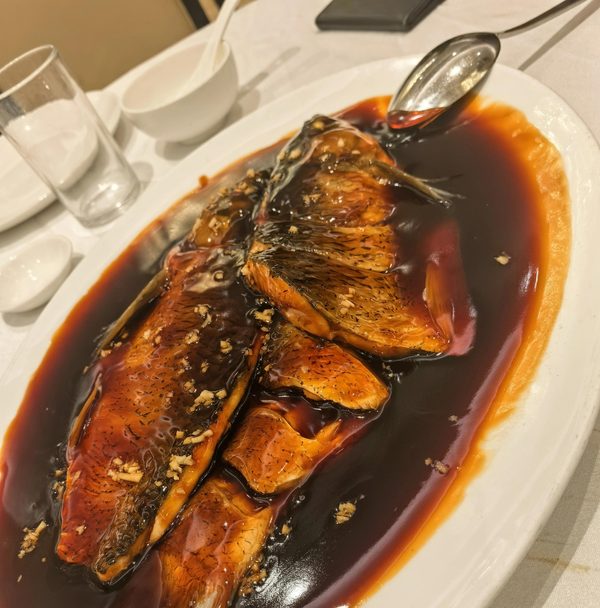
West Lake vinegar fish (西湖醋鱼) is the dish every visitor asks about. It is a whole grass carp, poached and dressed in a sweet-sour glaze, and it lives or dies on the freshness of the fish, the exactness of the poaching and the lightness of the sauce. Done well, it is delicate, clean-tasting, and quietly impressive. Done badly — and in high-turnover tourist restaurants it often is — it is bony, sweet and faintly muddy, and the vinegar sharpens the fishiness instead of hiding it. The fish has many fine bones and the flavour is subtle rather than striking. Order one to share, at a proper Hangzhou restaurant, and treat it as an experience. If you dislike bones, sweetness or fishiness, skip it without regret. Louwailou (楼外楼), the lakeside restaurant, built its name on this dish, and it is still the dish to order there — once.
Dongpo pork (东坡肉) is named for Su Shi, whose courtesy name was Dongpo, and it is the dish I recommend without hesitation. A square of pork belly, slow-braised until the fat turns to silk and the skin gives way at a touch, in a dark, sweet-savoury sauce. It is very sweet and very rich, so one portion shared between two or three is plenty. Done properly it is the soul of old Hangzhou cooking.
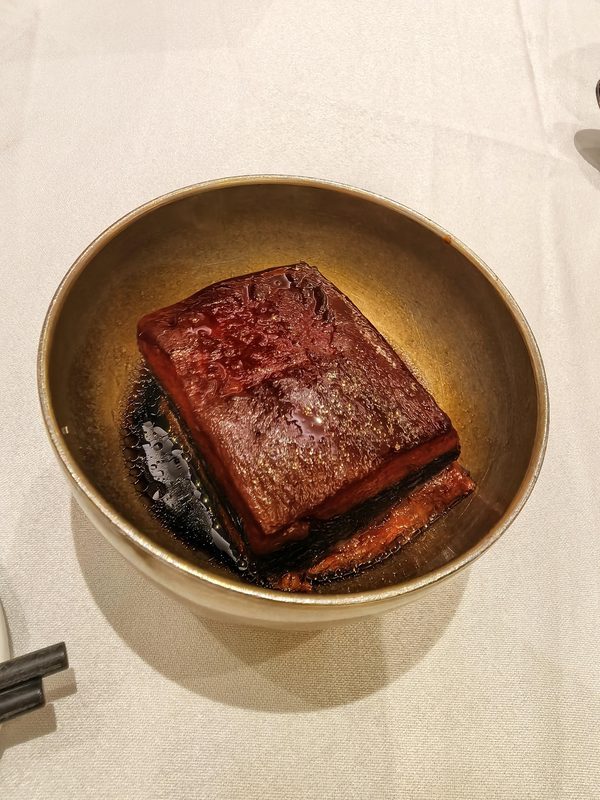
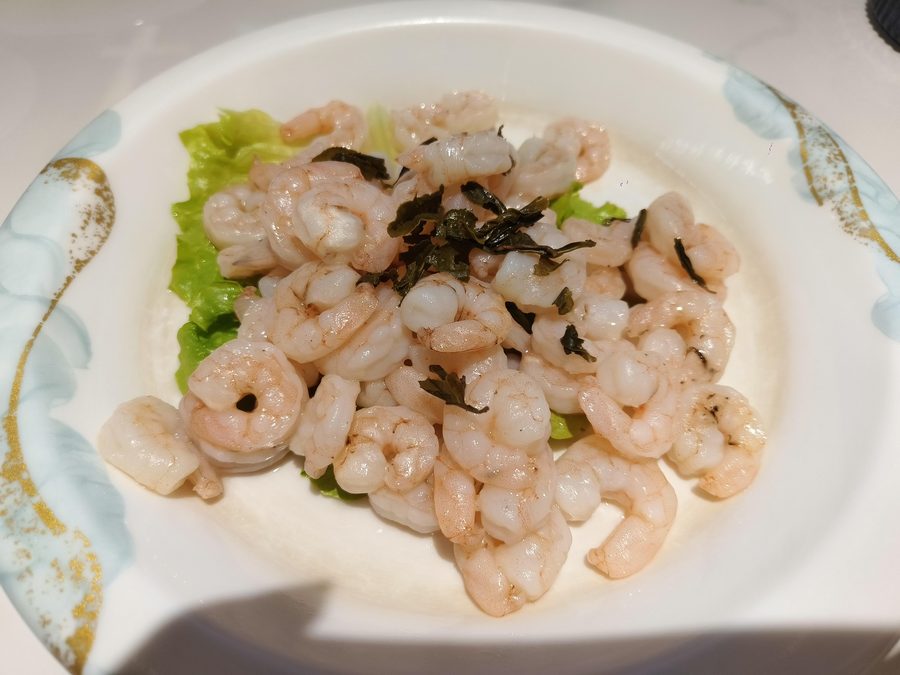
Longjing shrimp (龙井虾仁) is the most delicate of the three: fresh river shrimps, shelled by hand, stir-fried quickly with Longjing tea leaves. Good ones are pale, tender and faintly fragrant with tea; frozen shrimp makes a flat, forgettable version. On the tourist streets it is often the most expensive dish on the menu and the least impressive on the table, so I order it only in restaurants I trust. Beggar’s chicken (叫花鸡), the clay-wrapped roast chicken, is the fourth famous name, and I would not build a meal around it.
Noodles and Everyday Eating
The bowl I eat most often in Hangzhou is pian’er chuan (片儿川): wheat noodles in a clear pork broth, topped with pickled snow vegetable, bamboo shoots and slivers of pork. It is credited to Kuiyuan Guan (奎元馆), the old noodle house — the perfect Hangzhou dish: plain-looking, deeply savoury. The bamboo shoots matter: in season they are crisp and sweet, and out of season they turn woody, so a good shop will tell you when to order something else.
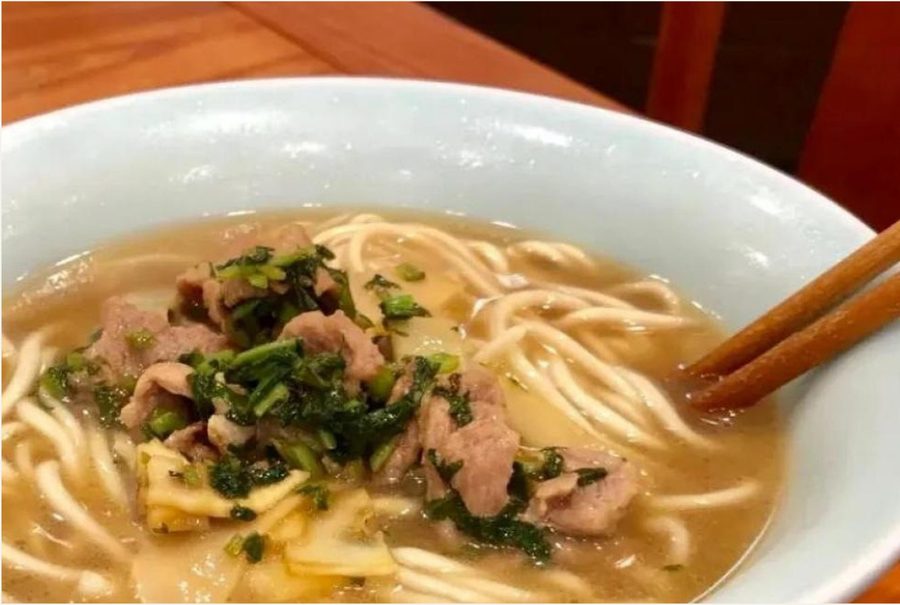
Cat’s ears (猫耳朵), little shell-shaped pasta in a light broth with shrimp and greens, are a Hangzhou original I always order. Xiaolongbao (小笼包), the soup dumplings, are done two ways here: the thin-skinned, soup-filled kind at Zhiweiguan (知味观), and the larger, softer kind at Xinfeng (新丰小吃). With the thin-skinned kind, bite a small hole in the top, drink the soup, then add the vinegar — eating one whole is how you burn your mouth. Ban chuan (拌川), the dry-tossed noodles with a rich topping, is the other noodle to know. Zhiweiguan’s main shop carries nearly the whole range of Hangzhou snacks under one roof — the easiest single stop for tasting widely.
Snacks to Eat Standing Up
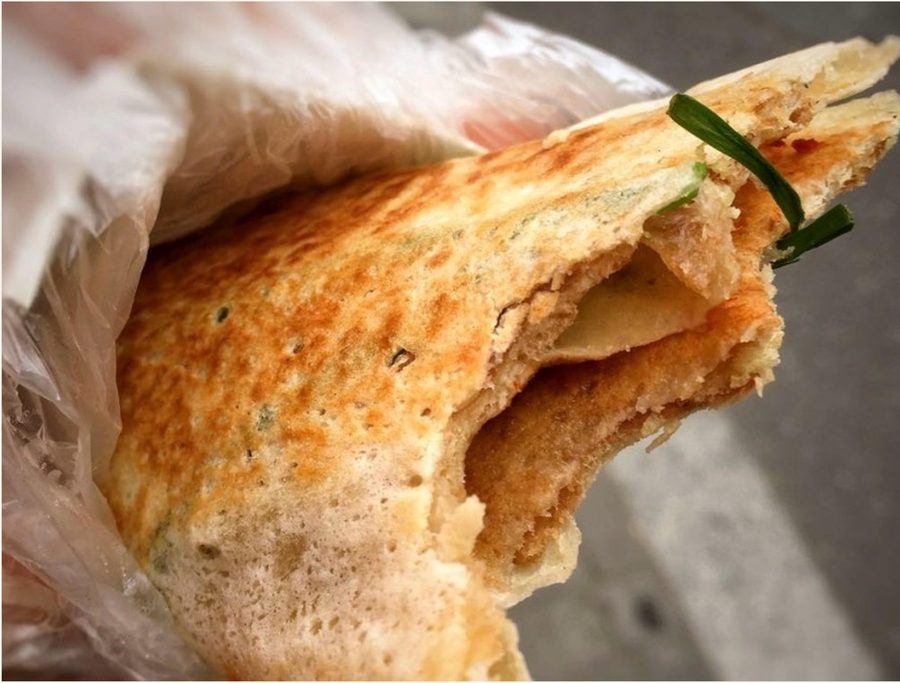
Cong bao hui (葱包烩) is the snack I dream about between visits: a thin pancake wrapped around a fried dough stick and spring onions, pressed flat on a griddle, brushed with sweet sauce. It is crisp, savoury, slightly sweet, and it must be eaten hot, standing at the stall, because once it cools the pancake softens and half the pleasure is gone.
Ding sheng gao (定胜糕) is the sweet counterpart: small pink steamed rice cakes, soft and crumbly, filled with sweet red bean paste and sometimes stamped on top. They are said to date from the Southern Song, when they were victory cakes, and are best eaten hot from the steamer, fresh from one of the old downtown shops.
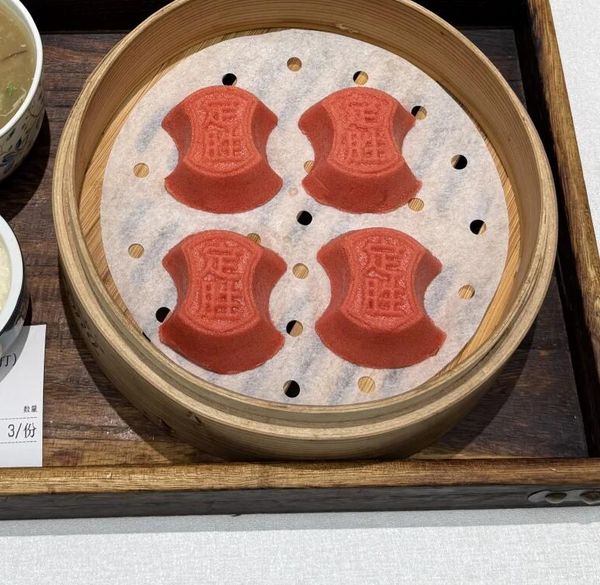
Tiaotou gao (条头糕), sweet rice rolls, and you dun’er (油墩儿), crisp fried dough balls, are old street snacks of the same family, and the osmanthus sticky-rice lotus root (桂花糯米藕), stuffed with sticky rice and dressed with osmanthus syrup, is the prettiest dessert in the city. Do your snacking on the old streets, where the stalls have done the same few things for decades.
Booking, Honestly
Hangzhou needs more advance planning than most Chinese cities, and it is almost all about reservations. The temple and the peak in the western hills need an advance reservation through the official platform — use only the official one and check the official channels for the current rules, because they change. The museums in the canal quarter mostly close on Mondays and are worth reserving ahead on weekends. The Song City show sells out and should be booked ahead if you plan to go. The island boat on the lake should not be left until late in the day. The electric boat in the wetlands is best booked through the park’s official account. Book hotels ahead for weekends and holidays. And the general rule: if someone on the street offers you a tour, a boat, incense or a bargain, walk on — every one of those offers has a shop at the end of it.
What I’d Skip
Walking the full lake loop is the first thing I’d drop from any plan. The best of the lake is in a few stretches done slowly, not the whole circuit done tiredly.
Cycling the whole circuit sounds better than it is. A short ride along the shore is pleasant, but the shared bikes have few return points near the lake, and you can end up pushing a bike you cannot return.
The cheap guided tours at the temple gates are another one to walk past. They keep you outside, talk at you and steer you into shops. The temple is better wandered alone.
Same goes for the rented audio guides at the temple gates. They belong to a private firm, not the temple, the content is thin, and the return rules are unclear.
Buying expensive tea inside the scenic areas is the costliest mistake on this list. Taste first, compare in several shops, and buy from somewhere you trust. The most expensive tea in the prettiest shop is very often the worst value in the city.
Don’t take the private boats on the lake bank. Use the official boats at the proper piers. The men on the bank sell a worse boat at a higher price.
Finally, don’t cram the canal, the wetlands and a night market into one day. Pick one, do it properly, and keep the other for the next visit.
Summary
Hangzhou is the gentlest of China’s great cities, and the easiest to get wrong by hurrying. Give the lake a full day and let it set the pace. Give the temple an early morning and the tea gardens a slow afternoon. Choose between the canal and the wetlands, and do not apologise for the one you miss. Eat one famous dish at a time, trust the noodle shops and the snack stalls, and book the things that need booking. The city has absorbed visitors for a thousand years — emperors, poets, monks, merchants, and one Venetian who could not believe his eyes — and it will absorb you too. I keep coming back, and I never run out of reasons.