
The first time I came to Xi’an, I tried to do it in two days. I got up early, ran from the Terracotta Army to the City Wall to the Muslim Quarter, and by the second evening I was sitting in my hotel room with sore feet, having seen a lot and enjoyed almost none of it. I have been back many times since, and I have learned the city’s real secret: it rewards you for slowing down. Three days is the right amount. Two will cover the big sights if you are willing to rush. Three lets you look at things properly and still have an evening free.
Xi’an was Chang’an, the capital of the Han dynasty and the Tang dynasty, and the eastern end of the Silk Road. It is often described as the capital under more dynasties than any other Chinese city, and you feel it in the width of the streets and the size of the wall. Long before the Tang, the Qin dynasty ruled from nearby, which is why the most famous sight in China sits just outside the city. Xi’an belongs on any list of the great ancient capitals, and it is still very much alive.
For a first visit, the sights cluster helpfully. The Terracotta Army and the hot-spring palace sit together out in Lintong (临潼), to the east. The old walled city holds the wall, the two towers, and the food streets. The museums and the pagoda sit in the south, and the night street glows below the pagoda. You move between three or four neighbourhoods, each filling a day. That is the plan below.
At a Glance
- How many days: Three. That is what I tell friends. Two will do it at a rush, but you will miss the evenings.
- Where to stay: I usually stay near the Bell Tower (钟楼), for transport and food, or near the Big Wild Goose Pagoda (大雁塔), for night views and evening walks. Both areas suit every budget; location matters more than brand.
- The shape of the trip: Day one inside the old city walls. Day two out in Lintong for the Terracotta Army and Huaqing Palace (华清宫). Day three around the museum and the pagoda, ending on the night street.
- Book ahead: The Terracotta Army and the Shaanxi History Museum (陕西历史博物馆) both need advance booking. I sort these out before I arrive, not after.
- Getting around: I use the metro and taxis. The old city is walkable, and the wall is best done on a bike.
- When to go: Spring and autumn are the most comfortable, in my experience. Summer is hot and crowded. Winter is cold but quieter.
- My verdict: Xi’an is the easiest city in China to love on a first trip, because the history is big and the food is honest, and everything worth seeing is close together.
Day One: The Wall, the Towers, and the Locals’ Food Street
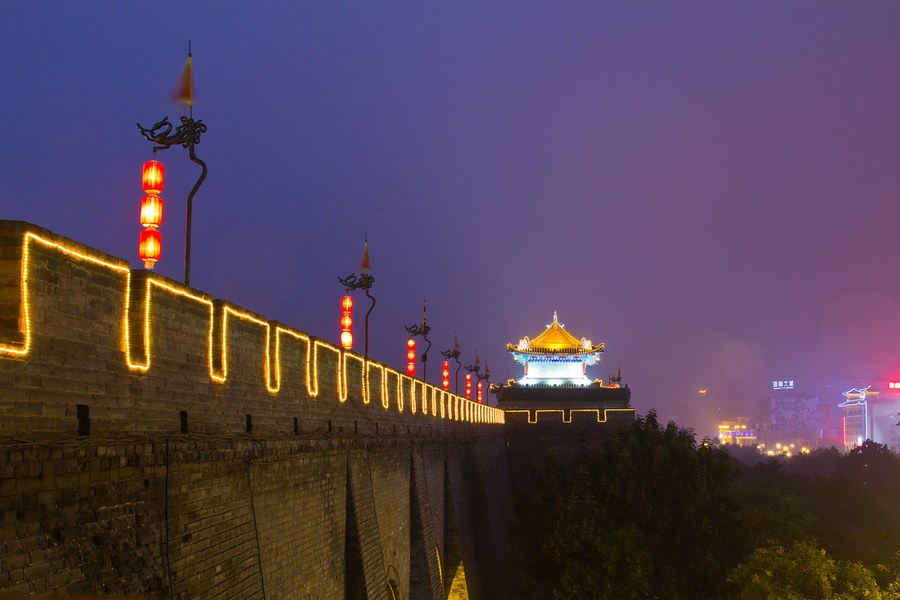
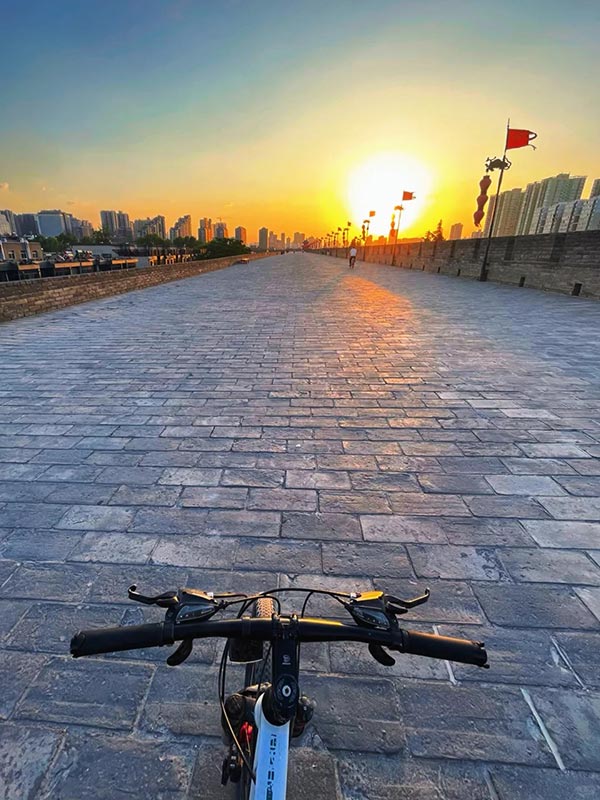
Start with the wall. It dates from the Ming dynasty, built in the 1370s on older foundations, and it runs for about 14 km around the old city. It is one of the best-preserved city walls in China, wide enough on top to cycle comfortably, which is what you should do. Cycling the full loop is 13.9 km, and it took me an hour and twenty minutes with stops for photographs. About a kilometre around Yongningmen (永宁门), the main south gate, must be walked, with bike parking at both ends. You can get on and off at any gate, and back on within your rental time, so the whole loop is optional. The rental bikes are old, and the leaning-forward riding position is hard on the lower back. Single bikes beat doubles, which are heavy and bumpy on the uneven surface. My advice: take a single bike, ride as far as you feel like, and get off when your back tells you to. From the top, you get the city’s best geography lesson: the grid of the old city on one side, the modern towers rising beyond the moat on the other.
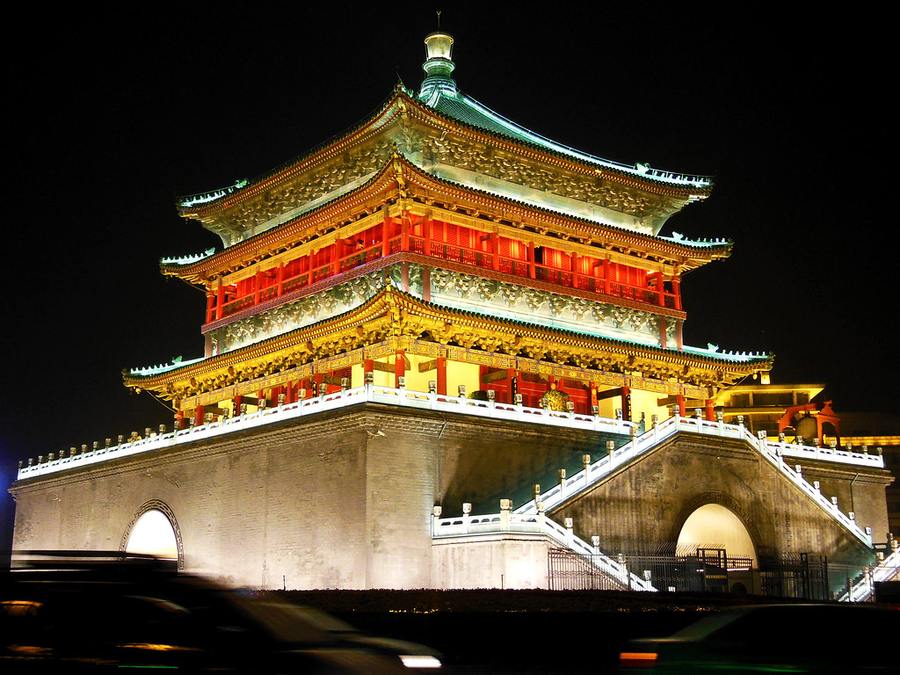
In the late afternoon, walk to the two towers in the middle of the city. The Bell Tower dates to 1384 and was moved to its present site in 1582, which still strikes me as extraordinary. The Drum Tower (鼓楼) stands just to the west. Both are at their best after dark, lit up gold and red above the traffic, and honestly the view from street level is the best one. If you want a higher angle for photographs, local guides point to the viewing platform on the fourth floor of the Kaiyuan mall (开元商城), reached through the Li-Ning sports shop on the north-west corner. That was open when I last checked, and it saves you going up the towers for a photograph.
For dinner, walk to Sajinqiao (洒金桥). This is the locals’ food street: narrow, smoky, cheap, full of neighbours rather than sightseers. Huimin Street (回民街), the Muslim Quarter, is the famous one, and you should go there too, but know the difference: Huimin Street is busier, louder, and more of a show. Sajinqiao is where you eat well without thinking about it. If you have time, the Great Mosque (清真大寺), tucked behind Huimin Street in a quiet courtyard, is worth a look: one minute a crowd, the next old trees in silence. The Stele Forest (碑林), the museum of carved stone tablets, suits calligraphy lovers; others can leave it for a second trip.
Read more: Confucius, Confucianism and Confucian Classics
Day Two: The Terracotta Army, Huaqing Palace, and an Evening Show
The Terracotta Army is the reason most people come to Xi’an, and it lives up to it — if you manage the crowds rather than letting them manage you. The figures were discovered in 1974 by farmers digging a well, and the site is the mausoleum complex of Qin Shi Huang, whose tomb building began in 246 BC. Around 8,000 life-size figures are estimated, and UNESCO listed the site in 1987. Pit 1, the long hall of infantry in formation, is the one everyone photographs — and it is extremely crowded, several deep around the viewing areas. Go in expecting that, and you will enjoy it. Go in expecting a quiet museum, and you will not.
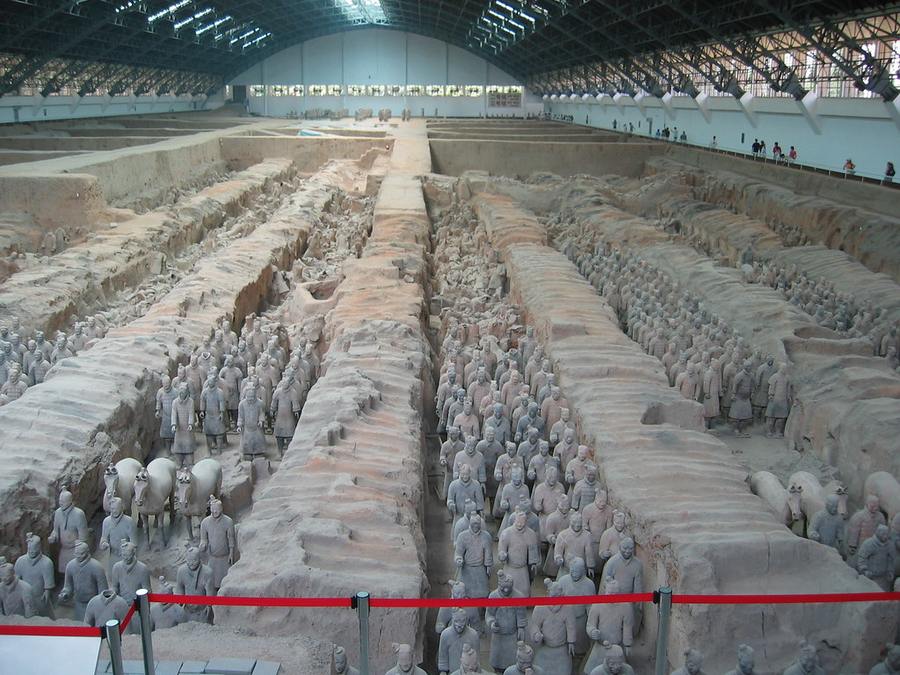
Here is the trick I wish someone had told me on my first visit: do Lishan Garden (丽山园) first, in the morning, and the Terracotta Army pits in the afternoon. Lishan Garden, the other half of the site around the tomb mound, is included in your ticket. It holds three smaller pits — acrobats, bronze chariots, civil officials — and most visitors skip it, which is a waste: the bronze chariots alone are worth the trip. A shuttle bus runs both ways between the two parts, so the order costs you nothing. If you do the pits first, try returning to Pit 1 late in the day, when the tour groups have thinned out; several travellers say it is much quieter then. Pits 2 and 3 are smaller and quieter, and worth a look on the way through. Either way, get a guide: hire one at the gate for a small fee, haggling expected, or join a group and share an official guide, which is what I do now. The pits mean little without someone explaining them.
Getting there is straightforward. Take Metro Line 9 to Qinlingxi station (秦陵西), then a short taxi ride — or a taxi from downtown. When you leave, skip the commercial street outside the exit and take a taxi from the side road: faster, and no gauntlet of souvenir stalls. Bus 613 runs two stops from the Terracotta Army to Huaqing Palace, which fills the afternoon well.
Huaqing Palace, at the foot of Mount Li (骊山), was the Tang imperial hot-springs palace. The famous story is Yang Guifei (杨贵妃), the emperor’s beloved consort, bathing in the pools — a romance from poetry and opera, not history. Enjoy it as a story. The pools are real enough, and the spring water is so clear you can see the moss on the bottom. Follow the route map, take your time; half a day is plenty. One factual note: the Xi’an Incident of December 1936, when Chiang Kai-shek was detained here, explains why this pretty palace matters to modern Chinese history.
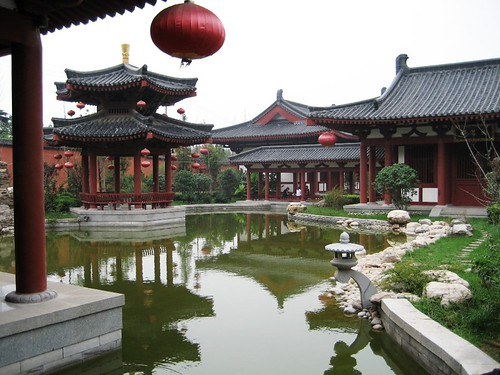
Stay out in Lintong for the evening, because the show is here too. “The Song of Everlasting Sorrow” (Changhenge, 长恨歌) is performed outdoors on Jiulong Lake (九龙湖), inside Huaqing Palace, with the palace and the mountain behind the stage. Book ahead, pick middle-section seats, and watch the first show — the advice travellers repeat most often, and it matches my experience. It is a big, romantic spectacle, and after a day of tombs and crowds it is a good way to end the day.
Day Three: The Museum, the Pagoda, and the Street That Only Wakes Up at Night
The Shaanxi History Museum is the best museum in the city, and the hardest to get into. It is free, which is part of the problem: tickets are released a few days ahead in the late afternoon, and they go fast. The booking scramble is real — I describe it honestly in the booking section below, because it catches out first-timers every week. Inside, the galleries run from prehistory through the Tang, and the Tang gold and silver and the Tang murals are my highlights — beautiful things, well displayed, in a calm building after yesterday’s crowds. If you cannot get a ticket, two fallbacks: a paid special exhibition, which includes the basic galleries, or the Xi’an Museum, which shares its grounds with the Small Wild Goose Pagoda (小雁塔) and is much easier to enter. The museum’s Qin Han branch outside the city needs no booking and takes ID entry, though it is a longer trip.
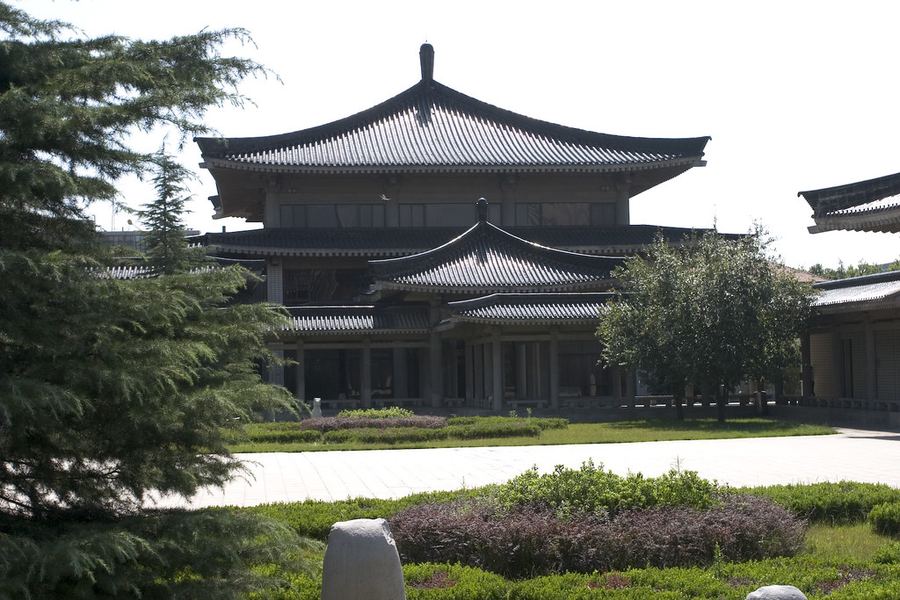
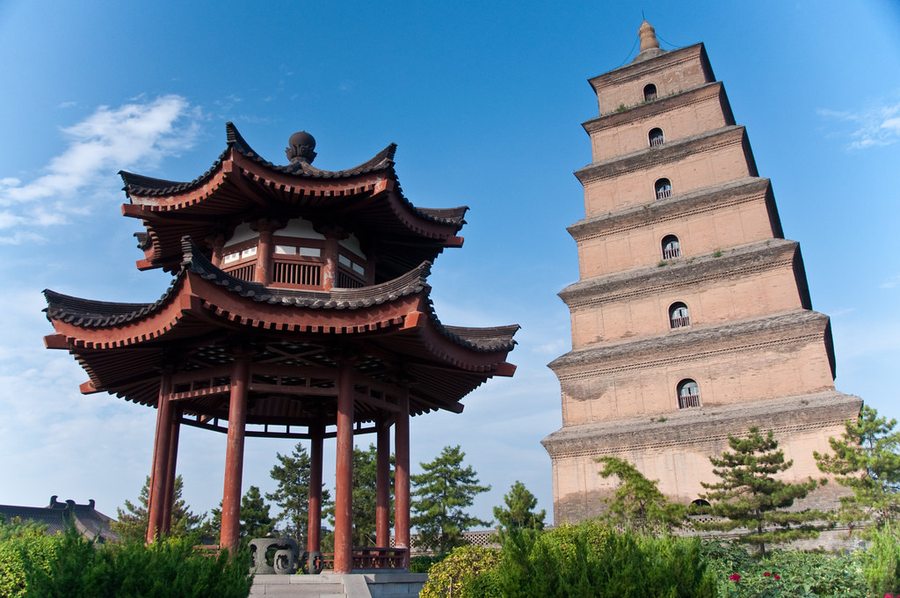
From the museum, the Big Wild Goose Pagoda is a short ride away. It was built in 652 to house the sutras that the monk Xuanzang (玄奘) brought back from India, and the present brick tower is a Tang rebuild from about 704. The pagoda is plain and solid, which is part of its charm. The North Square has the music fountain: get there early in the evening to claim a spot, because the crowds build fast and the show is short — about ten minutes of light and water with the pagoda behind it. For photographs, the red wall on the west side is the classic shot, and the south square’s Xuanzang statue photographs well in the late light. The temple around the pagoda is a working one, not a museum piece, and the courtyards are worth a slow wander.
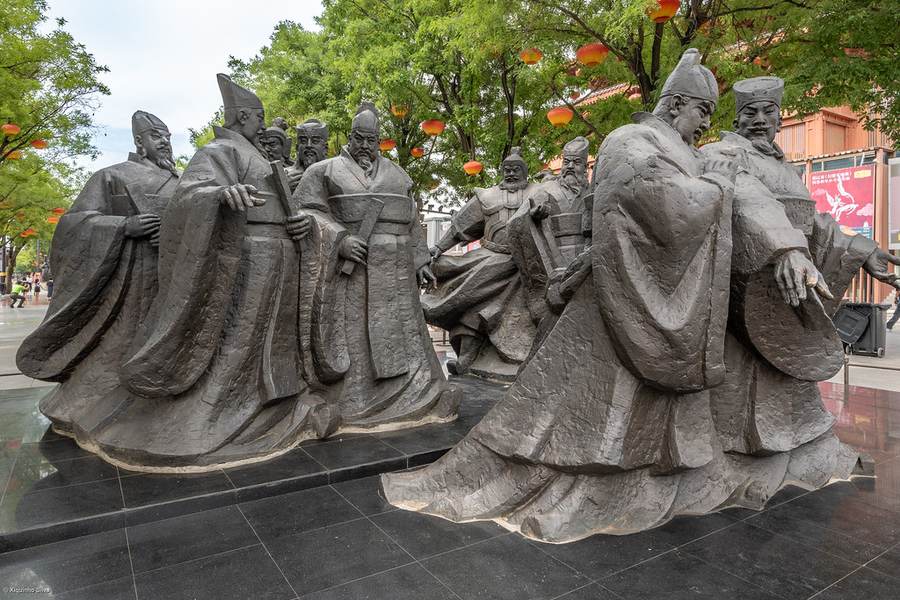
When it gets dark, walk down to Datang Everbright City (大唐不夜城), the pedestrian street below the pagoda. It is modern, Tang-themed, and it only works at night. In the daytime it has no atmosphere at all; I have seen visitors wander through at noon looking puzzled. At night it is different: lit up, crowded, full of street performances and people in hanfu having photographs taken. The performances on the street are free. One warning, and it matters: do not trust show timetables you find in other people’s guides. One traveller I read about walked to the square for a fountain show at the advertised time and found it had finished hours earlier. Check the official account for that day’s times, on the day, and treat everything else as a rough guess. Tang Paradise (大唐芙蓉园), the big Tang-style garden nearby, is a full evening in itself, so go only if you have the time and energy. One honest note: on my visits, after about ten at night there has been little to do outside the hotel, so I plan evenings around the night street, the show, and the tower views.
Read more: Ancient Chinese Gardens: History, Elements and Culture
What to Eat
Xi’an runs on wheat. Noodles, bread, dumplings: this is carb country, and it is glorious. The food here is not delicate, and it is not trying to be. It is filling, salty, spicy, and cheap, and after a day of walking it is exactly what you want. The eating is half the reason I keep coming back.
The Noodles
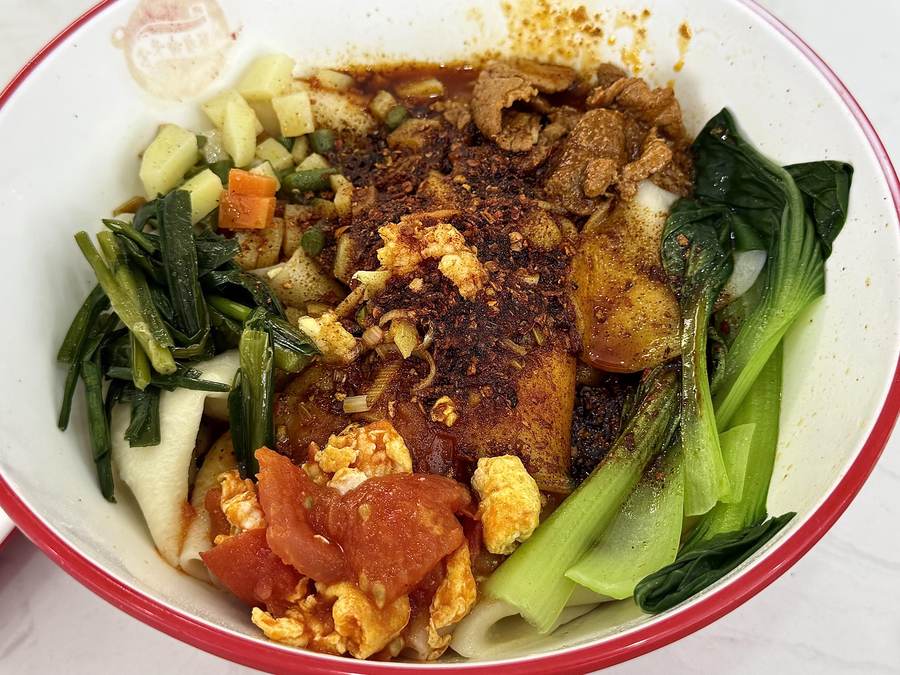
Start with biangbiang noodles, the broad hand-pulled noodles Xi’an is famous for — the written character for “biang” is famously so complicated that most people cannot write it. Then try kudaimian (裤带面), belt noodles, named for their width: I always order the “three-in-one” version, with three toppings over the noodles. And order liangpi (凉皮), cold skin noodles in chilli oil, which is spicier than it looks — if you cannot handle heat, go easy on the chilli. My usual order is the trio of a pork burger, a bowl of liangpi, and a bottle of Bingfeng (冰峰) soda, the local orange fizzy drink. It sounds like a strange combination. It works.
Meat, Bread and Soup
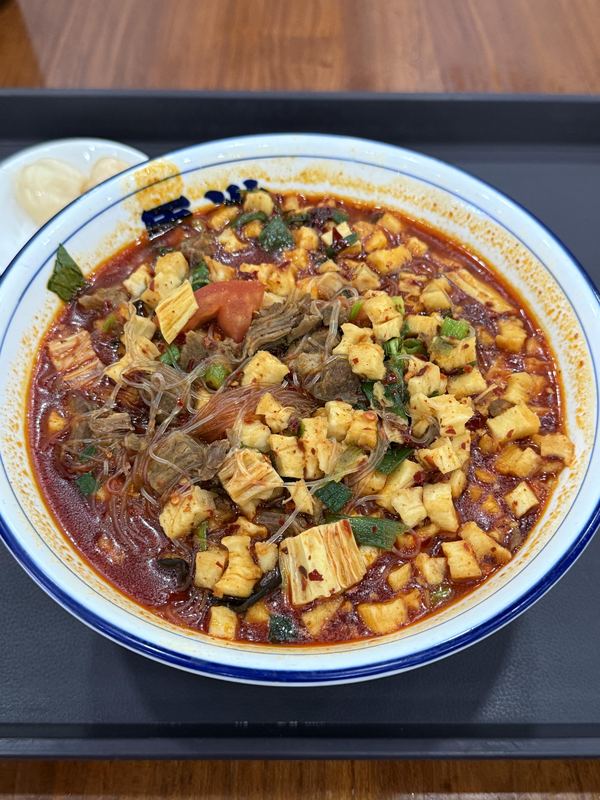
The pork burger is roujiamo (肉夹馍), slow-cooked pork in a crisp flatbread. Not all of them are equal: I find the version at Ziwu Zhangji (子午张记) on the dry side, and I prefer the crisp one at Weijia Liangpi (魏家凉皮). Then there is yangrou paomo (羊肉泡馍), lamb soup with bread you tear into pieces yourself — tear it small, the smaller the better, because the pieces soak up the soup. Eat it where locals eat: the tourist version, in my experience, disappoints. Shuipen yangrou (水盆羊肉) is a lighter lamb soup, good in cold weather, and hulu chicken (葫芦鸡), gourd-shaped fried chicken, is worth ordering when you see it. For something different, try the beef stir-fry at Ma Hong’s (马洪牛肉小炒), served with flatbread: spicy, generous, and very good.
The Two Food Streets
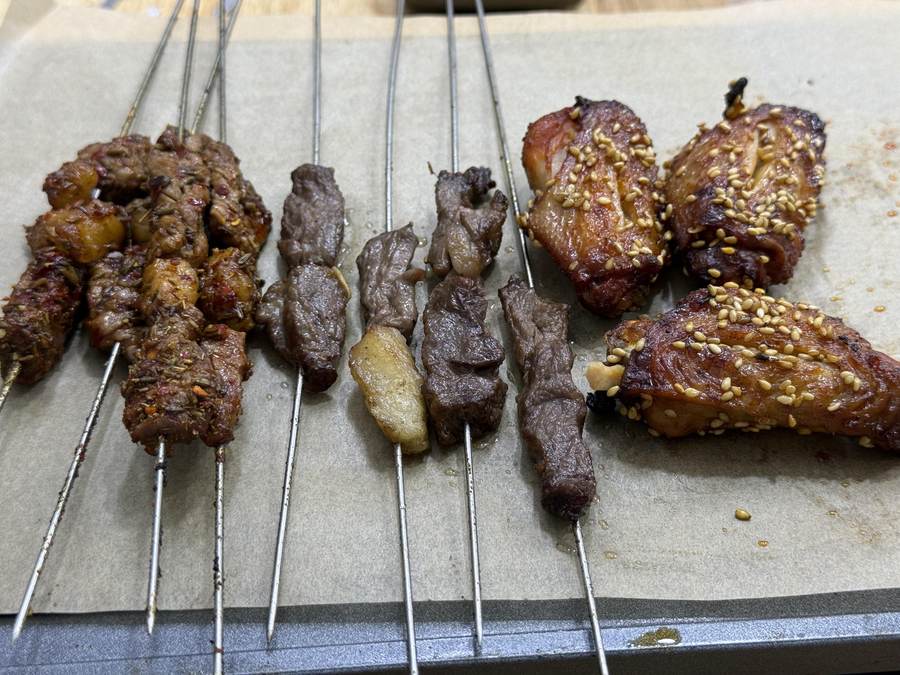
The two food streets serve different purposes, and I go to both. Sajinqiao is where I eat when I want something good and cheap without a performance attached. Huimin Street is where I go for the atmosphere: the crowds, the smoke, the stalls, the noise. It is fun, and some of the food is genuinely good, but it is built for visitors, and the queues show it. My own shortlist: I stumbled on the Feisaer kebab stall (费萨尔烤肉) on Huimin Street one evening and have gone back since; Liu Laohu’s meatball soup (刘老虎肉丸糊辣汤), a peppery breakfast soup; and Pangzi’s zenggao (胖子甑糕), steamed sticky rice cake with dates.
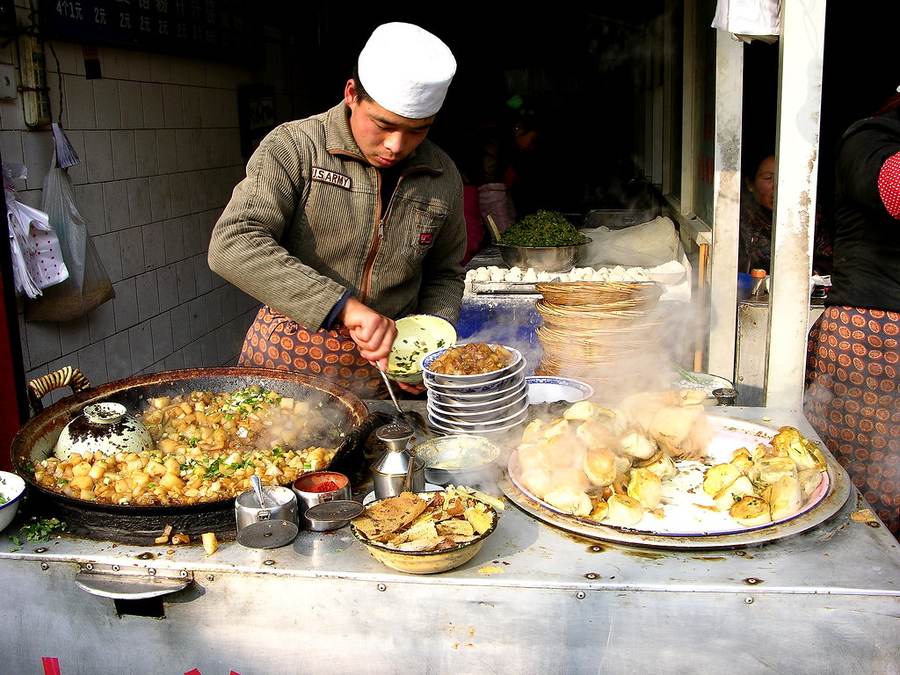
Two rules of mine, learned the hard way: skip the pomegranate juice on Huimin Street — overpriced, and often not what it seems — and do not judge yangrou paomo by the tourist version; eat it where locals eat. And do not queue for a long line just because it is long. In Xi’an, a long queue usually means a famous name, not necessarily the best bowl.
Booking, Honestly
This is the part of the trip that causes the most trouble, so I will be blunt about it. Xi’an’s big sights mostly need advance booking, and the lead times differ: the Terracotta Army a few days ahead, the history museum several days ahead, Huaqing Palace and the evening show a day ahead. The wall, the towers, and the pagoda can usually be booked on the day. Check the official channels before you travel, because this changes. Bring your passport or ID everywhere: you will need it to enter, and several places check it against your booking. Most booking goes through official accounts and mini-programs on WeChat — set it up before you leave home, not in the hotel lobby.
For the history museum: fill in your visitor details well before the release time, pick your date and time slot, and be ready when the tickets appear. If the page hangs on a “please wait” message, do not keep refreshing: travellers say that often means the booking has gone through, and waiting a few minutes is the right move. If you miss out, remember the fallbacks: the paid special exhibition, the Xi’an Museum, or the Qin Han branch. And if all of that sounds like too much trouble for a museum, I understand the feeling. It is worth the trouble. Just do not leave it to the day you arrive.
What I’d Skip
Not everything in Xi’an is worth your time, and three days is short enough that the skips matter as much as the picks. I would skip the “love tree” at Xingqing Palace (兴庆宫): it is a photograph spot and nothing else, and you will spend longer getting there than looking at it. I would skip going up the Bell and Drum Towers if all you want is photographs — the street-level view and the mall platform do the job. I would skip any guide that gives fixed show times for Datang Everbright City: they go stale fast, and too many people arrive to find the show already over. And I would skip trying to do the Terracotta Army and the city sights in a single day. People attempt it, and people regret it. The army deserves a morning, Huaqing deserves an afternoon, and the city deserves a day of its own.
Summary
Three days, three neighbourhoods, and a booking plan made before you leave home: that is the whole secret to Xi’an. The wall and the towers on day one, the Terracotta Army and Huaqing Palace on day two, the museum and the pagoda and the night street on day three, and noodles in between at every opportunity. It is a city that rewards a bit of preparation and punishes none of it. I have been coming here for years, and I still find something new each time. Start with this plan, and then go and find your own version of it. And if you only remember one thing from this guide, make it the booking: sort the Terracotta Army and the museum before you arrive, and the rest of the trip takes care of itself.