
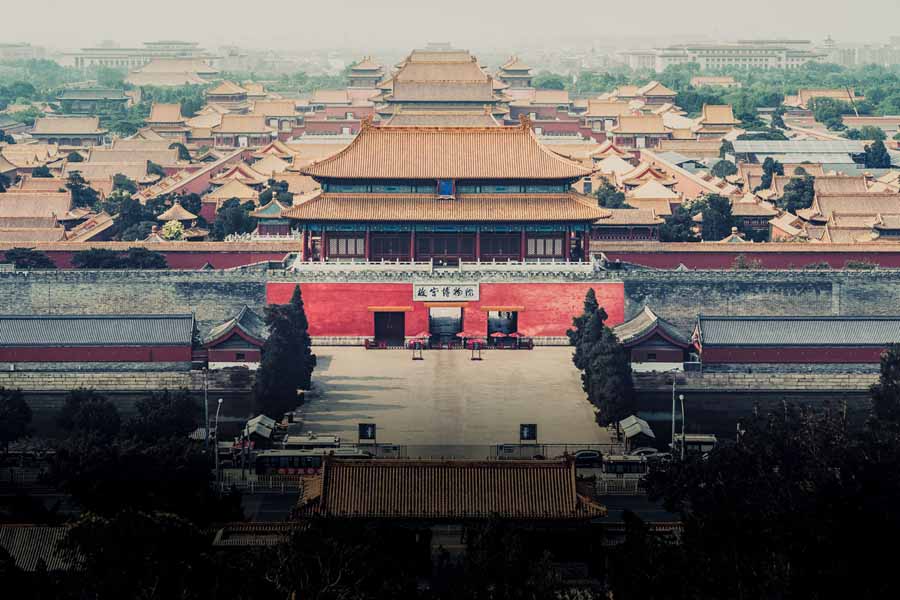
For three thousand years, almost every ruler of China claimed to hold power because Heaven had given it to him. The idea was called the Mandate of Heaven — in Chinese, Tianming (天命), literally “Heaven’s command”. The doctrine said this: Heaven grants the right to rule to a virtuous ruler and his family, but the grant is conditional, and Heaven takes it back from a ruler who governs badly. A dynasty rose because it held the Mandate; it fell because it had lost it.
The Mandate was the unwritten constitution of imperial China. It explained why dynasties rose and fell, gave rebels a language to justify rebellion, and gave officials a language to criticise their emperor. It made the emperor powerful — and insecure, since every flood, earthquake and failed harvest could be read as Heaven’s displeasure.
The same word, Heaven, also covered a personal idea: that each person’s fortune was fixed by Heaven. That is the traditional Chinese view of fate, a different topic, about ordinary lives. This article is about the other, political meaning of Heaven’s will: the licence to rule an empire, who held it, how it was lost, and why it ended.
Key Facts
- Chinese name: Tianming, “Heaven’s command” — the Mandate of Heaven.
- First articulated: Western Zhou, after the conquest of Shang, c. 1046 BC.
- Core claim: Heaven grants the right to rule to a virtuous ruler; misrule loses it.
- Signs of loss: omens — flood, drought, earthquake, eclipse, comet — and, finally, rebellion.
- The ruler’s title: Son of Heaven, the only person who could sacrifice to Heaven.
- Earliest source: the Book of Documents (Shangshu, 尚书), preserving early Zhou proclamations.
- Greatest ritual stage: the Temple of Heaven, Beijing, built 1420.
- End: abdication of the last emperor, 1912; a restoration attempt in 1915–16 failed within months.
The Invention of the Mandate
The Mandate was not a timeless Chinese belief. It was invented, at a particular moment, for a particular purpose. Around 1046 BC, the Zhou dynasty, a western power, defeated the Shang dynasty at the Battle of Muye (牧野) and took its territory. The Zhou faced an awkward question: the Shang kings had ruled for centuries by descent from royal ancestors. By what right did newcomers replace them? The answer was the Mandate of Heaven.
The doctrine was worked out by the Duke of Zhou (Zhou Gong, 周公), the founder’s younger brother, who governed as regent for King Wu’s young son. In proclamations preserved in the Book of Documents, the Duke argued that Shang had once held Heaven’s favour, but its last king, Di Xin (帝辛), had thrown it away through cruelty, drunkenness and neglect of the sacrifices — the tyrant portrait is the Zhou account, written by the winners. Heaven had therefore passed its command to the virtuous founders of Zhou. The Book of Documents puts it in one famous line: “Heaven’s mandate is not constant” — it does not stay for ever with one family.
The Shang kings had worshipped Shangdi (上帝), a supreme power above the royal ancestors, and consulted the ancestors through oracle-bone divination. Their authority came from bloodline. The Zhou kept the old language of Heaven but changed its meaning: Heaven was no longer a family god favouring one bloodline, but a moral power whose favour depended on conduct — care for the people, honest government, proper ritual — rather than ancestry alone. Later ages read the Mandate back onto the sage-kings of legend, but as a doctrine it was Zhou work, not Shang or Xia belief.
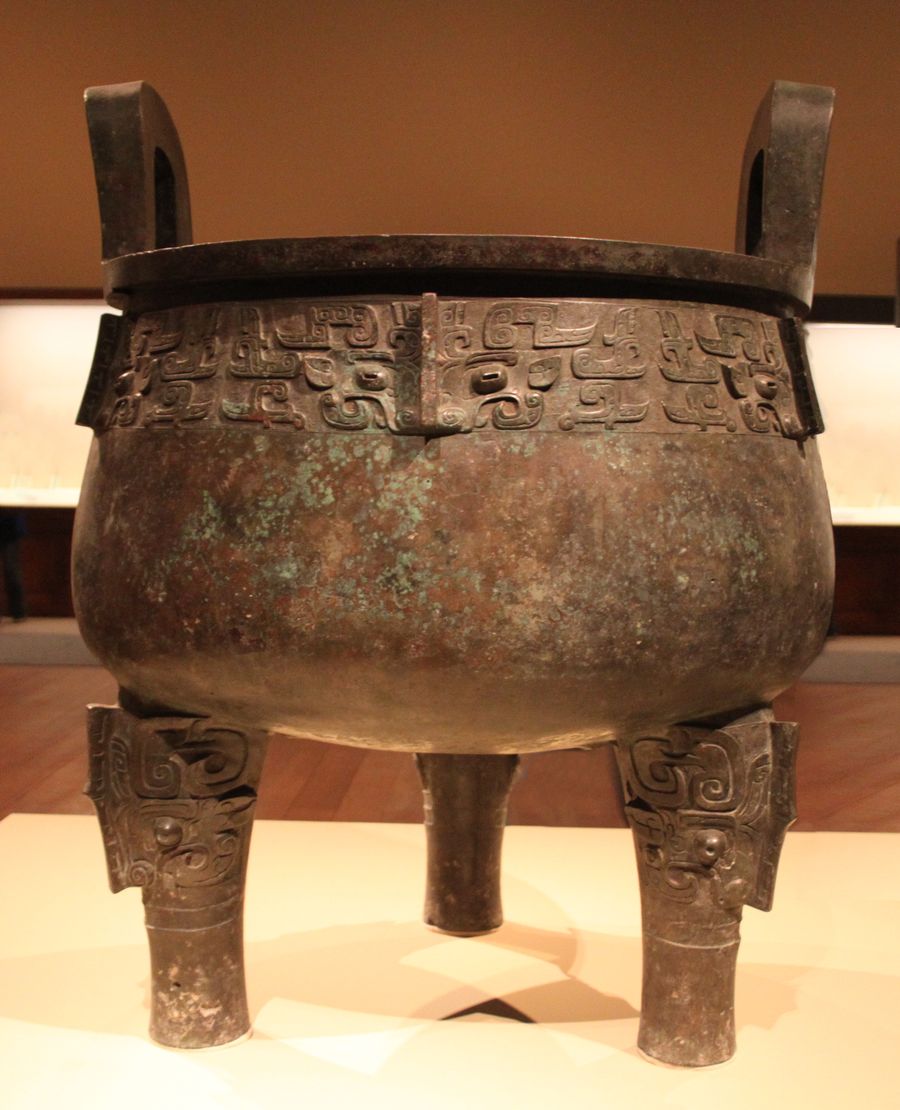
The doctrine also survives in bronze: Western Zhou ritual vessels carry inscriptions recalling how Heaven gave the command to the Zhou founders. The most famous is the Da Yu ding (大盂鼎), a massive bronze cauldron cast in the reign of King Kang, whose inscription of nearly three hundred characters is one of the earliest surviving statements of the Mandate idea in the Zhou’s own words.
How the Mandate Worked
Heaven’s favour could not be seen directly, so it had to be read from signs. A good reign showed itself in peace and good harvests; a bad reign announced itself through warnings. Floods, droughts, earthquakes, famines, eclipses and comets were read as Heaven’s reproofs — not random misfortunes, but messages. The expected response was public: self-blame, tax cuts, and the dismissal of corrupt officials. If the disasters stopped, Heaven was satisfied. If they went on and rebellions spread, the conclusion was drawn: the Mandate was lost.
The doctrine had a built-in circularity, and everyone could see it. Success proved the Mandate, and the Mandate explained success. A rebel who won had evidently received Heaven’s command; a rebel who lost had evidently not. Victory was the evidence. It could justify almost any change of dynasty after the event, whilst still setting a real standard before it.
The result was the dynastic cycle, the rhythm of Chinese history-writing. A virtuous founder claimed the Mandate and restored order; a golden age followed; then the court grew corrupt, taxes rose and the omens multiplied; rebellion spread; and a new founder arose to claim that the Mandate had moved. Each dynasty’s official history was written by its successor, which gave the new house every reason to call the old one’s fall Heaven’s verdict.
The Philosophers’ Mandate
Confucius (551–479 BC) taught reverence for the Mandate. “The gentleman stands in awe of the Mandate of Heaven,” says the Analects, and for Confucius the ruler must govern by virtue and ritual, not by force alone. A ruler who cultivated his character would win the people’s hearts without coercion; one who relied on punishments and fear had already failed Heaven’s test.
The most radical development came from Mencius (Mengzi, 孟子, c. 372–289 BC). Quoting the Book of Documents, he declared: “Heaven sees as the people see; Heaven hears as the people hear.” The people’s welfare was the measure of the Mandate: “The people are the most important, the altars of soil and grain next, the ruler least.” A ruler who harmed the people was a “mere fellow” who might be removed. When the founders of Shang and Zhou overthrew the tyrants Jie (桀) and Di Xin, Mencius argued, they were removing men who had already ceased to be rulers, not murdering their kings.
Dong Zhongshu (董仲舒, c. 179–104 BC), a scholar at the court of Emperor Wu of Han, systematised the doctrine for the empire. He taught that Heaven and the human world moved in constant resonance — the resonance between Heaven and humanity (Tianren Ganying, 天人感应) — so that disasters were Heaven’s reproofs, aimed at the emperor’s conduct. Officials read omens as criticisms of policy, and emperors issued edicts of self-blame after earthquakes and floods. The system cut both ways: it gave critics a safe language, but also gave emperors a reason to control what each eclipse meant.
Read more: Confucius, Confucianism and Confucian Classics
The Emperor and Heaven
The emperor’s formal title was Son of Heaven (Tianzi, 天子): Heaven’s son on earth, the one link between Heaven and humanity, and the only person permitted to worship Heaven directly. His sacrifices were acts of state, on which the harvest depended. To perform them correctly was to show the Mandate secure.
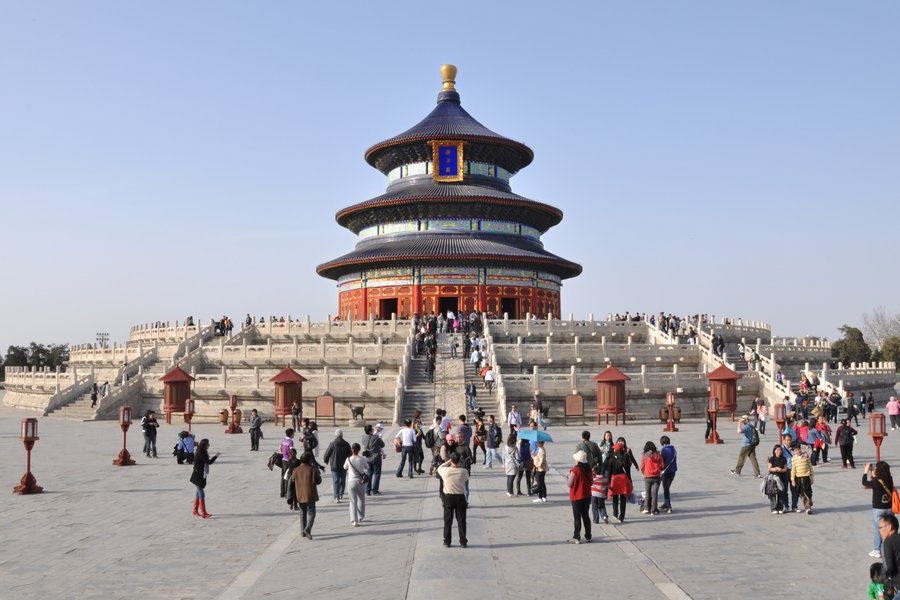
The grandest stage for the rite was the Temple of Heaven (Tiantan, 天坛) in Beijing, built in 1420 on the orders of the Yongle (永乐) Emperor, the ruler who moved the capital from Nanjing to Beijing. Each year the emperor came in procession: at the winter solstice he sacrificed to Heaven, and in the spring he prayed for grain in the Hall of Prayer for Good Harvests, the round, triple-roofed hall that has become the symbol of Beijing.
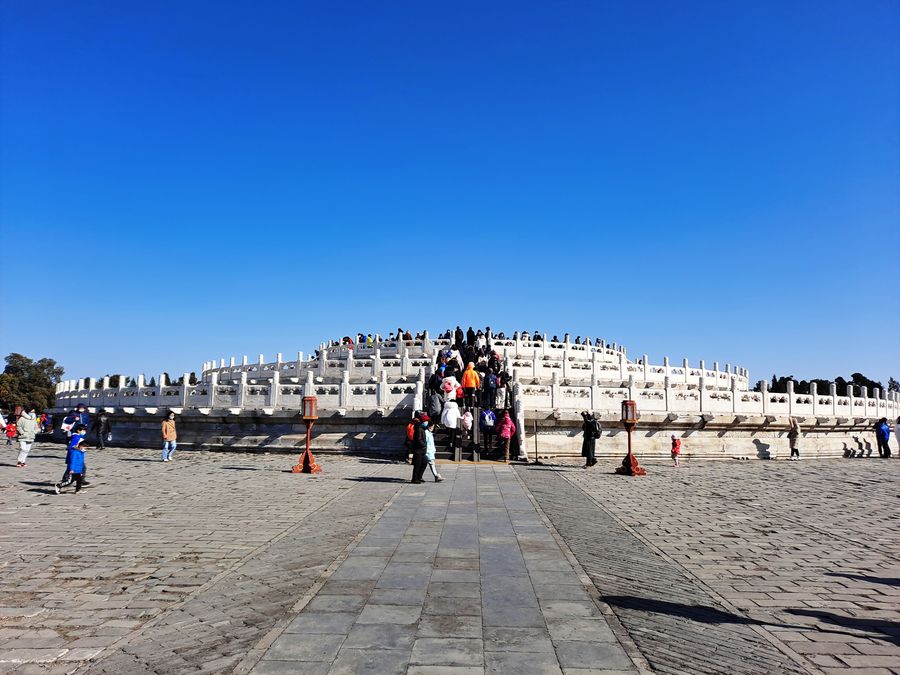
The sacrifice itself was performed at the Circular Mound Altar, an open-air terrace of white marble in three tiers, whose round shape stood for Heaven itself. There, before dawn on the solstice, the emperor offered a bullock, jade and silk to Heaven, with no image or statue of any god. Ordinary people were forbidden to enter the grounds; the rite belonged to the emperor alone.
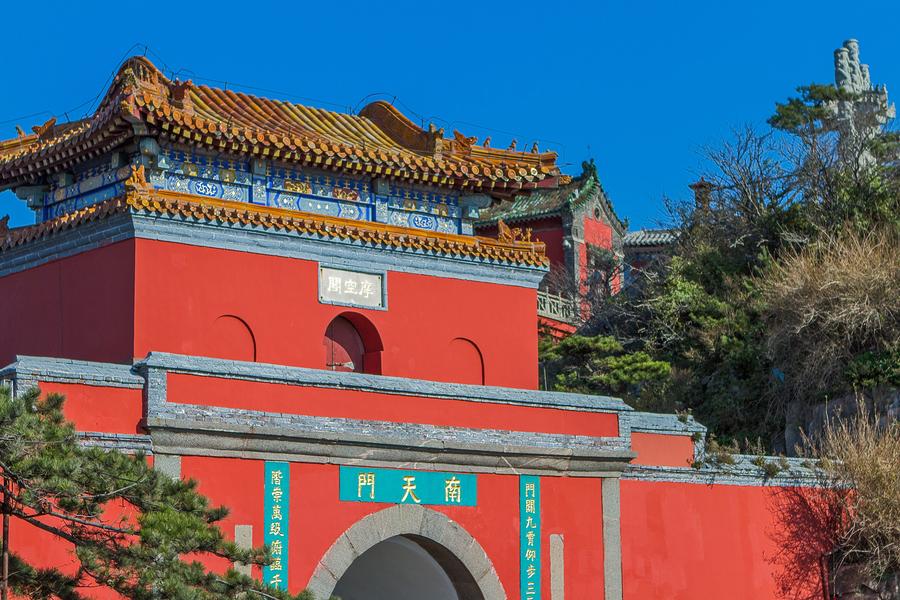
The most spectacular form of the rite took place far from the capital, on Mount Tai (Taishan, 泰山), the sacred mountain in what is now Shandong (山东). Emperors confident their reigns were great climbed the mountain to perform the Fengshan (封禅) sacrifices — the Feng on the summit, announcing their achievements to Heaven, and the Shan at its foot, honouring Earth. The rite was rare, since performing it claimed the empire at peace and the Mandate secure. Qin Shi Huang, the First Emperor of the Qin dynasty, and Emperor Wu of the Han dynasty, both performed the sacrifices, and their climbs were recorded as proof of Heaven’s favour.
The Mandate in Action
The doctrine was used at every change of dynasty, and the pattern barely varied. The founders of the Tang dynasty presented the Sui as a house that had lost the Mandate: Emperor Yang had exhausted the empire with great building works, failed campaigns in Korea and heavy taxes, until rebellion spread across the country. The Tang founders claimed Heaven had passed its command to them; Tang historians made Emperor Yang a byword for extravagance and folly.
The Song founder took the throne from a child emperor in 960 and presented it as a peaceful passing of the Mandate: the boy yielded his place in a formal abdication, and Heaven’s command moved without bloodshed — or so the official story ran.
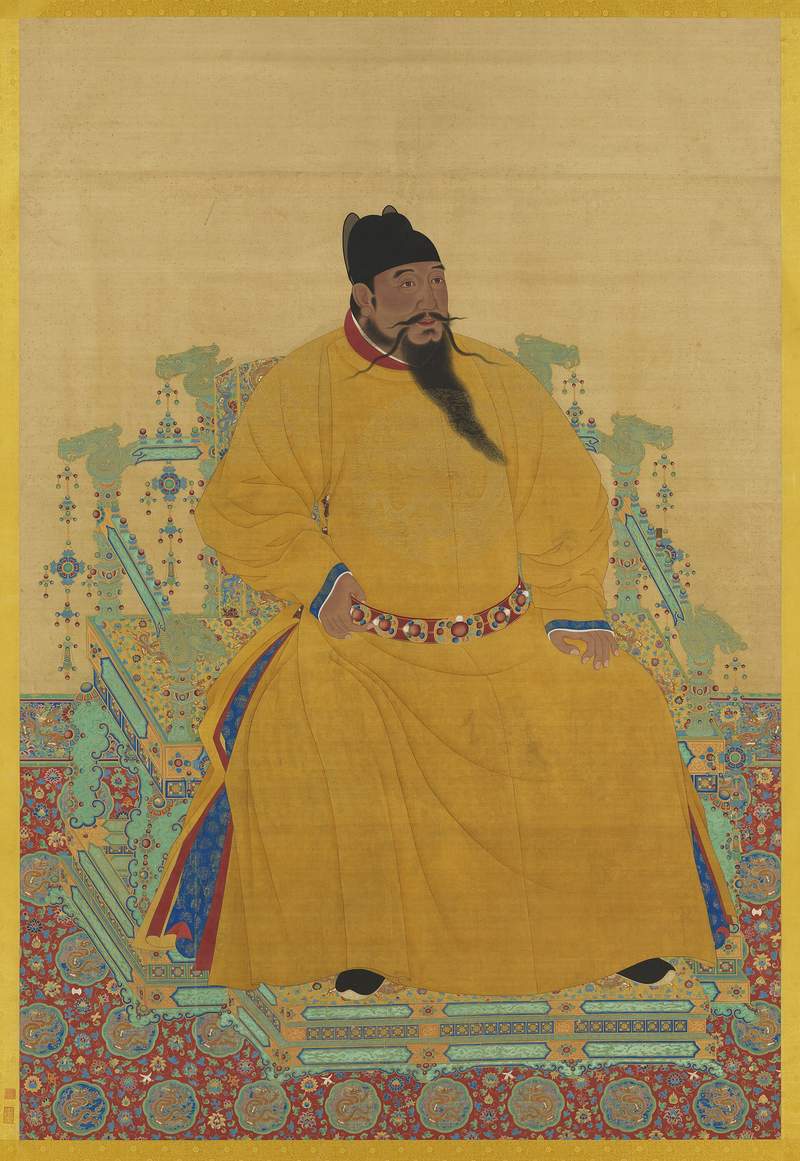
The founder of the Ming dynasty, Zhu Yuanzhang (朱元璋), had risen from peasant rebel to emperor, and his claim needed the Mandate more than most: the Mongol Yuan, he said, had lost Heaven’s favour through misrule, and Heaven had chosen a man of the people to restore Chinese rule. His son, the Yongle Emperor, seized the throne from his nephew in 1402, and proved Heaven approved by moving the capital to Beijing and building the Temple of Heaven there.
The Manchu conquerors who founded the Qing dynasty faced the same problem in reverse: foreign rulers claiming Heaven’s command over China. They answered it by adopting the doctrine wholeheartedly — performing the sacrifices to Heaven, honouring Confucius, and presenting the Ming as a house that had lost the Mandate through corruption and rebellion. The Mandate, it turned out, did not require a Chinese holder, only a virtuous one.
The language of the Mandate could also be turned against a dynasty. In the 1850s, Hong Xiuquan (洪秀全), a failed examination candidate who believed himself the younger brother of Jesus Christ, proclaimed the Taiping Heavenly Kingdom (Taiping Tianguo, 太平天国) and raised a rebellion that nearly toppled the Qing. His “Heavenly Kingdom” filled the old vocabulary of Heaven’s command with a Christian message; the rebellion was crushed in 1864, but it showed the Mandate’s language belonged to whoever could claim it.
Read more: The Song Dynasty
The End of the Mandate
The Mandate ended with the empire that had carried it. The revolution of 1911 overthrew the Qing, and in February 1912 the last emperor, Puyi (溥仪), a child of six, abdicated. With no emperor, there was no Son of Heaven, and the Mandate had no holder. The Temple of Heaven fell silent as a place of imperial ritual; no emperor ever performed the sacrifices again.
One man tried to bring the old order back. Yuan Shikai (袁世凯), the general who had forced the abdication and become the republic’s first president, proclaimed himself emperor in December 1915. It collapsed within months: provinces declared independence, his generals deserted him, and he abandoned the throne in March 1916, dying soon after. The Mandate, as a working belief, was dead: the idea that Heaven chose rulers no longer commanded faith.
Yet something of the doctrine survived its own ending. Stripped of its talk of Heaven and omens, the Mandate carried a stubborn expectation: that rulers exist to serve the people’s welfare, that misrule forfeits the right to rule, and that the governed may judge their governors by results. That expectation, in new language, outlived the empire.
Mandate of Heaven vs Divine Right
Readers often compare the Mandate with the European doctrine of the divine right of kings — mostly for the differences. Divine right, as preached in seventeenth-century Europe, held that a king ruled by God’s will and answered to God alone; his subjects had no right to resist him, whatever he did. The Mandate held the opposite on the crucial point: Heaven’s grant was conditional. A bad king lost it, and rebellion against him was not a sin but Heaven’s judgement, carried out by human hands.
The comparison should not be pushed too far. European kings also faced limits — law, custom, church and parliament — and Chinese emperors were not easily removed: the Mandate justified rebellion after the event far more often than it caused it. But the theories pointed in different directions. One told subjects to endure; the other told rulers to beware.
One last distinction: the Mandate is sometimes confused with the Chinese idea of personal fate — the belief that each person’s fortune, health and length of life are fixed by Heaven. The two share the same word, Heaven, and the same sense that human life stands under a higher power. But they answer different questions. Personal fate asks what will happen to me; the Mandate asks who has the right to rule. This article has been about the second question.
Read more: What Are The Traditional Chinese Views of Fate?
Summary
The Mandate of Heaven began as a piece of Zhou propaganda: a justification for replacing one dynasty with another. It grew into the central idea of Chinese politics: a conditional licence to rule, granted to the virtuous and withdrawn from the corrupt, read in omens and proved in rebellion. For nearly three thousand years, from the Zhou conquest of Shang to the abdication of the last emperor, it decided who could rule China and why.
Its ending was quiet. No one abolished it; belief simply faded, and with the empire gone, no one was left to hold it. What remains is the idea at its heart: that power is held on trust, that it must be earned by serving the people, and that it can always be lost. Few political ideas in world history have lasted so long, or shaped so many lives.