
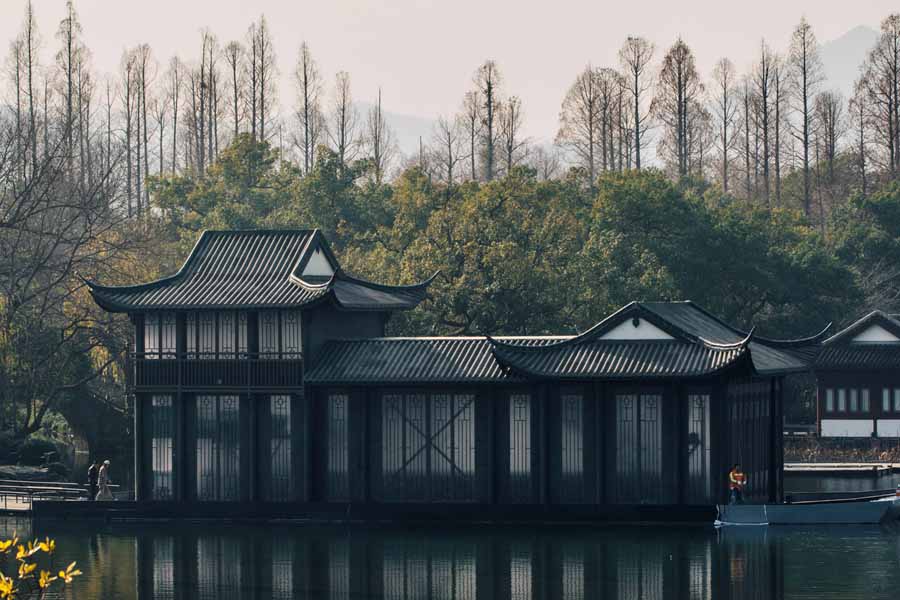
The Zhou dynasty (1046 – 256 BC) lasted about 790 years, longer than any other dynasty in Chinese history. It followed the Shang dynasty (c. 1600 – 1046 BC), and although the Zhou royal line came to an end in 256 BC, it was the Qin dynasty (221 – 207 BC) that finally unified China thirty-five years later, in 221 BC.
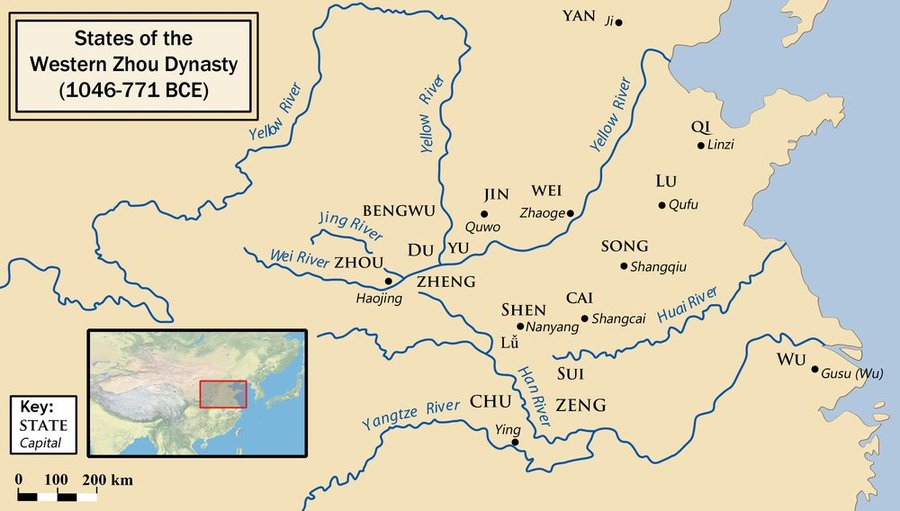
The Zhou dynasty is divided into two distinct periods – the Western Zhou and the Eastern Zhou. During the Western Zhou period (1046 – 771 BC), the capital was at Haojing (镐京), near modern Xi’an. In 770 BC the capital was moved east to Luoyi (洛邑, modern Luoyang), beginning the Eastern Zhou period (770 – 256 BC). The Eastern Zhou is itself divided into the Spring and Autumn period (770 – 476 BC) and the Warring States period (475 – 221 BC), although the Zhou dynasty itself ended in 256 BC, before the Warring States period was over.
The Zhou rulers were kings, not emperors – the imperial title was only created centuries later, by the First Emperor of Qin. The Zhou king was known as the Son of Heaven, and he ruled, in theory, by the Mandate of Heaven: the idea that Heaven grants the right to rule to a virtuous king, and takes it away from a corrupt one. Its ideas – the Mandate of Heaven, the fengjian (封建) system of enfeoffment, and the ritual order known as li (礼) – shaped Chinese government and thought for the next 3,000 years.
Key Facts
- Dynasty dates: 1046 – 256 BC.
- Preceding dynasty: Shang, c. 1600 – 1046 BC.
- Subsequent dynasty: Qin, 221 – 207 BC (the Zhou dynasty ended in 256 BC, thirty-five years before Qin unified China in 221 BC).
- First Zhou king: Wu (周武王), reigning from 1046 BC to 1043 BC.
- Total number of Zhou kings: 37, made up of 12 kings of the Western Zhou and 25 kings of the Eastern Zhou.
- Longest Zhou king reign: Nan (周赧王), fifty-nine years, reigning from 314 to 256 BC – the longest reign in pre-imperial China.
- Final King: Nan, reigning from 314 to 256 BC. Unusually, the final Zhou king and the longest-reigning Zhou king were the same man.
The Founding of the Zhou Dynasty
The Zhou were originally a people living in the Wei River (渭河) valley, in the west of the Shang world, whose leaders had long served as vassals of the Shang kings. Under Ji Chang (姬昌), later honoured as King Wen (周文王), the Zhou grew steadily stronger. Wen built alliances with neighbouring peoples and prepared the ground for a challenge to Shang power. However, he died in around 1050 BC, before the conquest could be attempted, and the task was left to his son, Ji Fa (姬发).
In 1046 BC Ji Fa, known to history as King Wu, marched east against the last Shang king, Di Xin (帝辛). Wu was advised by the strategist Jiang Ziya (姜子牙), and, according to the traditional account, his army numbered some 45,000 men and 300 chariots. At the Battle of Muye (牧野) the Shang forces were decisively defeated, Di Xin died, and his dynasty came to an end.
To justify the overthrow of the Shang, the Zhou put forward a powerful new idea – the Mandate of Heaven. The Shang kings, they argued, had lost the right to rule through their cruelty and misgovernment, and Heaven had transferred its mandate to the virtuous Zhou. This idea became the central political theory of Chinese civilisation, used by every later dynasty to justify its own rise to power.
The Zhou Dynasty Founder and First King – Wu
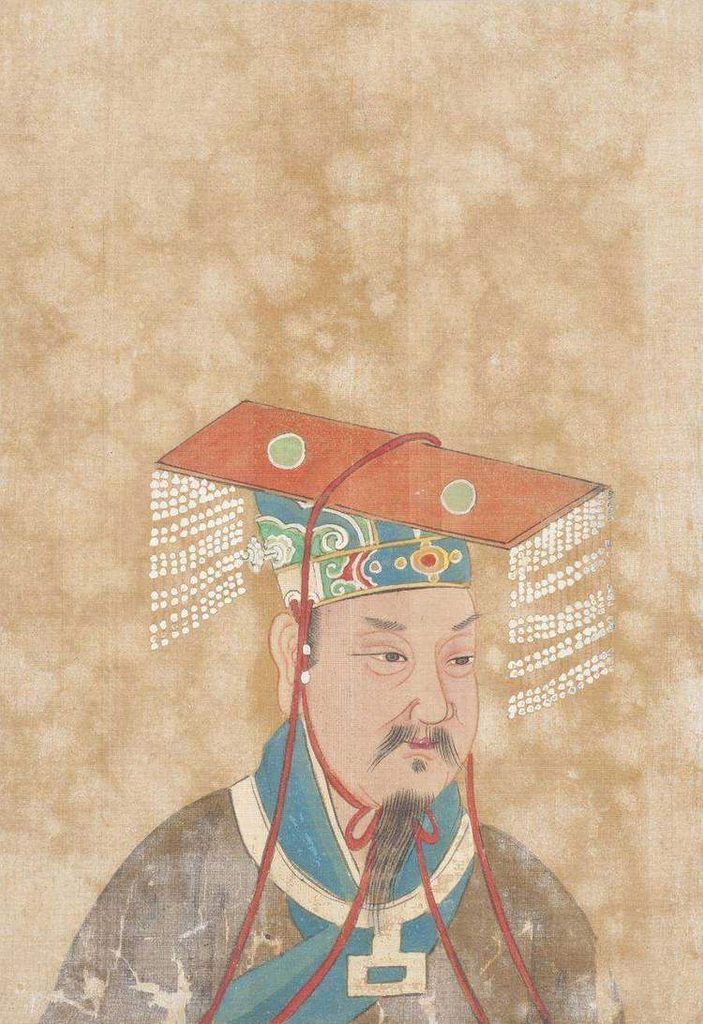
King Wu (died in 1043 BC) was born Ji Fa, the son of Ji Chang, King Wen. He reigned as the first king of the Zhou dynasty from 1046 BC to 1043 BC. Wu completed the work his father had prepared, but the lands he had won were far larger than the territory the Zhou could rule directly.
His solution was the fengjian system of enfeoffment, the foundation of how ancient China’s government was run in this early age. The king granted lands to his relatives, his allies, and the descendants of earlier rulers, and in return these lords owed him loyalty, military support, and tribute. Dozens of small states were created in this way, each ruled by a lord bound to the Zhou king by blood, by marriage, or by gratitude.
King Wu died only a few years after his victory, in 1043 BC, leaving the throne to his young son, King Cheng (周成王). Wu’s younger brother, Ji Dan (姬旦), known as the Duke of Zhou, then became regent. When three of Wu’s other brothers joined the surviving Shang prince in the Rebellion of the Three Guards against the young king, the Duke crushed the revolt and secured the dynasty. He also founded the eastern capital of Chengzhou (成周), at Luoyi, to control the newly conquered east. Tradition credits the Duke with creating the system of rites and music, and with the rituals and laws that ordered Zhou society, and with setting out the theory of the Mandate of Heaven in its classic form.
Read more: Top 10 Capital Cities of Ancient China
The Zhou Dynasty at its Height – The Cheng–Kang Era
The reigns of King Cheng and his son, King Kang (周康王), in the decades after the conquest, are remembered as a golden age of peace and good government. The enfeoffed states were still loyal, and Zhou power reached across the North China Plain.
Underpinning this society was the well-field system, the Zhou ideal of how land was held in ancient China. In theory, all land belonged to the king, who granted it to the lords to share out among farming families. In the well-field arrangement, eight families each farmed their own plot and joined together to farm a ninth, central plot for their lord. Whether or not this neat system was ever fully carried out, it expresses the Zhou ideal of an ordered world in which everyone had a fixed place and duties.
Not everything in the Western Zhou was peaceful. In 841 BC the people of the capital rose in revolt against the harsh King Li (周厉王) and drove him into exile. During the period known as the Gonghe Regency (共和), senior nobles governed jointly until Li’s son could be placed on the throne. The year 841 BC is also the first year in traditional Chinese chronology that can be dated exactly and reliably.
Li’s son, King Xuan (周宣王), who reigned from 827 to 782 BC, worked hard to restore royal power, but the revival did not outlast him. Under his son, King You (周幽王), the Western Zhou moved rapidly towards disaster.
The Eastern Zhou – Hegemons and Warring States
King You favoured his consort Bao Si (褒姒) and deposed his crown prince in favour of her son. A famous traditional story tells how You repeatedly lit the beacon fires that summoned the lords to defend the capital, just to make Bao Si laugh, so that when a real attack came, nobody came. This beacon-fire story is a much-loved legend rather than established fact, but the disaster that followed was real enough. In 771 BC the Marquis of Shen (申), father of the deposed crown prince, allied himself with the Quanrong (犬戎) and attacked the capital. Haojing was sacked and King You was killed. In 770 BC his son, King Ping (周平王), moved the capital east to Luoyi, and the Eastern Zhou began.
The move east saved the dynasty, but greatly weakened it. The royal domain around Luoyi was small, and the Zhou kings slowly lost real power to the lords of the enfeoffed states, although they were still respected as Sons of Heaven. During the Spring and Autumn period, the strongest lords took the title of Hegemon and claimed to lead and protect the other states in the king’s name. Five Hegemons are traditionally remembered from this period, beginning with Duke Huan of Qi (齐桓公). In reality, the states fought hundreds of small wars and swallowed their smaller neighbours.
By the start of the Warring States period in 475 BC, only a handful of great powers remained. Seven Warring States dominated China: Qin (秦) in the west, Chu (楚) in the south, Qi (齐) in the east, Yan (燕) in the north-east, and Han (韩), Wei (魏), and Zhao (赵) in the centre. It was in this later period, not in the early Zhou, that iron tools spread through farming and warfare, that states issued their own metal coinage, and that cavalry became an important arm of war. The Zhou king still reigned at Luoyi, but he was now little more than a spectator whilst the great states fought for mastery of China.
Art and Culture During the Zhou Dynasty
The most famous products of Zhou culture are its ritual bronze vessels. These great cauldrons (ding, 鼎), food vessels, and wine vessels, cast for use in sacrifices to the ancestors, were far more than works of art. Many carry long inscriptions which record speeches, grants of land, appointments, and military victories, so that the bronzes themselves form a written archive of Zhou history. The Da Yu Ding (大盂鼎), cast under King Kang, carries an inscription of almost 300 characters in which the king warns his officials against the drunkenness that he blamed for the fall of the Shang.
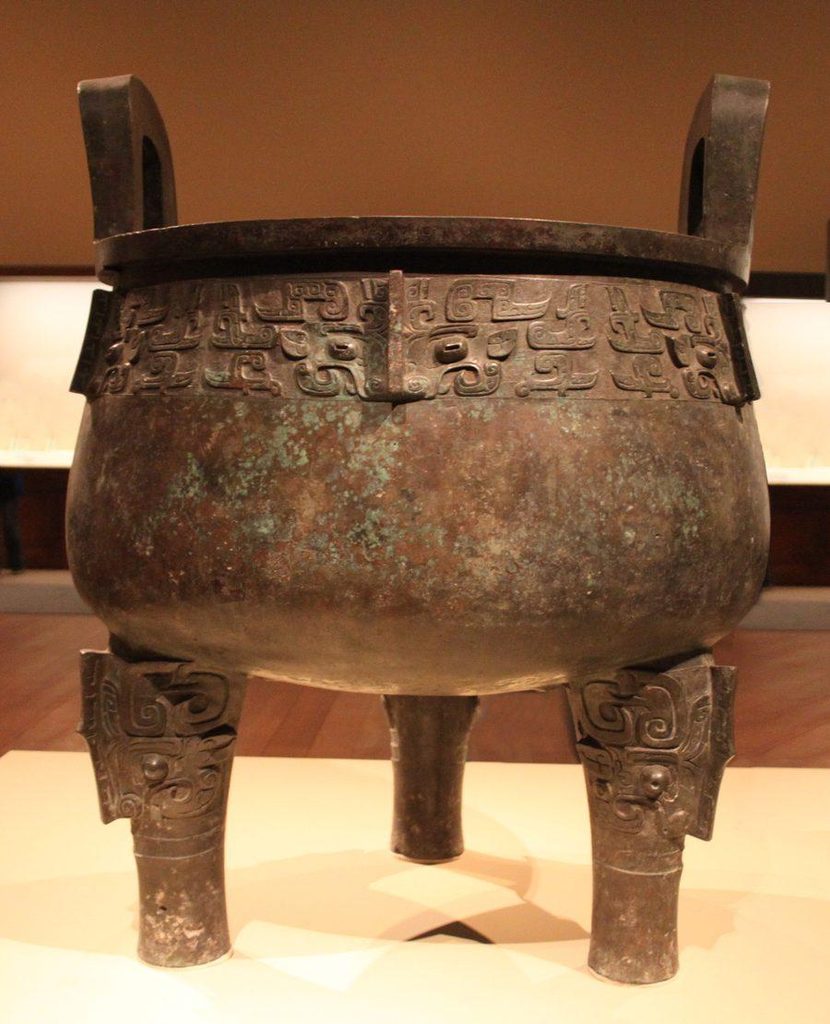
Another famous vessel, the He Zun (何尊), was cast under King Cheng. Its inscription contains the earliest known written use of the word Zhongguo (中国, the name used for ‘China’ today), where it means the ‘central states’, the Zhou heartland. Together with the Da Ke Ding (大克鼎), it shows how central writing, ritual, and memory were to Zhou civilisation.
The Zhou also gave China the first books of its classical tradition. The Book of Songs (Shijing, 诗经) collects 305 poems, from court hymns sung at sacrifices to folk songs about love, work, and complaint. The Book of Documents preserves what were presented as the speeches and announcements of the early Zhou kings and of the Duke of Zhou, whilst the core of the Book of Changes (the Zhouyi, 周易) took shape as a manual of divination.
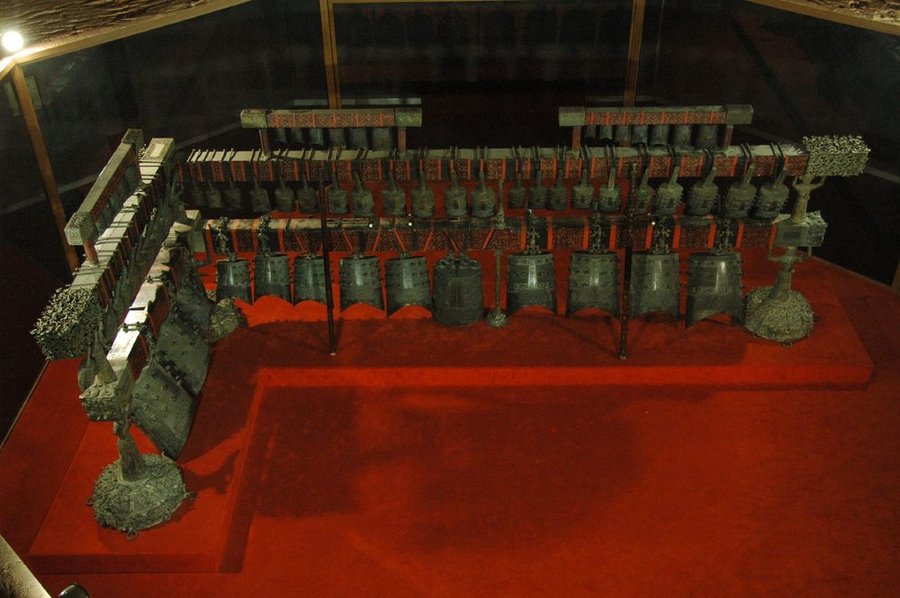
Music was inseparable from ritual, and its grandest instruments were the bianzhong (编钟), sets of tuned bronze bells. The most spectacular set ever found came from the tomb of the Marquis Yi of Zeng (曾侯乙), who died in 433 BC. His sixty-five bells cover five octaves and can still be played today.
Religion and Philosophy During the Zhou Dynasty
Zhou religion centred on the worship of Tian (天), Heaven, and on the worship of ancestors. Heaven was a supreme moral power that watched over the human world, rewarded virtue, and punished wickedness – the power behind the Mandate of Heaven. The king, as Son of Heaven, performed the great sacrifices to Heaven on behalf of all his people, whilst families honoured their ancestors with offerings, believing their spirits still watched over their descendants. Divination remained an important part of religious life, as it had been under the Shang.
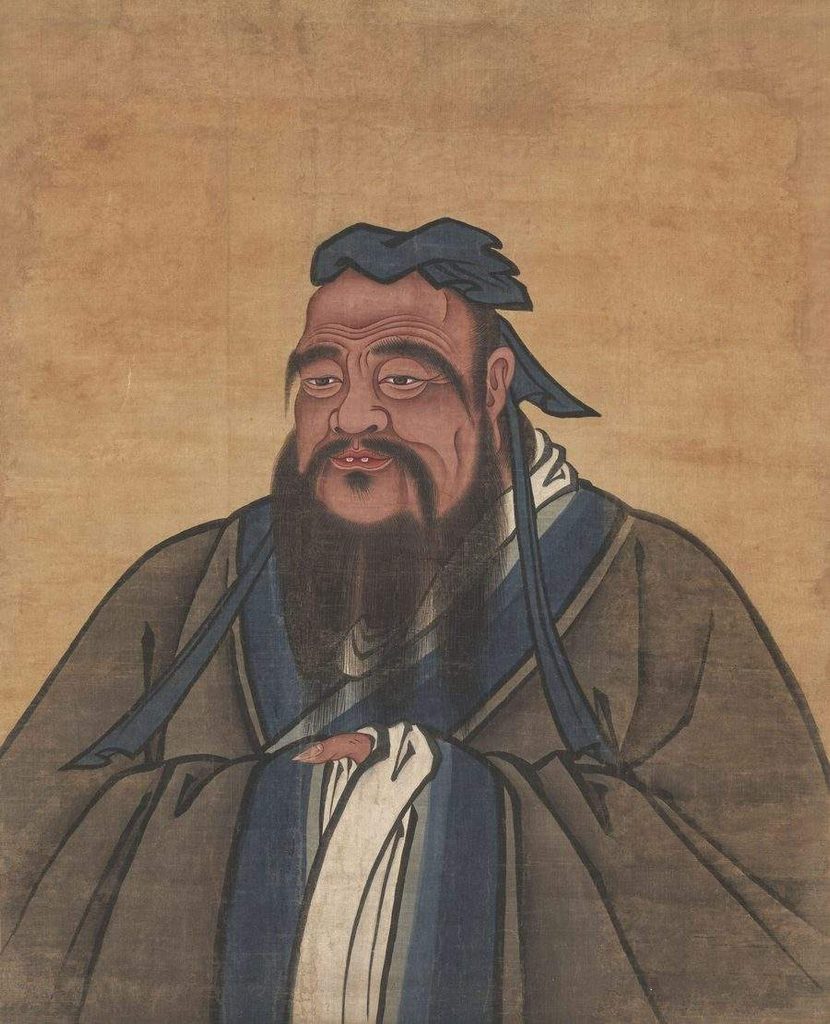
Paradoxically, the political collapse of the Eastern Zhou produced the greatest age of Chinese philosophy. As the old ritual order broke down, thinkers asked how society could be put back together, and their competing answers are known as the Hundred Schools of Thought. The most influential of them all was Confucius (551 – 479 BC), who lived in the later Spring and Autumn period. Confucius taught that the ritual order of the early Zhou kings, and above all the example of the Duke of Zhou, held the answer to the chaos of his own time. He travelled from state to state seeking a ruler who would employ him, and devoted himself to teaching his disciples and to compiling and editing the old classics. His teaching later became the foundation of ancient Chinese education, and his ideas shaped China for more than 2,000 years.
Read more: Confucius, Confucianism and the Confucian Classics
His great rival tradition was Daoism, whose founding figure, Laozi (老子), is known only from tradition, and whose dates are uncertain. The Daoist answer to disorder was the opposite of the Confucian one: rulers should govern by non-action, doing less rather than more, and letting people and nature follow their own way. Mozi (墨子, c. 470 – 391 BC) preached universal love and condemned aggressive war. Mencius (372 – 289 BC), the great second teacher of Confucianism, argued that human nature is good and that a king who lost the Mandate of Heaven could rightfully be overthrown. Zhuangzi (庄子, c. 369 – 286 BC) turned Daoist ideas into brilliant, funny stories. Xunzi (荀子) taught that human nature needs the discipline of ritual and education, whilst his student Han Fei (韩非, c. 280 – 233 BC) became the leading thinker of Legalism, which argued that only strict laws and a powerful state could hold society together – the philosophy that Qin would soon use to conquer all the others.
The Fall of the Zhou Dynasty
The fall of the Zhou was the slowest in Chinese history. It did not collapse in a single rebellion or invasion, but faded over five centuries, whilst the states it had created grew into kingdoms and their rulers took the title of king for themselves. The royal domain shrank until it was little more than the city of Luoyi and the land around it, and the later Zhou kings survived by playing the great powers off against one another, or by surrendering territory to buy peace.
The end, when it came, was quiet. In 256 BC the armies of Qin, by then the strongest of the Warring States, marched into the Zhou royal lands and took the royal capital area of Wangcheng (王城). King Nan, who had reigned for fifty-nine years – longer than any other king of pre-imperial China – submitted to Qin and died in that year, and with him the dynasty founded 790 years earlier came to an end. A small remnant, the duchy of Eastern Zhou, held out a little longer, but in 249 BC Qin extinguished it as well. Thirty-five years later, in 221 BC, Qin completed the work the Zhou kings could no longer do, conquered the remaining states, and unified China.
Summary
The Zhou dynasty lasted about 790 years and had thirty-seven kings, and it is considered to be one of the formative periods in Chinese history. It was during the Zhou that China developed the Mandate of Heaven, by which every later dynasty explained its right to rule; that the ritual order of li was created; that the first classics of Chinese literature were written; and that the Hundred Schools of Thought produced Confucianism, Daoism, and Legalism, the ideas that ran China for the next two thousand years.
The Zhou kings themselves ended in weakness, ruling a small domain around Luoyi whilst their former vassals fought for the empire. But the world they had founded outlasted them completely. The unified empire built by Qin, and inherited and developed by the Han dynasty, was governed by Zhou ideas, read Zhou books, and performed Zhou rituals. In that sense, the ‘foundational’ dynasty never really fell at all.
Read more: Ancient Chinese Dynasty Timeline