
The Han dynasty (202 BC – 220 AD) lasted for more than 400 years and is considered one of the great golden ages in Chinese history. It followed the short-lived Qin dynasty (221–207 BC), which had managed to unify China for the first time, but which had collapsed only a few years after the death of its founding emperor, Qin Shi Huang.
The Han dynasty is divided into two distinct periods – the Western Han and the Eastern Han. During the Western Han period (202 BC – 9 AD), the capital was in the western city of Chang’an (now known as Xi’an). The Eastern Han period (25–220 AD) refers to the period after the Han dynasty was restored following a brief interruption, with the capital moved east to Luoyang. Between the two periods came the short-lived Xin dynasty (9–23 AD), founded by the usurper Wang Mang.
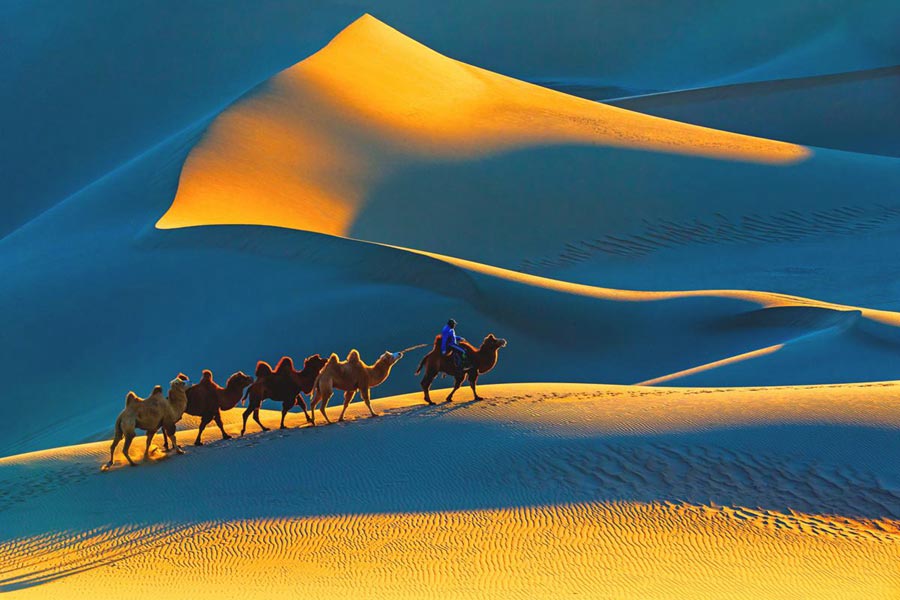
The Han dynasty gave its name to the Han Chinese people, still the largest ethnic group in China today, as well as to Han characters (Hanzi) and the Chinese language itself (Hanyu). The dynasty established Confucianism as the official state philosophy, opened the Silk Road trade route to Central Asia and beyond, and created a system of imperial government that lasted, in one form or another, for the next 2,000 years.
Key Facts
- Dynasty dates: 202 BC – 220 AD.
- Preceding dynasty: Qin, 221 – 207 BC.
- Subsequent dynasty: Wei – the first of the ‘Three Kingdoms’ into which China fragmented after the fall of the Han.
- First Han emperor: Gaozu, reigning from 202 BC to 195 BC.
- Total number of Han emperors: 29, interrupted by an interregnum during the period 9–23 AD.
- Longest Han emperor reign: Wu, the seventh Han emperor, fifty-four years, reigning from 141 to 87 BC.
- Final Emperor: Xian, reigning from 189 to 220 AD.
The Founding of the Han Dynasty
The Qin dynasty had unified China in 221 BC, but its rule was harsh and deeply unpopular. Heavy taxes, forced labour on huge construction projects such as the Great Wall, and severe laws imposed by the Legalist Qin government created widespread resentment across the empire. When Qin Shi Huang died in 210 BC, rebellions broke out across the country.
Two rebel leaders emerged as the main contenders for power. Xiang Yu was a powerful aristocratic general from the former state of Chu. Liu Bang, by contrast, was a man of humble peasant origins who had worked as a minor Qin official. In 206 BC Liu Bang’s forces were the first to enter the Qin capital, Xianyang, and accept the surrender of the last Qin ruler.
Xiang Yu and Liu Bang then turned on each other, fighting the four-year conflict known as the Chu–Han Contention (206–202 BC). The struggle ended at the Battle of Gaixia in 202 BC, where Liu Bang’s forces surrounded Xiang Yu’s army. Xiang Yu escaped to the Wu River, but, refusing to cross to safety, he took his own life. In 202 BC Liu Bang declared himself emperor, establishing the beginning of the Han dynasty.
The Han Dynasty Founder and First Emperor – Gaozu
Emperor Gaozu (born in 256 BC, and died in 195 BC) was born Liu Bang in Pei County, in present-day Jiangsu province. He was the founding emperor of the Han dynasty and reigned from 202 BC to 195 BC. Unlike the aristocratic Xiang Yu, Liu Bang came from a peasant family and had worked as a minor patrol chief under the Qin dynasty. When the rebellions against Qin began, Liu Bang joined the uprising and rose rapidly through the ranks thanks to his charisma, his pragmatism, and his talent for gathering capable advisers and generals around him, including Xiao He, Zhang Liang, and the brilliant military commander Han Xin.
Having experienced the collapse of the Qin dynasty at first hand, Gaozu was determined not to repeat its mistakes. He lowered taxes, reduced the harsh Qin punishments, and allowed the population time to recover from decades of warfare. This policy of rest and recovery was continued by his successors, and reached its height during the prosperous ‘Rule of Wen and Jing’ under Emperors Wen and Jing.
Gaozu also divided the empire between commanderies ruled directly by the central government, and semi-autonomous kingdoms granted to his relatives and allies. This compromise later became a source of instability, and in 154 BC, during the reign of Emperor Jing, seven of these kingdoms rose in the unsuccessful Rebellion of the Seven States. After this rebellion failed, the power of the kingdoms was greatly reduced and central government control was strengthened.
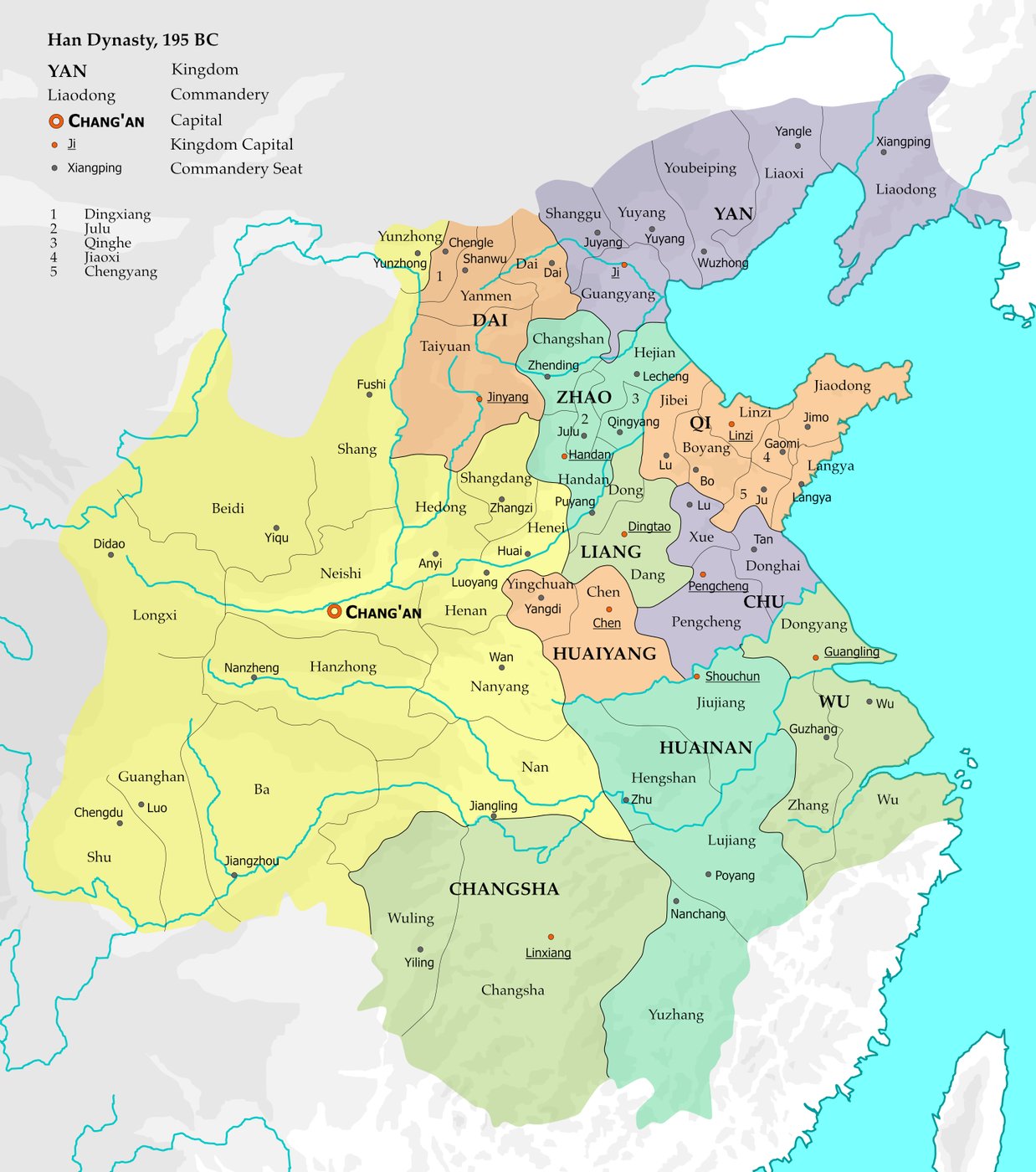
Emperor Gaozu died in 195 BC, aged around 61, from wounds received during a campaign against a rebellious vassal king. He left behind a reunited and recovering empire that would go on to become one of the most powerful states in the ancient world.
Wang Mang and the Xin Dynasty Interregnum
In the later years of the Western Han, power at court increasingly fell into the hands of the families of the emperors’ wives and mothers. The most powerful of these consort families was the Wang clan. Wang Mang (born in 45 BC, and died in 23 AD), the nephew of Empress Dowager Wang Zhengjun, rose through the court to become regent for the young Emperor Ping. In 9 AD Wang Mang took the throne for himself and announced the beginning of a new dynasty – Xin, bringing the Western Han to a temporary end.
Wang Mang attempted a series of radical reforms. He tried to nationalise the land and redistribute it to the peasants, banned the buying and selling of slaves, and repeatedly changed the currency. These reforms were ambitious, but they were badly organised, created economic chaos, and did not go down too well with either the landowners or the ordinary population. To make matters worse, flooding of the Yellow River caused widespread famine and displacement.
Rebellions broke out across the empire, including the Lülin and Red Eyebrows movements, named after the rebels painting their eyebrows red so that they could recognise each other in battle. In 23 AD rebel forces stormed the capital Chang’an and Wang Mang was killed. His Xin dynasty had lasted only fourteen years.
From the chaos, a distant member of the Han imperial family, Liu Xiu, emerged as the victor. In 25 AD he declared himself Emperor Guangwu and restored the Han dynasty, establishing his capital at Luoyang in the east. This restored dynasty is known as the Eastern Han, and Guangwu’s reign is remembered for reunifying China and restoring stable government after years of civil war.
The Han Dynasty at its Height – The Reign of Emperor Wu (141 – 87 BC)

The Han dynasty reached the height of its power under Emperor Wu (born in 156 BC, and died in 87 BC). Wu reigned for fifty-four years, from 141 to 87 BC, a record that was not broken for more than 1,800 years, until the reign of the Qing dynasty Kangxi Emperor.
Emperor Wu abandoned the quiet, non-interventionist policies of his predecessors and set out to actively expand the empire. Han armies campaigned against the nomadic Xiongnu confederation, which had raided China’s northern borders for decades. Led by generals such as Wei Qing and Huo Qubing, Han forces pushed deep into the Mongolian steppes. At its height, the Han empire stretched from present-day Kyrgyzstan and the Fergana Valley in the west, to the Korean peninsula in the east, and to northern Vietnam in the south. Four Han commanderies were established in northern Korea in 108 BC.
In 139 BC, Emperor Wu dispatched his envoy Zhang Qian on a mission to Central Asia to seek an alliance against the Xiongnu. Zhang Qian was captured by the Xiongnu and held for ten years, and although the alliance he sought never materialised, the information he brought back to Chang’an in 126 BC opened China’s eyes to the lands of the west. His journeys laid the foundations for the Silk Road, along which Chinese silk travelled westwards, and horses, glassware, and new foods such as grapes and alfalfa travelled east into China.
Emperor Wu also reshaped the government at home. He made Confucianism the official state ideology, following the advice of the scholar Dong Zhongshu, and in 124 BC he established an Imperial University (Taixue) in the capital to train officials in the Confucian classics. What began with just fifty students eventually grew to thousands, and Confucian learning became the route into government service. He also strengthened central control by creating state monopolies on salt, iron, and liquor, which filled the imperial treasury and funded his military campaigns.
However, Emperor Wu’s long reign came at a heavy cost. Decades of warfare drained the empire’s finances, taxes rose, and his later years were troubled by paranoia, costly searches for immortality, and a witchcraft scandal in 91 BC which led to the deaths of tens of thousands of people, including members of his own family. By the time of his death in 87 BC, the empire was at its largest, but it was also financially exhausted.
Read more: Emperor Wu of Han: Insatiable Ambition for Territorial Expansion
Art and Culture During the Han Dynasty
The Han dynasty saw great development in history writing, science, and technology, as well as in the arts. It was during this period that the historian Sima Qian (born around 145 BC, and died around 86 BC) completed the Shiji, or ‘Records of the Grand Historian’. This huge work covered more than 2,000 years of Chinese history, from the legendary Yellow Emperor down to Sima Qian’s own time, and it set the pattern for all Chinese dynastic histories that followed. During the Eastern Han, the historian Ban Gu wrote the Book of Han, covering the history of the Western Han dynasty in a similar style.
One of the Han dynasty’s most important inventions was paper. Paper had existed in a crude form earlier, but in 105 AD the court eunuch Cai Lun improved the production process, using materials such as tree bark, hemp, rags, and old fishing nets to make paper that was cheap, light, and suitable for writing. Over the following centuries, paper spread from China across Asia and eventually to the rest of the world, transforming the way information was recorded.
Read more: Four Great Inventions of Ancient China
Han science also flourished. The polymath Zhang Heng (78–139 AD) improved the armillary sphere used to observe the stars and in 132 AD invented the world’s first seismoscope, a bronze vessel which could detect the direction of an earthquake hundreds of kilometres away. Han physicians compiled medical knowledge in texts such as the Huangdi Neijing, and the physician Zhang Zhongjing wrote his famous Treatise on Cold Damage Disorders towards the end of the Eastern Han.
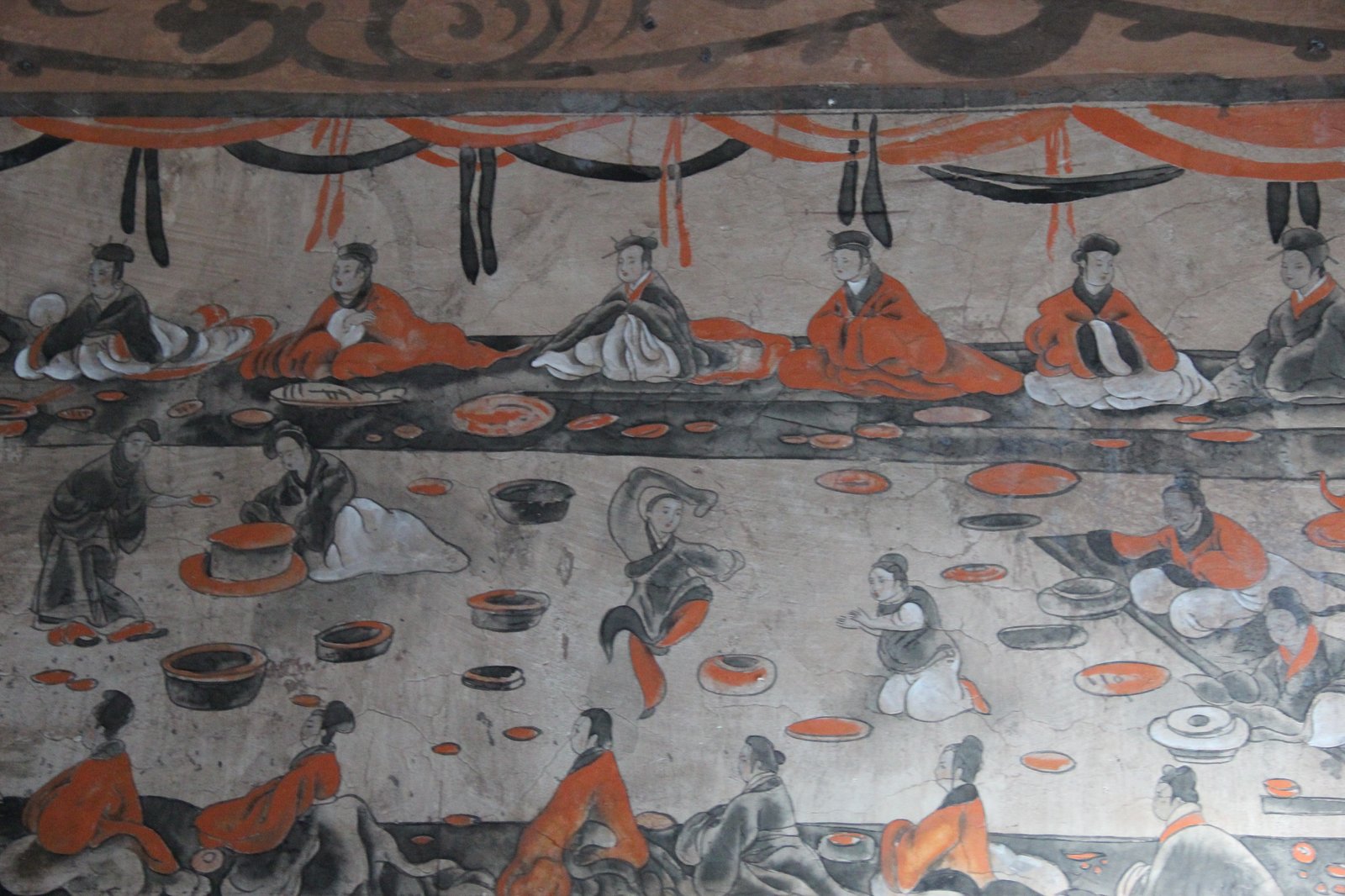
In the visual arts, Han craftsmen produced fine lacquerware, silk textiles, and jade carvings, including suits of jade burial armour sewn with gold thread for imperial princes. Pottery tomb figurines, showing soldiers, servants, dancers, and farm animals, were buried with the dead so that they could be served in the afterlife. The rhapsodic fu form of poetry, long and richly descriptive, was the most celebrated literary style of the age, whilst clerical script became the standard style of Chinese calligraphy.
Religion During the Han Dynasty
In the early years of the dynasty, the court favoured the Daoist philosophy of Huang-Lao, which emphasised governing by doing as little as possible. This ‘hands-off’ approach suited an empire that needed peace and recovery after the destruction of the Qin dynasty, and it helped to create the prosperity of the early Western Han.
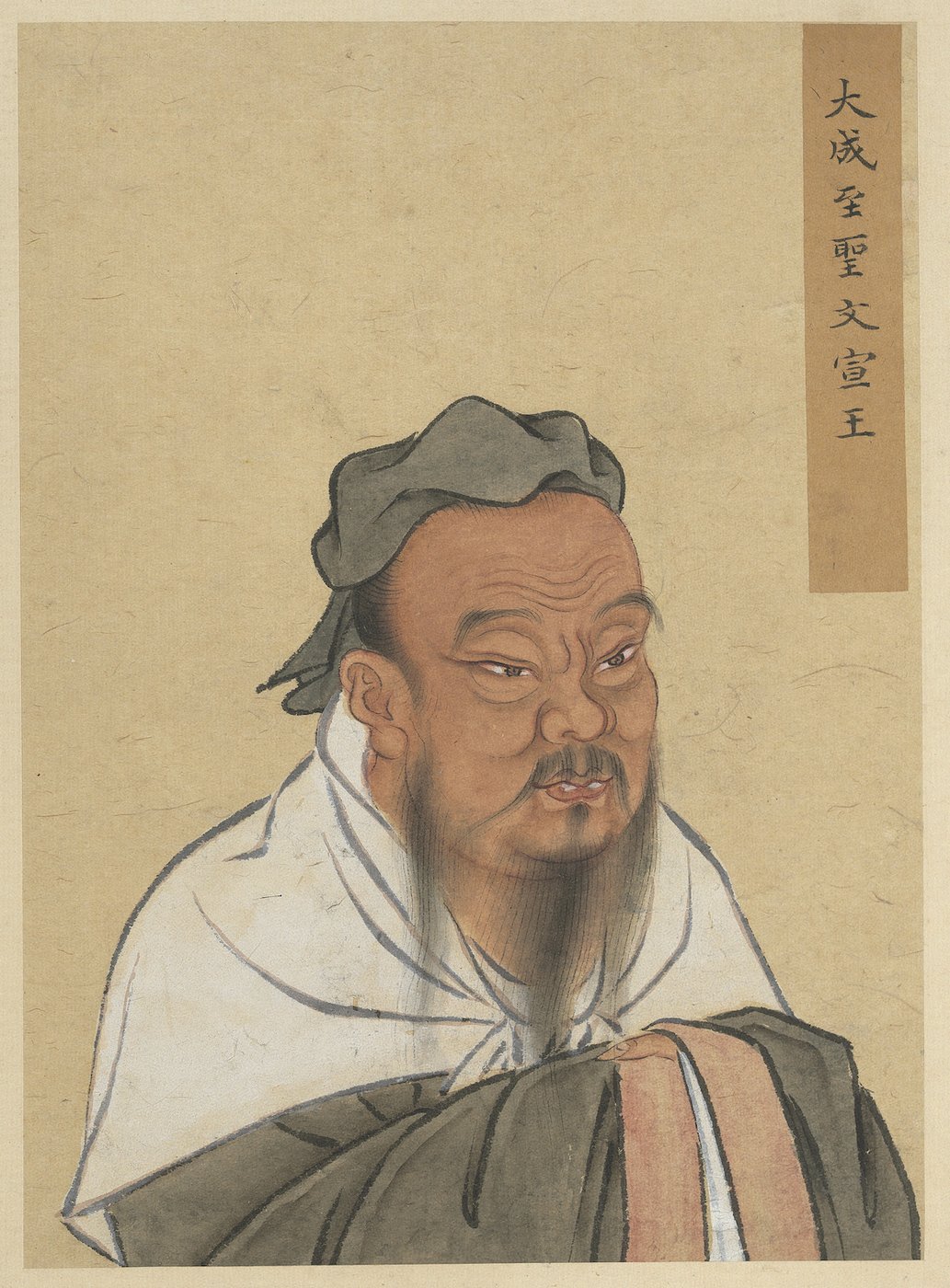
Under Emperor Wu, however, Confucianism became the dominant philosophy of the state. Confucian values – respect for parents and elders, the importance of education, and the idea that a ruler must govern virtuously – shaped Chinese government and society for the rest of the imperial period. Confucian temples and state rituals became central features of Chinese life, whilst rival schools of thought, such as Legalism, continued to influence the day-to-day running of the government in practice, if not in name.
It was also during the Han dynasty that Buddhism first arrived in China, travelling eastwards from India along the Silk Road. According to legend, Emperor Ming of the Eastern Han dreamed of a golden man, and sent envoys westwards who returned with Buddhist scriptures and monks. The White Horse Temple, established near Luoyang in around 68 AD, is traditionally regarded as the first Buddhist temple in China. Buddhism remained a small foreign religion during the Han dynasty, but after the dynasty’s fall it spread widely and became one of the defining religions of Chinese life.
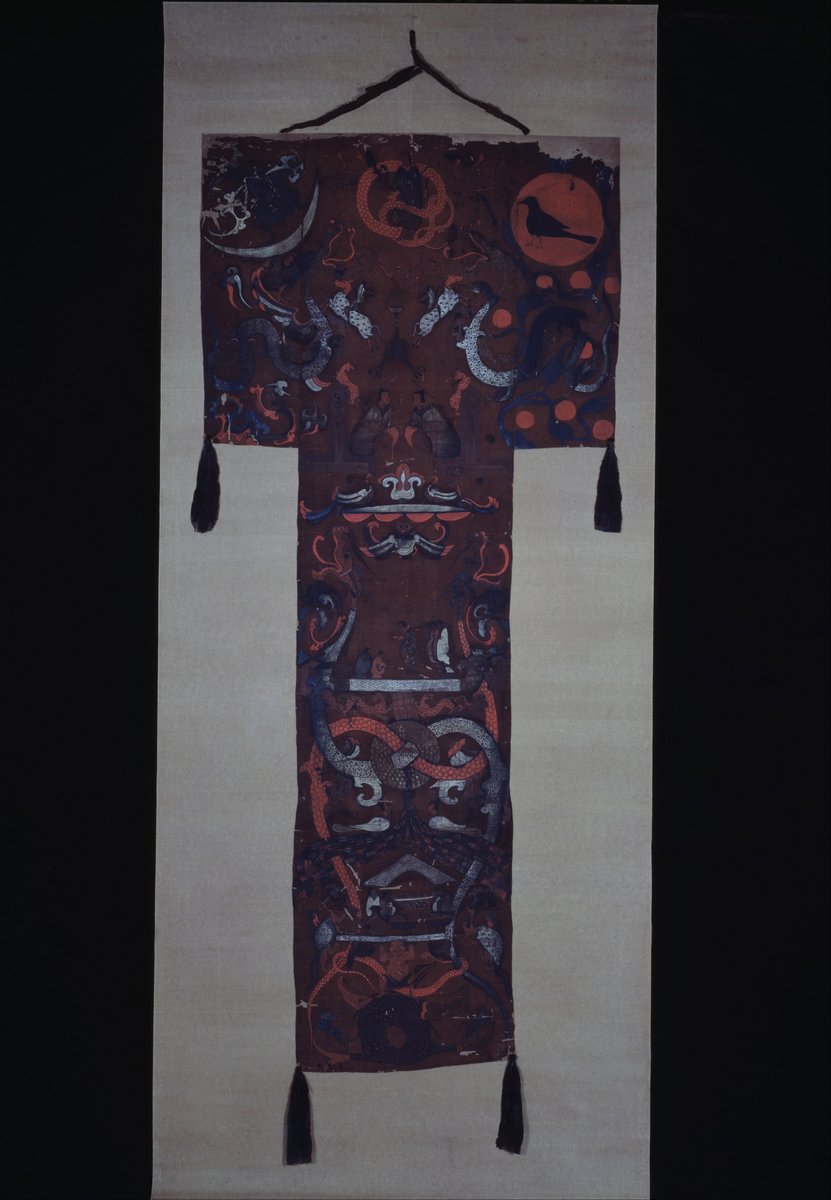
Ancestor worship also remained an important part of Han religious practice. Families made offerings to their ancestors, and the elaborate tombs of the emperors and nobility, filled with goods for the afterlife, show how seriously the Han Chinese took their obligations to the dead.
The Fall of the Han Dynasty
The downfall of the Eastern Han is deeply rooted in problems that built up over more than a century. Land became concentrated in the hands of a small number of wealthy families, whilst peasants lost their farms and became tenants or labourers. At court, power was fought over by three groups – the families of the emperors’ wives, the court eunuchs, and the scholar-officials – and the conflict between them made the government increasingly ineffective and corrupt.
A series of child emperors made the situation worse. Emperors came to the throne as children, ruled briefly, and often died young, leaving real power in the hands of regents, empresses dowager, and eunuchs. Punishments of scholar-officials who opposed the eunuchs, in the political purges known as the Partisan Prohibitions, further damaged the reputation of the dynasty.
In 184 AD the Yellow Turban Rebellion broke out, led by the Daoist faith healer Zhang Jue, whose followers wore yellow headscarves and believed a new age was about to begin. The rebellion was crushed, but only with the help of regional commanders who raised their own armies. These armies soon became the private forces of warlords, and central government control effectively collapsed.
In 189 AD the warlord Dong Zhuo seized the capital Luoyang, placed the young Emperor Xian on the throne as a puppet, and burned Luoyang to the ground when a coalition of warlords marched against him. For the next thirty years Emperor Xian remained a figurehead whilst warlords fought for control of the empire. The most successful of these was Cao Cao, who took the emperor into his protection and reunified northern China. However, Cao Cao was defeated at the Battle of Chibi (Red Cliffs) in 208 AD by the allied forces of the southern warlords Liu Bei and Sun Quan, and China settled into a three-way division.
The Han dynasty formally ended in 220 AD. On his death, Cao Cao was succeeded by his son Cao Pi, who forced Emperor Xian to abdicate and declared himself emperor of Wei. Liu Bei and Sun Quan soon declared their own rival states, Shu Han and Wu, beginning the Three Kingdoms period of Chinese history.
Summary
The Han dynasty lasted for over 400 years, interrupted only briefly by Wang Mang’s Xin dynasty, and it is considered to be one of the formative periods in Chinese history. It was during the Han that China developed the Confucian model of imperial government, the Silk Road opened China to trade and cultural exchange with Central Asia and the West, and great advances were made in history writing, science, and technology, including the invention of paper.
So great was the dynasty’s influence that its legacy is carried in the name of China’s majority ethnic group, the Han people, in the Chinese characters, Hanzi, and in the Chinese language itself, Hanyu, which are all still in use more than 1,800 years after the dynasty fell.
Read more: Ancient Chinese Dynasty Timeline