
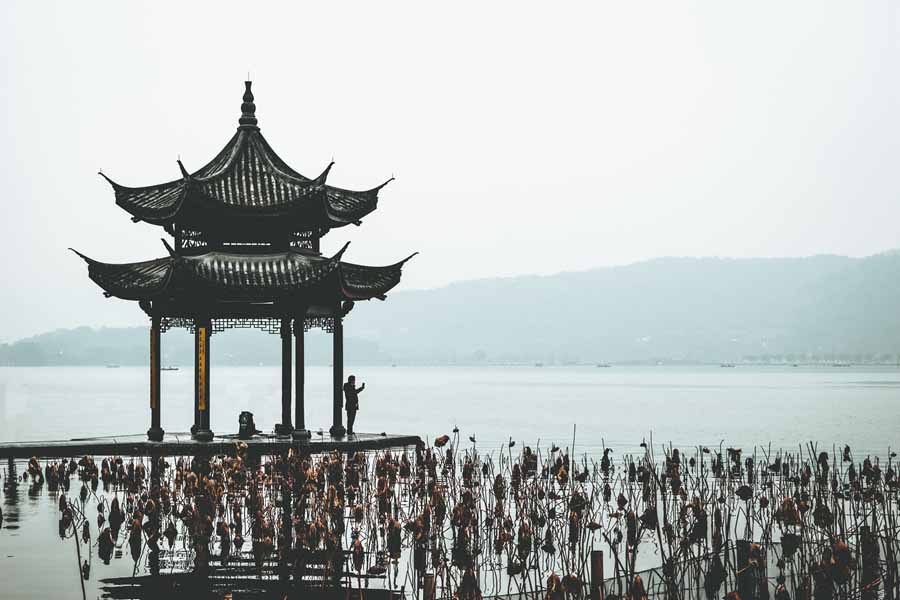
The Southern Dynasties (420 – 589 AD) were four dynasties that ruled southern China in succession, all from the same capital, Jiankang (建康, modern Nanjing): Liu Song, Southern Qi, Liang and Chen. Whilst they rose and fell, a separate line of dynasties ruled the north, and for a hundred and seventy years the two halves of China faced each other across the Huai River. None of the four southern dynasties lasted sixty years, yet together they presided over one of the most creative ages in Chinese civilisation.
The southern courts were dominated by a small circle of great aristocratic families, and their emperors were often children, puppets or victims. But the south was rich and growing richer, as northern refugees developed the Yangtze delta, and Jiankang became one of the largest cities in the world. Above all, this was an age of culture, in which landscape poetry, literary criticism and the Buddhist faith all reached new heights.
The end came in 589 AD, when the northern Sui dynasty conquered the last southern dynasty, Chen, and reunified China for the first time since 280 AD. The southern world did not disappear: its wealth, its families and its culture were absorbed into the reunited empire, and helped shape the Tang age.
Key Facts
- Period dates: 420 – 589 AD.
- Preceding dynasty: Jin (Eastern Jin), 317 – 420 AD, whose last emperor was forced to abdicate in 420 AD.
- Subsequent dynasty: Sui, 581 – 618 AD, which conquered Chen in 589 AD and reunified China.
- Liu Song: 420 – 479 AD, founded by Liu Yu (刘裕).
- Southern Qi: 479 – 502 AD, founded by Xiao Daocheng (萧道成).
- Liang: 502 – 557 AD, founded by Xiao Yan (萧衍).
- Chen: 557 – 589 AD, founded by Chen Baxian (陈霸先).
- Capital: Jiankang (modern Nanjing), the capital of all four dynasties.
- First southern emperor: Liu Yu, founder of Liu Song, reigning from 420 to 422 AD.
- Total number of southern emperors: 25 – eight of Liu Song, seven of Southern Qi, five of Liang and five of Chen.
- Longest reign: Wu of Liang (Xiao Yan), forty-seven years, reigning from 502 to 549 AD – the longest of the whole Northern and Southern Dynasties period.
- Final Emperor: Shubao of Chen, reigning from 583 to 589 AD.
The Founding of the Southern Dynasties
In 420 AD the general Liu Yu forced the last emperor of the Eastern Jin to abdicate and took the throne himself, founding the Liu Song dynasty. (This Liu Song — the Song dynasty of the Liu family — is not the Song dynasty that began in 960 AD.) Liu Yu set a pattern that the whole age would follow: every southern dynasty was founded by a general of the previous one, who first made himself master of the court, then took the throne from a helpless emperor in a formal ceremony of abdication. Power rarely passed peacefully from father to son; it passed to each dynasty’s strongest soldier.
Behind the emperors stood the great families, a hereditary aristocracy graded by the Nine-Rank system, who between them decided how ancient China’s government was run. One early emperor broke the pattern. Liu Yu’s son, Emperor Wen of Song (reigned 424 – 453 AD), gave his dynasty its golden age, the Yuanjia (元嘉) era: taxes were light, farming and trade flourished, and the Yangtze lands grew rich, although Wen’s later campaigns to recover the north ended in heavy defeat.
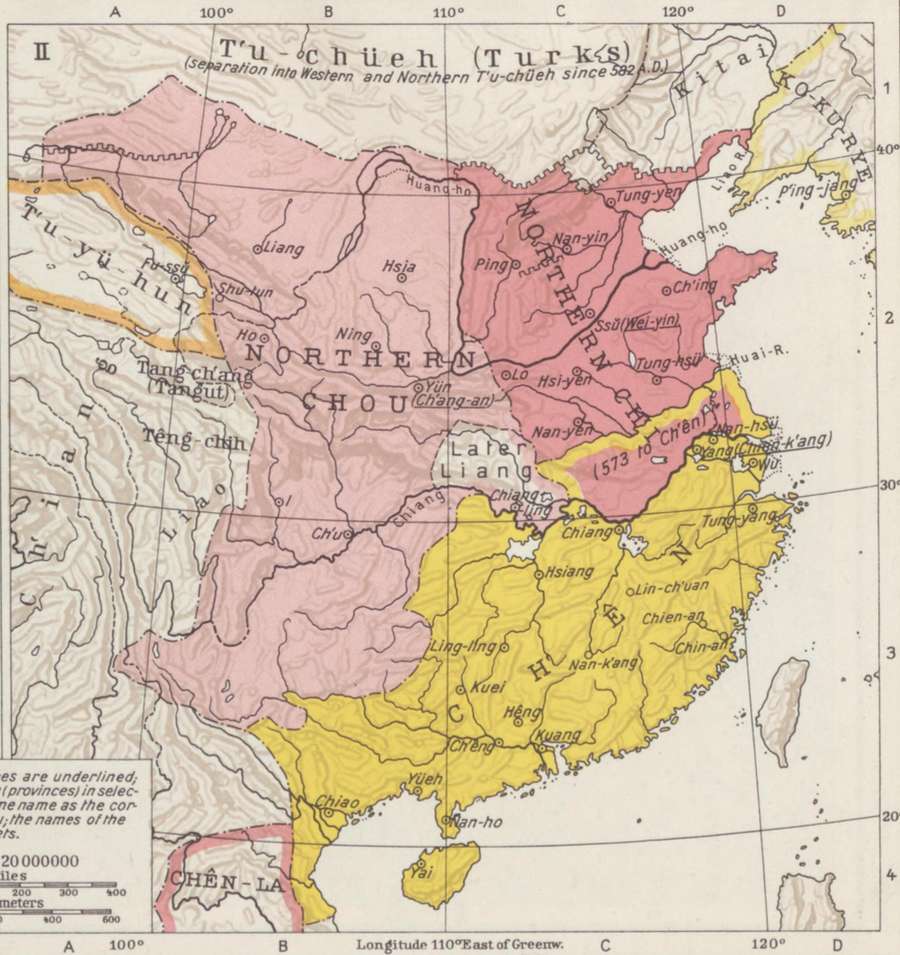
After Wen was murdered by his own heir in 453 AD, Liu Song fell into the pattern that would consume every southern dynasty: short reigns, emperors who slaughtered their own brothers, and power sliding to the court’s strongest general. In 479 AD that general, Xiao Daocheng, took the throne and founded Southern Qi. The first southern dynasty had lasted fifty-nine years.
Liu Yu – Founder of the First Southern Dynasty
Liu Yu (born in 363 AD, and died in 422 AD) was the most remarkable self-made man of the age. He was born into a poor family in the north of modern Jiangsu, made a living as a fisherman and a seller of straw sandals, and rose purely by military talent through the ranks of the Beifu Army, the elite force of northern refugees. He made his name destroying rebels, then in 404 AD crushed Huan Xuan, a warlord who had seized the Jin throne itself. From then on Liu Yu was the real ruler of the Eastern Jin: between 409 and 417 AD his northern expeditions briefly recovered Luoyang and Chang’an, a feat no southern general ever matched. He was said to be descended from a younger brother of the founder of the Han dynasty, and like that founder he came from nowhere.
In 420 AD Liu Yu completed the usurpation, forcing the boy Emperor Gong of Jin to abdicate. He reigned for only two years, but he used them well: he governed frugally, curbed the great families, and kept his armies in firm discipline. He also set the age’s grimmest precedent: the deposed Jin emperor, allowed to live after his abdication, was murdered on Liu Yu’s orders in 421 AD. Later founders copied the act.
The Southern Dynasties at their Height – The Liang Golden Age
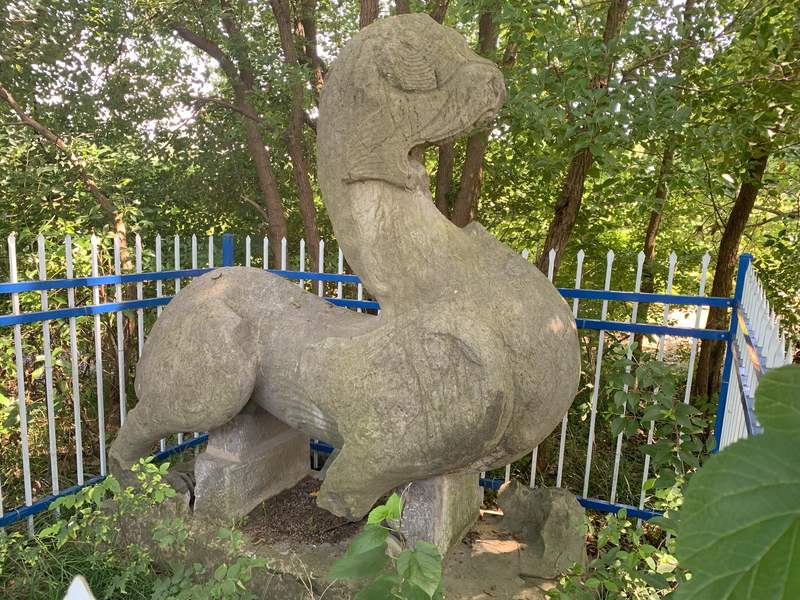
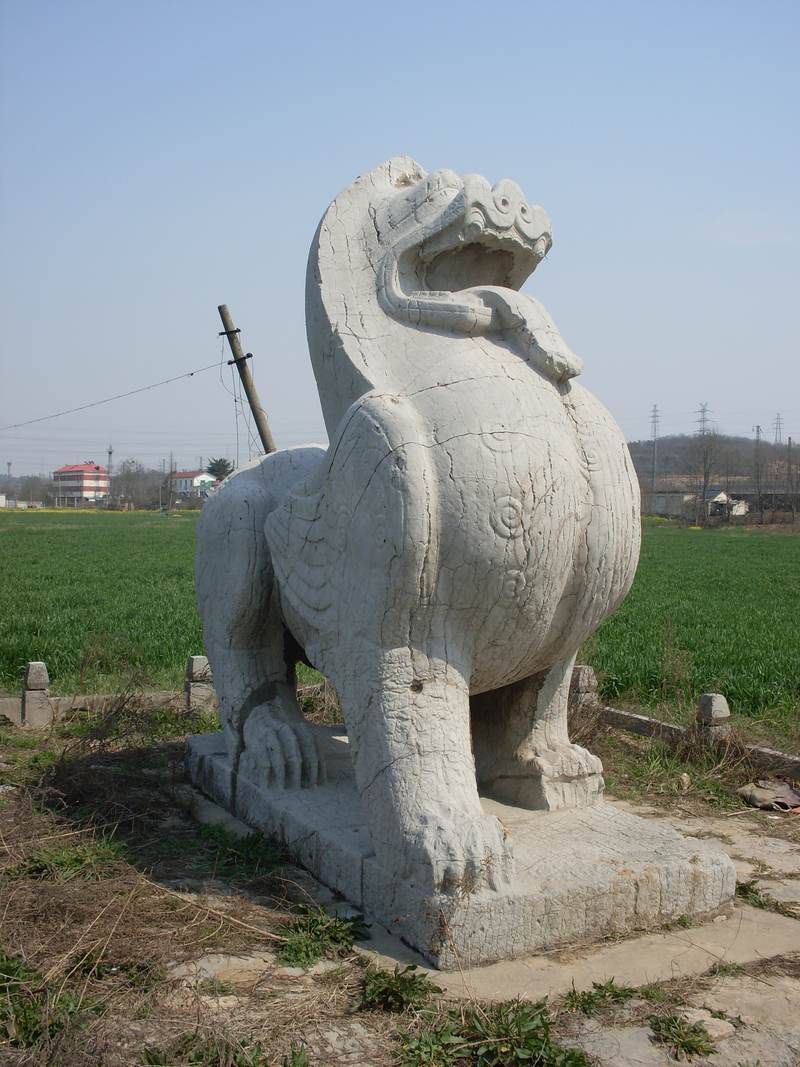
Southern Qi, founded in 479 AD, was the shortest of the four dynasties — just twenty-three years — but its first two emperors reigned ably, and its Yongming (永明) era (483 – 493 AD) was a famous flowering of court literature. At the salon of Xiao Ziliang (萧子良), Prince of Jingling, the best poets and scholars of the day gathered. The dynasty’s emperors were buried in the hills around Danyang, north-east of the capital, where their stone guardian beasts still stand.
After 494 AD Qi collapsed into a run of palace murders and boy rulers, and in 501 AD the general Xiao Yan rose in revolt. In 502 AD he founded the Liang dynasty. Xiao Yan, Emperor Wu of Liang, reigned for forty-seven years, from 502 to 549 AD — by far the longest reign of the age — and for most of it he was a genuinely able ruler: a fine scholar, poet and calligrapher, served by a brilliant court, ruling a prosperous state whose capital rivalled any city on earth. Jiankang at its height held perhaps half a million people, with great palaces, academies and hundreds of Buddhist temples. His middle decades were the summit of the southern dynasties.
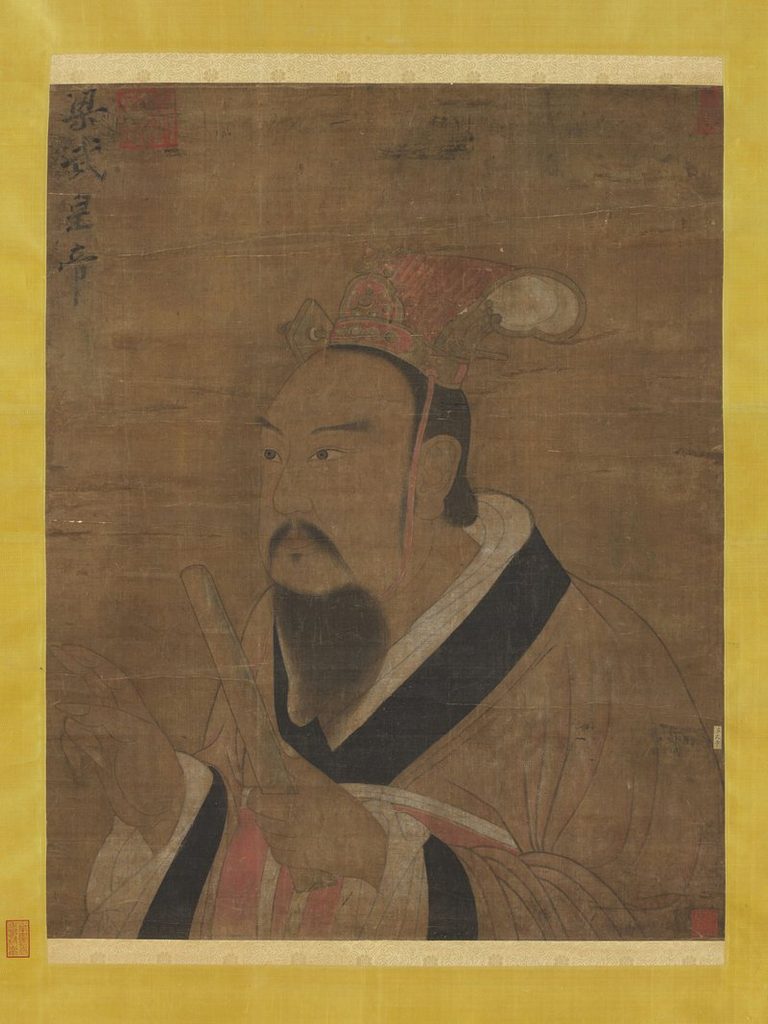
Yet Xiao Yan’s virtues carried the seeds of ruin. In old age his government grew slack and his many sons and nephews, enfeoffed as princes, were left to misgovern their provinces. Above all, his Buddhism became an obsession. He built the great Tongtai Temple (同泰寺) beside his palace, and several times ‘gave himself’ to the temple as a servant of the Buddha, so that his ministers had to ransom their emperor back with enormous donations. He decreed that monks should neither eat meat nor drink alcohol, a rule Chinese Buddhism keeps to this day, and even the offerings at his own ancestral altars were made vegetarian. A ruler who was also a monk had little attention left for the armies of the north.
Read more: Top 10 Capital Cities of Ancient China
The Hou Jing Rebellion and the Coming of Chen
In 547 AD Hou Jing (侯景), a ruthless northern turncoat general, defected to Liang and was received by the aged Xiao Yan against the advice of his ministers. A year later, in 548 AD, Hou Jing rebelled. With a surprisingly small army he marched on Jiankang, and the capital, crammed with refugees, was besieged and starved through the winter of 548 – 549 AD. Tens of thousands died of hunger within the walls. Xiao Yan, held prisoner in his own palace, died in 549 AD, aged eighty-five. It was the single greatest catastrophe of the southern age.
The Liang empire never recovered. Its princes, instead of uniting against the rebel, fought one another for the empty throne and called in northern armies to help them. The northern states helped themselves: Sichuan was seized, and the lands north of the Yangtze stripped away. Hou Jing himself was killed in 552 AD, but the shattered south could not be reassembled.
Out of the wreckage rose Chen Baxian, a southern general who had fought his way north against the rebels and by 555 AD controlled what was left of the Liang court. In 557 AD he founded the Chen dynasty. Chen inherited barely half of Liang’s territory — no Sichuan, no lands north of the Yangtze, only the lower Yangtze and the far south — and it was from the start the weakest of the four southern dynasties, facing a steadily reuniting north.
Art and Culture During the Southern Dynasties
The political failures of the south were matched by cultural triumphs that shaped China permanently. The age’s greatest early poet was Xie Lingyun (谢灵运, 385 – 433 AD), a brilliant and impossible aristocrat of Liu Song who, on his travels as a provincial governor, more or less invented landscape poetry: verse about mountains and water for their own sake.
At the Yongming court, poets such as Shen Yue (沈约) laboured to make verse musical, and his circle worked out the four tones of Chinese — the rules of tonal pattern that later made Tang regulated verse possible. Prose found its classic of a different kind in the Shishuo Xinyu (世说新语, A New Account of Tales of the World), compiled under the Liu Song prince Liu Yiqing (刘义庆, 403 – 444 AD): hundreds of witty anecdotes about the talk, loves, griefs and eccentricities of the aristocracy — still the most readable book of the age.
The south also invented literary criticism. Zhong Rong (钟嵘) ranked the poets of the past in his Poetry Grades, whilst Liu Xie (刘勰) wrote the Wenxin Diaolong (文心雕龙, The Literary Mind and the Carving of Dragons, c. 501 AD), the greatest work of literary theory in traditional China — composed whilst he lived as a poor scholar in a Buddhist monastery. Xiao Tong (萧统), Xiao Yan’s eldest son and crown prince, directed the compilation of the Wen Xuan (文选, Selections of Refined Literature) in the 520s AD: for a thousand years it was the anthology from which educated Chinese learned literature, a cornerstone of ancient Chinese education.
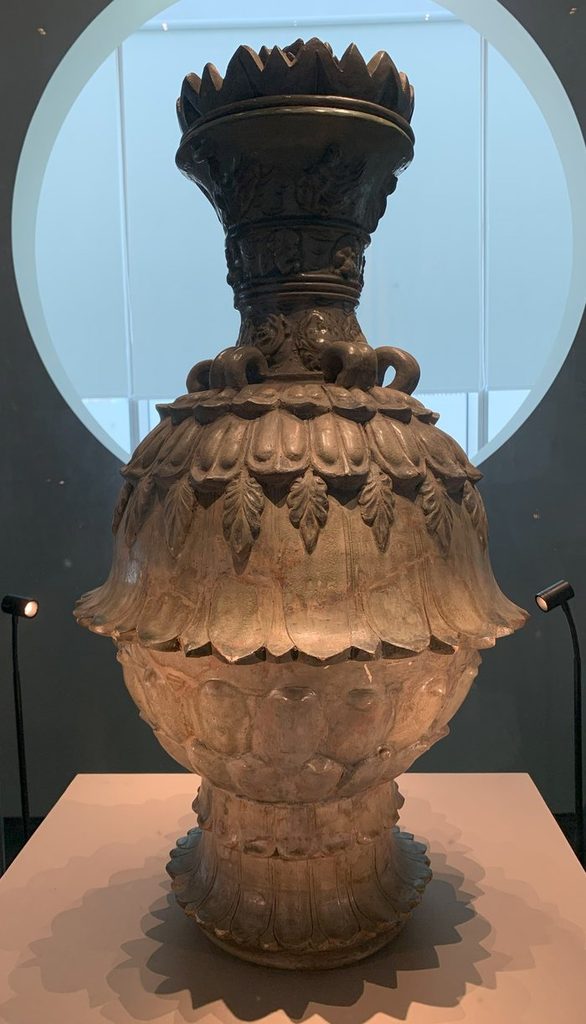
In painting, the Southern Qi critic Xie He (谢赫) set out his Six Laws of painting, which defined the aims of Chinese art ever afterwards. And the age survives in stone and clay: the imperial tombs outside Nanjing and Danyang were guarded by huge winged beasts, raised in the funeral customs of the southern courts, whilst its kilns produced celadon of a pure green, carved with the lotus petals of the Buddhist faith.
Religion During the Southern Dynasties
Buddhism reached its high-water mark in the south. Jiankang was a city of temples — tradition puts their number in and around the capital at more than five hundred — and monasteries grew rich on imperial and aristocratic gifts. Imperial patronage reached its height under Xiao Yan, whose devotion set the style of the age: vegetarian monks, sutra lectures at court, and emperors who treated the Buddha as a higher sovereign than themselves. Buddhist ideas and images soaked into southern art, from the lotus carvings on its celadon to the monasteries in which its scholars, like Liu Xie, went to write.
Daoism, the faith of recluses and immortals, was reshaped by Tao Hongjing (陶弘景, 456 – 536 AD), who organised the revelations of the Maoshan (茅山) school and retired to Mount Mao to practise alchemy and meditation. Xiao Yan, though a Buddhist, consulted him so often by messenger that Tao was nicknamed ‘the prime minister in the mountains’. Even emperors longed for the Daoist freedom of governing through non-action, far from the court.
Confucianism remained the framework of the state throughout: emperors performed its sacrifices, officials were trained in its classics, and the language of legitimacy — abdication edicts, era names, posthumous titles — was entirely Confucian. But for men’s hearts it now ran third. A southern gentleman might hold Confucian office, worship at a Buddhist temple, and dream of Daoist retirement, and see no contradiction at all.
Read more: What Were the Rituals and Laws in Ancient China?
The Fall of the Southern Dynasties
Chen, the last southern dynasty, survived for thirty-two years on courage and geography. Chen Baxian and his nephew, Emperor Wen of Chen, rebuilt a working state from the ruins Hou Jing had left, and Chen armies even recovered some lost ground. But the dynasty was small and poor beside the north, which Northern Zhou had reunited in 577 AD and the Sui dynasty had ruled since 581 AD. The balance tilted further against it every year.
Its last emperor was Chen Shubao (陈叔宝, reigned 583 – 589 AD), a gifted poet and a hopeless ruler. Whilst Sui shipyards built the fleet that would cross the Yangtze, he devoted himself to wine, music and three extravagant pavilions for his favourite concubines, and executed or ignored the ministers who warned him. When the invasion came in 589 AD, Sui armies — said to number more than half a million men — crossed the river at many points at once, and the Chen state collapsed almost without a battle.
Jiankang fell, and Chen Shubao was found hiding in a dry well in the palace grounds, together with two of his favourite concubines. He was taken north to the Sui capital as a prisoner, where he lived on, a pensioned curiosity, until 604 AD. With his surrender the Southern Dynasties ended, and with them the division of China that had lasted, in one form or another, since the fall of the Jin north in 316 AD.
Summary
The Southern Dynasties lasted a hundred and seventy years and had twenty-five emperors. Their story is one of brilliant courts and broken successions: four times a general took the throne from a helpless predecessor, and each time his house decayed into murdered princes and palace coups.
But the age left more behind than it destroyed. The south that Sui absorbed in 589 AD was no longer a refugee frontier but the richest part of China, its Yangtze delta developed by two centuries of southern government. In literature it produced landscape poetry, the tonal rules behind Tang verse, the Wen Xuan anthology and the first great works of literary criticism and painting theory; in religion it carried Buddhism to the centre of Chinese life. The emperors of Jiankang failed to reunify China, but the civilisation they sheltered became the civilisation of the reunified empire.
Read more: Ancient Chinese Dynasty Timeline