
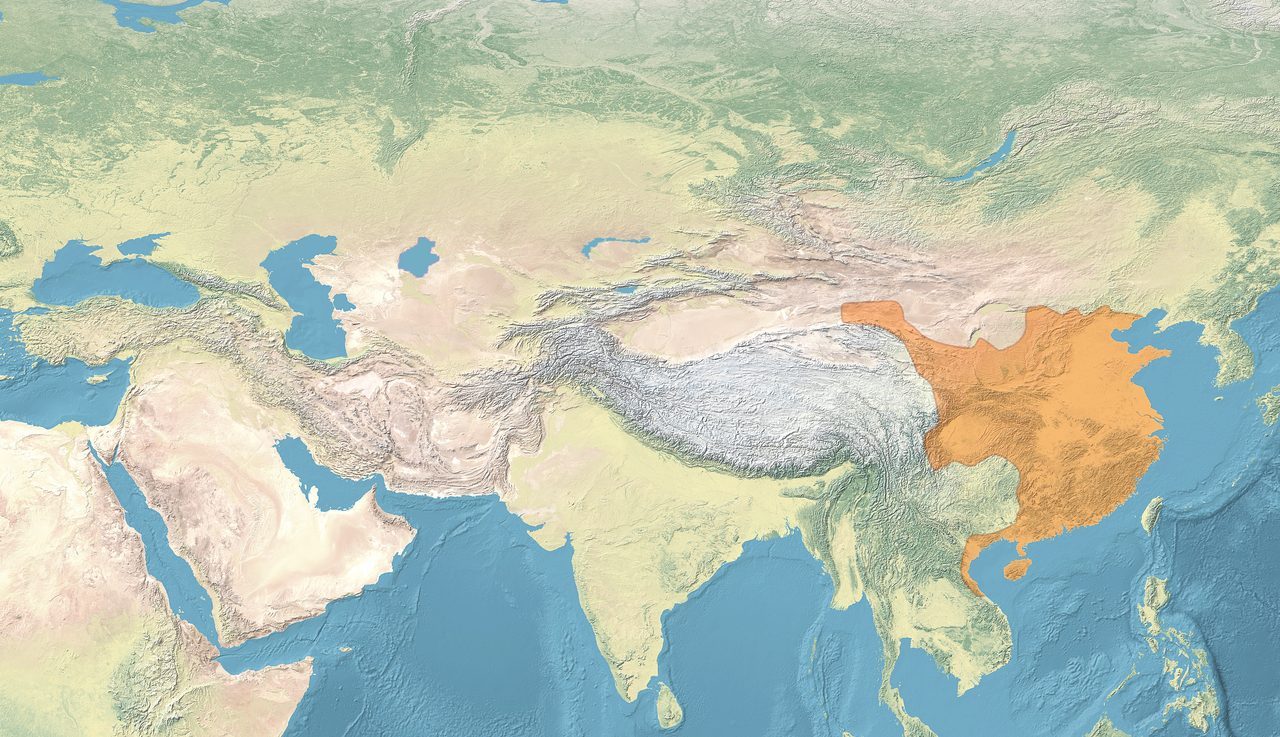
The Sui dynasty (581 – 618 AD) lasted for only thirty-seven years, yet in that short time it achieved something that no ruler had managed for centuries – it reunified China. Like the Qin dynasty some 800 years earlier, the Sui was a short-lived dynasty that did the hard work of unifying the country and building its institutions, only to collapse and leave a great golden age to the dynasty that followed it.
The Sui was founded by Yang Jian, known as Emperor Wen, who seized the throne of the Northern Zhou dynasty in northern China in 581 AD. Eight years later, in 589 AD, Sui armies conquered the Chen dynasty in the south, and China was united under a single emperor for the first time in nearly three hundred years.
Despite its short life, the Sui dynasty left an enormous legacy. It dug the Grand Canal, created the system of government known as the Three Departments and Six Ministries, laid the foundations of the imperial examination system, and filled the state granaries with grain. Almost all of this was inherited by the Tang dynasty, which took the Sui’s institutions and used them to build one of the most celebrated ages in Chinese history. The Sui’s problem was that its second emperor tried to do too much, too quickly, and the dynasty did not survive him.
Key Facts
- Dynasty dates: 581 – 618 AD.
- Preceding dynasty: Northern Zhou, 557 – 581 AD (the Sui conquered the southern Chen dynasty in 589 AD to complete the reunification of China).
- Subsequent dynasty: Tang, 618 – 907 AD.
- First Sui emperor: Wen, reigning from 581 to 604 AD.
- Total number of Sui emperors: 3, although the last of them, Gong, was a young puppet emperor who reigned for only a few months.
- Longest Sui emperor reign: Wen, the first Sui emperor, twenty-three years, reigning from 581 to 604 AD.
- Final Emperor: Gong, reigning from 617 to 618 AD.
The Founding of the Sui Dynasty
China had been divided ever since the fall of the Han dynasty in 220 AD. After centuries of warfare, the country had settled into a long stand-off between a succession of dynasties in the north and a succession of dynasties in the south, a period known as the Northern and Southern Dynasties. The north was finally united by the Northern Zhou dynasty, but the wealthy south, ruled by the Chen dynasty from its capital at Nanjing, remained independent.
Yang Jian was one of the most powerful men in the Northern Zhou. He was a successful general from a great military family, and his daughter Yang Lihua was married to the Northern Zhou emperor, Emperor Xuan. When Emperor Xuan died in 580 AD, Yang Jian manoeuvred himself into the position of regent for the new emperor, his own young grandson, Emperor Jing. Within a year he had forced the boy to abdicate, and in 581 AD he took the throne for himself, founding the Sui dynasty with its capital at Daxing (present-day Xi’an).
Yang Jian then turned his attention to the south. In 589 AD he launched a huge invasion of the Chen dynasty, sending an army said to number more than 500,000 men across the Yangtze River. The last Chen emperor, Chen Shubao, was a poet and a pleasure-seeker rather than a ruler, and his dynasty collapsed almost at once. He was captured hiding in a dry well with two of his favourite concubines, and was brought to the Sui capital as a prisoner. For the first time in nearly three hundred years, all of China was ruled by one emperor.
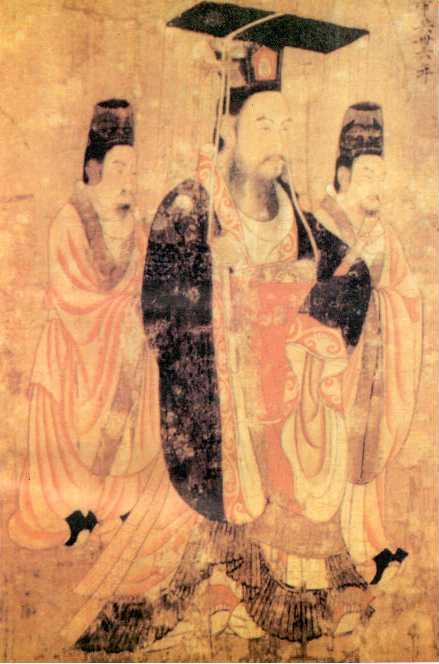
The Sui Dynasty Founder and First Emperor – Wen
Emperor Wen (born in 541 AD, and died in 604 AD) was born Yang Jian in a Buddhist temple, where, according to tradition, he was raised by a Buddhist nun until he was twelve years old. He reigned from 581 to 604 AD, and his reign, known as the Kaihuang era, is remembered as a time of prosperity, good government, and falling taxes.
Unlike many founders, Wen was famous for his frugality. He and his formidable wife, Empress Dugu Qieluo, lived simply at court, and he worked long hours on the business of government. He swept away the harsh punishments of the Northern Zhou and introduced a new legal code, the Kaihuang Code, which was simpler and more humane, and which later became the model for the laws of the Tang dynasty. A new census and reforms to the household registration system brought millions of people who had been hiding from the tax registers back onto the government books, and by 609 AD the registered population of the empire had reached around 50 million people, more than at any time since the Han dynasty.
Wen also created the machinery of government that would run China for centuries. Under the system known as the Three Departments and Six Ministries, which shaped how ancient China’s government was run for the rest of the imperial age, three central departments drafted, reviewed, and carried out imperial policy, whilst six ministries handled personnel, finance, rites, war, justice, and public works. He abolished the old Nine-Rank system, under which aristocratic families had effectively owned government jobs, and began appointing officials on merit instead. Across the empire, state granaries were built and filled with grain, so much of it that the stores laid down under the Sui were still being used decades later, under the Tang.
Wen’s later years were less happy. In 598 AD his invasion of Goguryeo, the powerful kingdom in Manchuria and Korea, was defeated by floods, storms, and disease. At court he grew suspicious and short-tempered, and in 600 AD he deposed his eldest son and heir, Yang Yong, in favour of his second son, Yang Guang. When Wen died in 604 AD, there were already rumours that Yang Guang had not waited for nature to take its course.
The Sui Dynasty at its Height – The Reign of Emperor Yang (604 – 618 AD)
Emperor Yang (born in 569 AD, and died in 618 AD), who reigned from 604 to 618 AD, was one of the most ambitious emperors in Chinese history – and ambition, in the end, destroyed both him and his dynasty. Where his father had been frugal and cautious, Yang was extravagant and restless, and he launched a series of construction projects on a scale that China had not seen since the First Emperor of Qin.
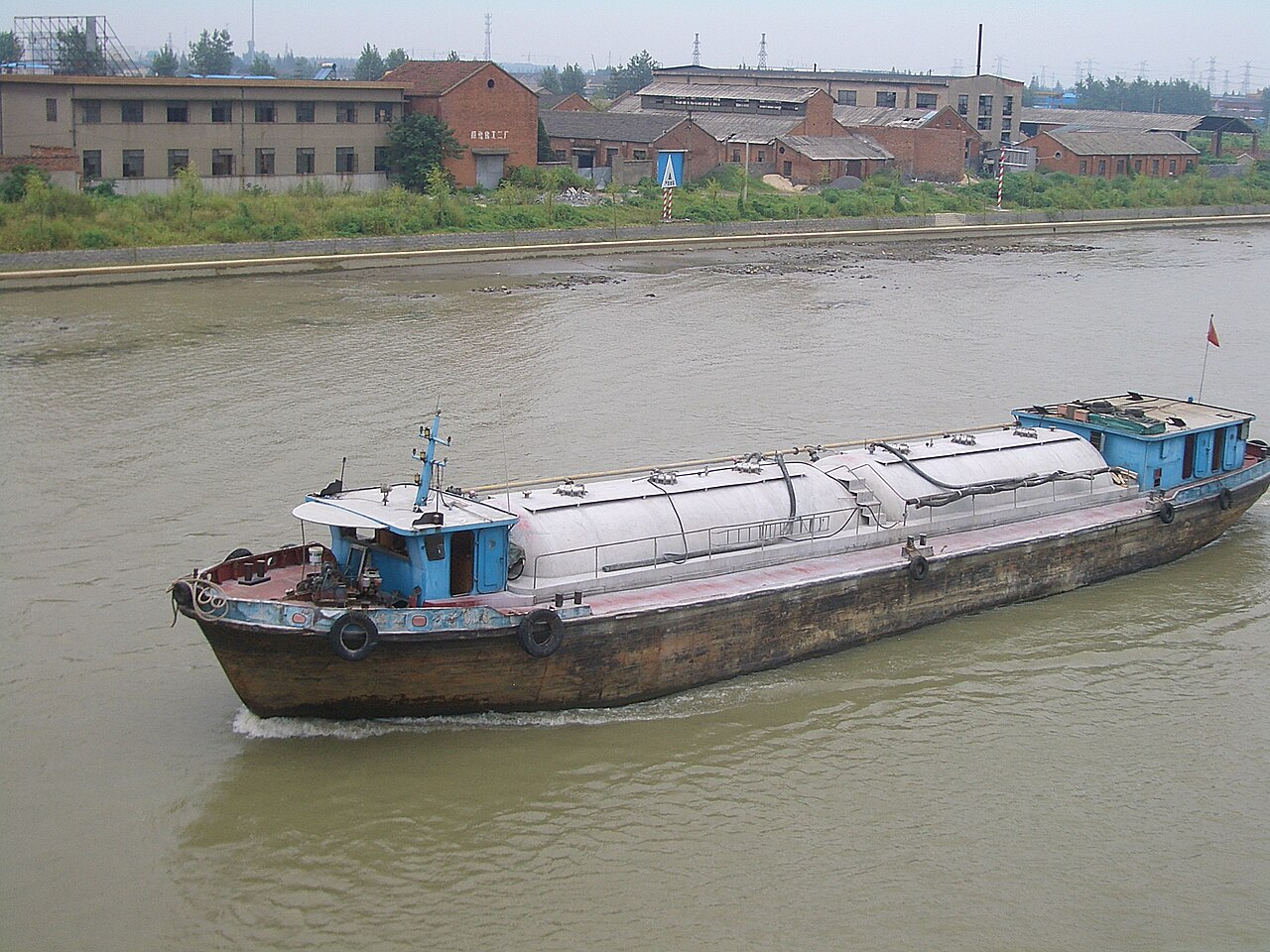
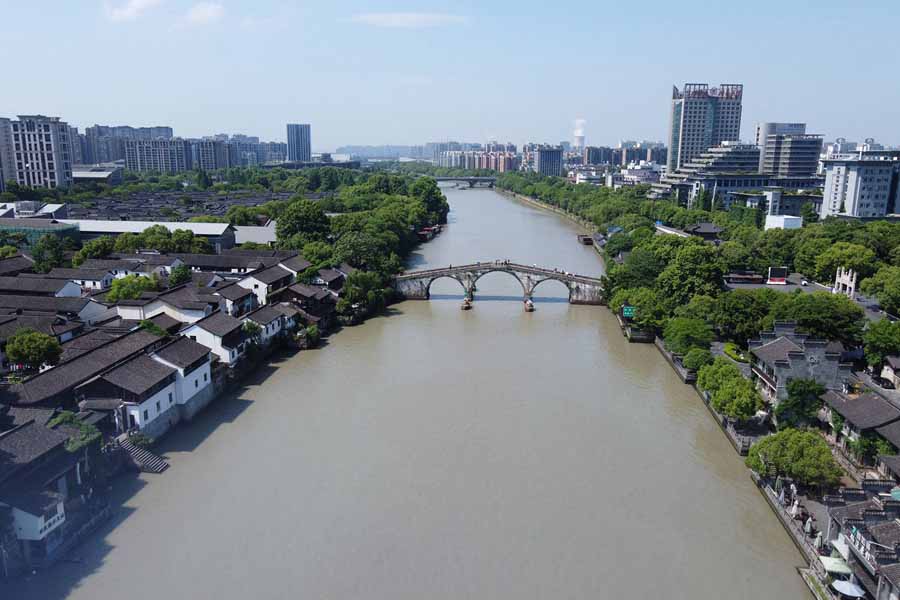
The greatest of these projects was the Grand Canal. Beginning in 605 AD, Yang linked together older canals and natural rivers into a single network some 2,500 kilometres long, centred on his new eastern capital at Luoyang. In the south the canal reached Hangzhou; in the north it reached Zhuojun, near modern Beijing. Millions of labourers were conscripted to dig it, and huge numbers died in the work, but when it was finished, grain from the rich rice lands of the Yangtze delta could be shipped north to feed the capitals and the armies on the frontier. The canal tied north and south China together economically, and it remained the main artery of the empire for more than a thousand years.
Yang also rebuilt Luoyang as a magnificent eastern capital, filled with palaces, parks, and granaries, repaired long sections of the Great Wall, and built roads across the empire. In the west, Sui armies conquered the Tuyuhun kingdom around Lake Qinghai in 609 AD, securing the routes of the Silk Road, and in 610 AD Yang staged a spectacular reception at Luoyang for merchants and envoys from across Central Asia, with the whole city turned into a free market and festival to impress them.
However, like Emperor Wu of Han before him, Yang overreached himself in war. Between 612 and 614 AD he launched three enormous invasions of Goguryeo. The first, in 612 AD, involved an army said to be more than a million strong, and it ended in catastrophe, with almost the entire invasion force destroyed. The second and third campaigns also failed. The cost of these wars, on top of the canal, the palaces, and the constant imperial tours, emptied the treasury and broke the patience of the population. By the time the third campaign limped home in 614 AD, rebellions were breaking out all over China.
Read more: Top 10 Capital Cities of Ancient China
Art and Culture During the Sui Dynasty
The short Sui dynasty is remembered above all for its engineering. As well as the Grand Canal, the age produced the Zhaozhou Bridge in Hebei province, built between 595 and 605 AD by the engineer Li Chun. The bridge is the world’s oldest surviving open-spandrel stone arch bridge. Its elegant design, with small arches in the shoulders of the main arch to let floodwater pass through, was centuries ahead of European bridge building, and the bridge is still standing, and still in use, more than 1,400 years later.
The Sui also changed the way China chose its officials, and so changed Chinese culture itself. Emperor Wen had begun selecting officials by recommendation and testing rather than by birth, and in 605 AD Emperor Yang created the jinshi degree, the highest qualification in a new system of imperial examination in the Confucian classics. Under the Tang and Song dynasties this system grew into the main road into government service, and it lasted, in one form or another, until 1905.
Read more: How Were Government Officials Chosen in Ancient China?
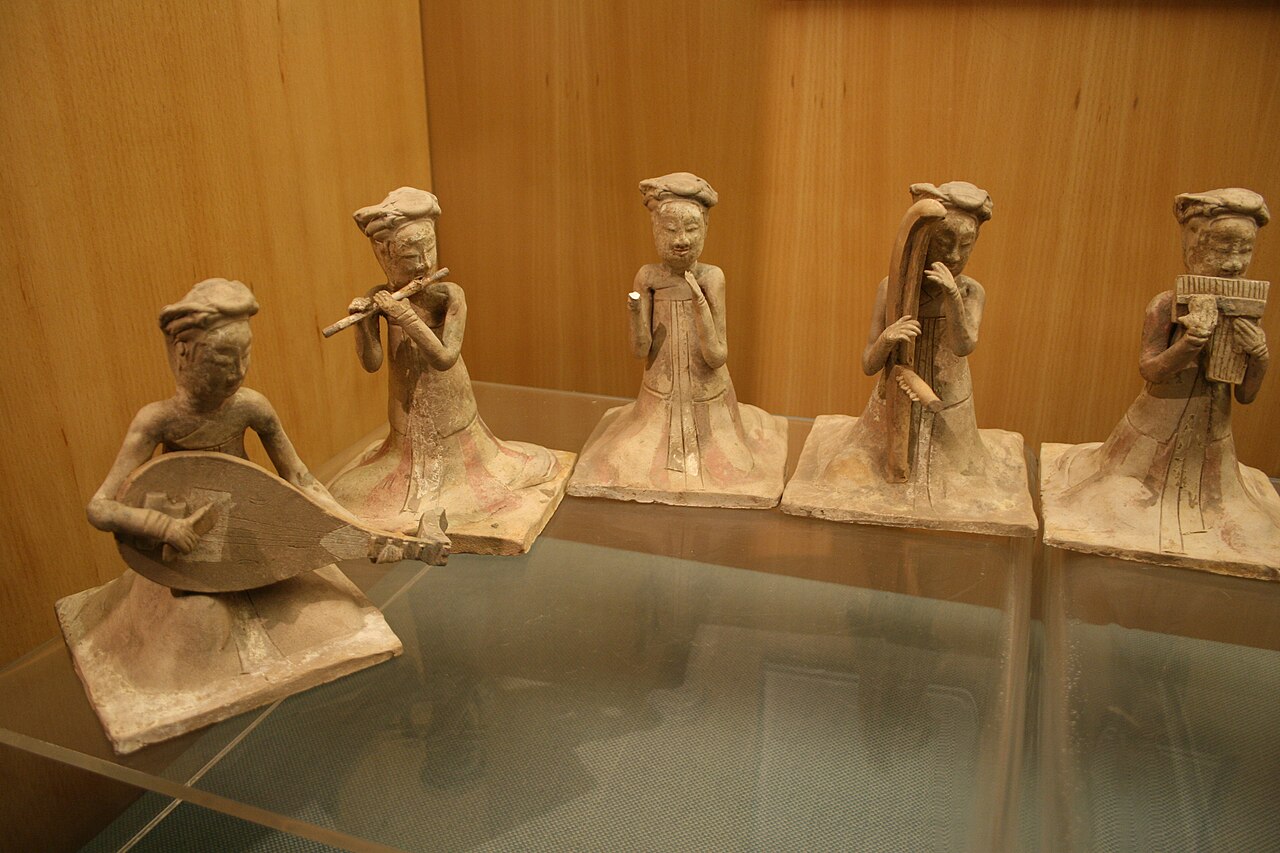
The reunified empire was prosperous and confident, and its arts flourished. The capital, Daxing, was laid out by the architect Yuwen Kai on a vast grid plan and was one of the largest cities in the world. Sui craftsmen developed fine white porcelain, and the painted pottery figurines of dancers, musicians, and horsemen buried in Sui tombs show a lively and cosmopolitan society. Some historians also trace the beginnings of woodblock printing, one of China’s great inventions, to the final years of the dynasty.
Religion During the Sui Dynasty
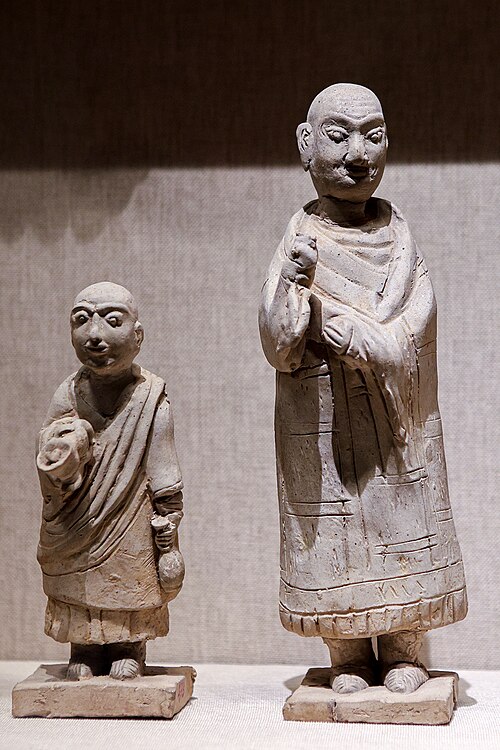
The Sui dynasty was a golden age for Buddhism in China. Emperor Wen, who had been raised by a Buddhist nun, presented himself as a Buddhist ruler and a protector of the faith. He built temples across the empire, supported the translation of scriptures, and in a series of campaigns in 601, 602, and 604 AD he had Buddhist relics distributed and enshrined in pagodas in more than a hundred prefectures, binding the newly reunified empire together with a shared religion. Under Sui patronage the monk Zhiyi (538 – 597 AD) founded the Tiantai school on Mount Tiantai, one of the first distinctively Chinese schools of Buddhism, and other schools, such as Sanlun, also took shape at this time.
At the same time, the Sui emperors restored Confucianism to its place at the centre of government. Confucian scholars were honoured at court, the Confucian classics became the basis of the new examinations, and state rituals and sacrifices were performed in the Confucian tradition. Daoism, the third of China’s great traditions, also received imperial support, and the Sui court was careful to patronise all three teachings rather than favouring one at the expense of the others.
Buddhism, in particular, did important work for the dynasty. After nearly three centuries in which north and south China had developed separately, monks, temples, and pilgrims crossed freely between the two halves of the empire, and a shared Buddhist culture helped to make reunification feel natural to ordinary people.
The Fall of the Sui Dynasty
The fall of the Sui was astonishingly fast. The three failed invasions of Goguryeo, and the endless labour demanded by the canal, the capitals, and the imperial tours, pushed the population too far. The first great rebellion broke out in Shandong in 611 AD, and its leader, Wang Bo, recruited followers with a song about the disasters of the Korean campaigns – a song whose message was, in effect, ‘do not go to Liaodong to die’. Within a few years, rebel armies controlled large parts of the empire, and aristocratic families began to raise armies of their own.
Emperor Yang, rather than returning north to face the crisis, withdrew in 616 AD to Jiangdu (present-day Yangzhou) on the Grand Canal, where he lived in luxury whilst the north slipped away. In 617 AD the general Li Yuan seized the capital, Daxing, and placed Emperor Yang’s young grandson, Yang You, on the throne there as Emperor Gong – in reality a puppet, whilst Li Yuan held the power. In 618 AD, Yang’s own guards at Jiangdu mutinied, and the emperor was strangled. A few weeks later, Li Yuan forced the boy Emperor Gong to abdicate and declared himself emperor, founding the Tang dynasty.
One last Sui prince, Yang Tong, held out at Luoyang until 619 AD, but the game was up. The Sui dynasty, which had reunified China after nearly three centuries of division, had lasted just thirty-seven years.
Summary
The Sui dynasty lasted for only thirty-seven years and had just three emperors, but few short dynasties have changed China so much. It ended nearly three centuries of division, rebuilt a unified empire, dug the Grand Canal that linked north and south for a thousand years, created the Three Departments and Six Ministries system of government, and planted the seeds of the imperial examination system.
The Sui’s tragedy was timing. Emperor Wen built a rich, well-governed empire; his son, Emperor Yang, spent its wealth and its people’s strength on projects and wars too grand even for that empire to bear. Almost everything the Sui built was inherited by the Tang, and it is one of the ironies of Chinese history that the dynasty which made the Tang golden age possible is remembered mainly for the tyranny of its second emperor.
Read more: Ancient Chinese Dynasty Timeline