
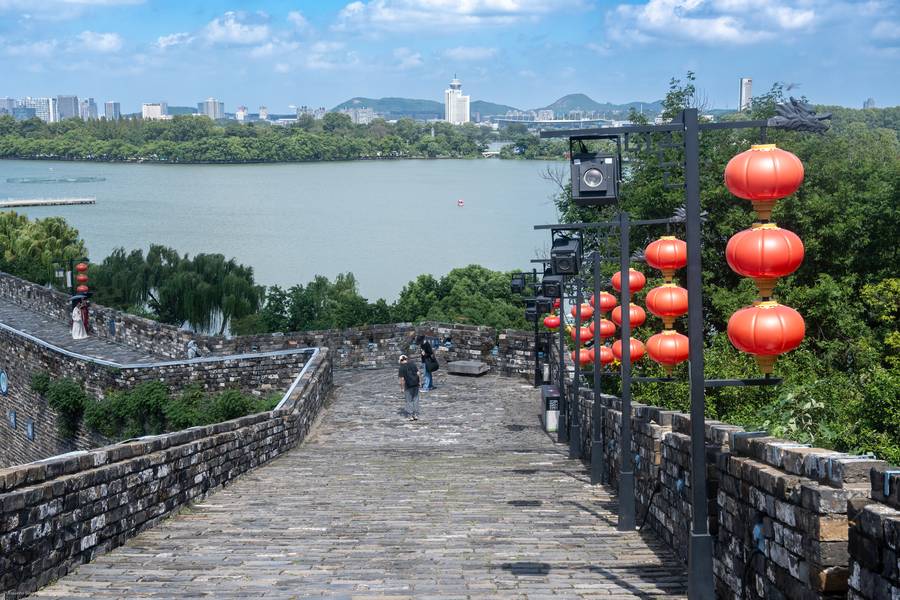
In the middle of the nineteenth century, China was torn apart by the largest civil war of the age. The rising began in January 1851, when the followers of Hong Xiuquan (洪秀全), a failed examination candidate from the south, took up arms at Jintian (金田) in Guangxi (广西). Within two years his armies had marched up the Yangtze and captured Nanjing, the empire’s second city, which they held for eleven years. At its height the movement ruled some of the richest land in China and fielded armies hundreds of thousands strong. It ended in 1864, when Qing forces retook Nanjing after a long siege. The rising is known in English as the Taiping Rebellion, and it left the Qing dynasty fatally weakened and China changed for ever.
The two sides saw the conflict in very different ways. Hong and his followers believed they were carrying out the will of God: destroying idols, sharing out the land and building a kingdom of peace on earth. The Qing court saw a rebellion that threatened the dynasty, the Confucian order and the lives of its subjects, and it fought to destroy it. Foreigners watched with mixed feelings: some hoped the movement’s Christian language meant China might open to the outside world, while others feared for trade and for the safety of the treaty ports. In the end Britain and France helped the Qing crush the rising. This article keeps all sides in view.
When the rising began, China was ruled by the Qing dynasty, which had held the throne since 1644. The dynasty had survived rebellions before, but none on this scale. It was the gravest challenge to a ruling house since the An Lushan Rebellion of the eighth century, more than a thousand years earlier, and it struck at a dynasty already weakened by the Opium Wars and by unrest across the country. The Taiping story is one of faith, war and revolution — and of a human cost so large that no reliable count of the dead exists.
Key Facts
- Dates: 1850–1864; the rising began in January 1851 and Nanjing fell in July 1864
- Leader: Hong Xiuquan, who called himself the Heavenly King
- The Taiping state: the Heavenly Kingdom, with its capital at Nanjing
- Spark: the rising at Jintian, in January 1851
- Turning point: the bloody purge of September 1856, which broke the movement’s leadership
- The Qing response: new regional armies raised by scholar-officials, with foreign help from 1860
- Foreign role: Britain and France first neutral, then on the Qing side
- End: Nanjing fell on 19 July 1864, weeks after Hong Xiuquan’s death
- Cost and outcome: estimates of the dead run to tens of millions; the Qing dynasty survived, fatally weakened
A Failed Examination
Hong Xiuquan was born in 1814, into a Hakka (客家) family in Hua County (花县), in Guangdong (广东). The Hakka were settlers who had moved south over many generations, and they were often looked down on by their longer-settled neighbours. Hong was a bright boy, and his family hoped he would pass the imperial examinations and become an official. He studied the Confucian classics for years, but he failed the examinations four times between 1828 and 1843, and the door to office stayed shut.
After one failure he fell seriously ill, and in his illness he had vivid visions. In Guangzhou (广州) he had been given a Christian tract written by Liang Fa (梁发), called Good Words to Admonish the Age (Quanshi Liangyan, 劝世良言). Years later he read the tract again, and he reinterpreted his visions through it. He came to believe that he was a son of God (Shangdi, 上帝) and the younger brother of Jesus Christ, sent to earth to destroy idols and drive out evil. It was a belief that would change his life, and the history of China.
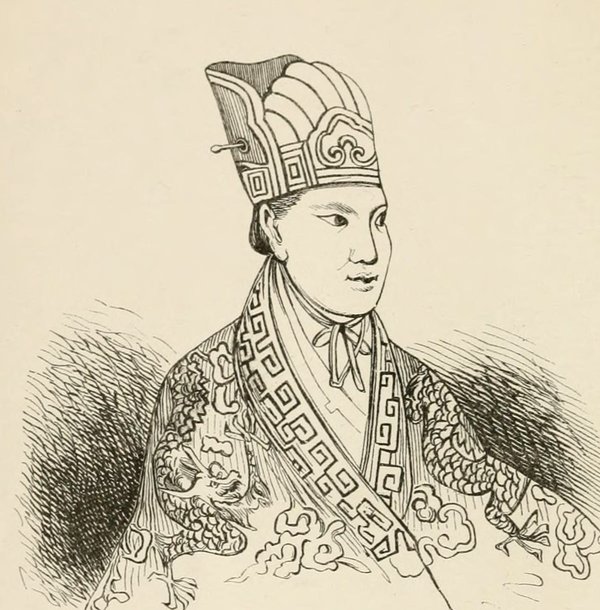
Hong began to preach his new faith, and he found listeners. He told them that the idols in the temples were false, that there was one true God, and that the old order of things was about to be swept away. His message spoke to people who had little reason to love the world as it was: poor farmers, miners and labourers who felt shut out of the prosperity they saw around them. What began as preaching would soon become a movement, and then an army.
The God Worshippers
With his friend and follower Feng Yunshan (冯云山), Hong founded a religious society, the God Worshipping Society (Bai Shangdi Hui, 拜上帝会), and began preaching in Guangxi. Its members worshipped one God, refused to bow before idols, and denounced the Confucian order whose temples and shrines filled the land. The society drew followers from the poor and the discontented: Hakka villagers, miners and landless labourers, many of them people with little to lose.
Guangxi in the 1840s was poor and unsettled. Tensions between Hakka newcomers and longer-settled villagers often broke into violence, disbanded soldiers drifted through the province, and secret societies flourished. The Qing authorities, thin on the ground, struggled to keep order. It was fertile ground for a movement that promised a new world.
The society grew quickly, bound together by shared worship and strict rules. Qing officials, alarmed by its growth and its denunciation of idols and temples, moved against it, and clashes with government forces began. By the end of 1850 Hong’s followers were gathering at Jintian, ready to fight rather than scatter. The preaching was over; the rebellion was about to begin.
From Jintian to Nanjing
In January 1851 Hong’s followers rose at Jintian. Hong proclaimed himself Heavenly King (Tian Wang, 天王) and named his state the Taiping Heavenly Kingdom (Taiping Tianguo, 太平天国), the Heavenly Kingdom of Great Peace. At Yongan (永安) in 1851–52 he enfeoffed his chief followers as kings: Yang Xiuqing (杨秀清) became the East King, Xiao Chaogui (萧朝贵) the West King, Feng Yunshan the South King, Wei Changhui (韦昌辉) the North King, and Shi Dakai (石达开) the Wing King. Xiao Chaogui and Feng Yunshan both died in 1852.
From Guangxi the Taiping army marched north, gathering followers as it went. It took Wuchang (武昌) in January 1853 and Anqing (安庆) in February, and in March 1853 it captured Nanjing, one of the great cities of the empire. Hong renamed the city Tianjing (天京), the Heavenly Capital, and made it the seat of his kingdom. The Qing court, which had dismissed the rising as a local revolt, now faced a rival state in the heart of China.
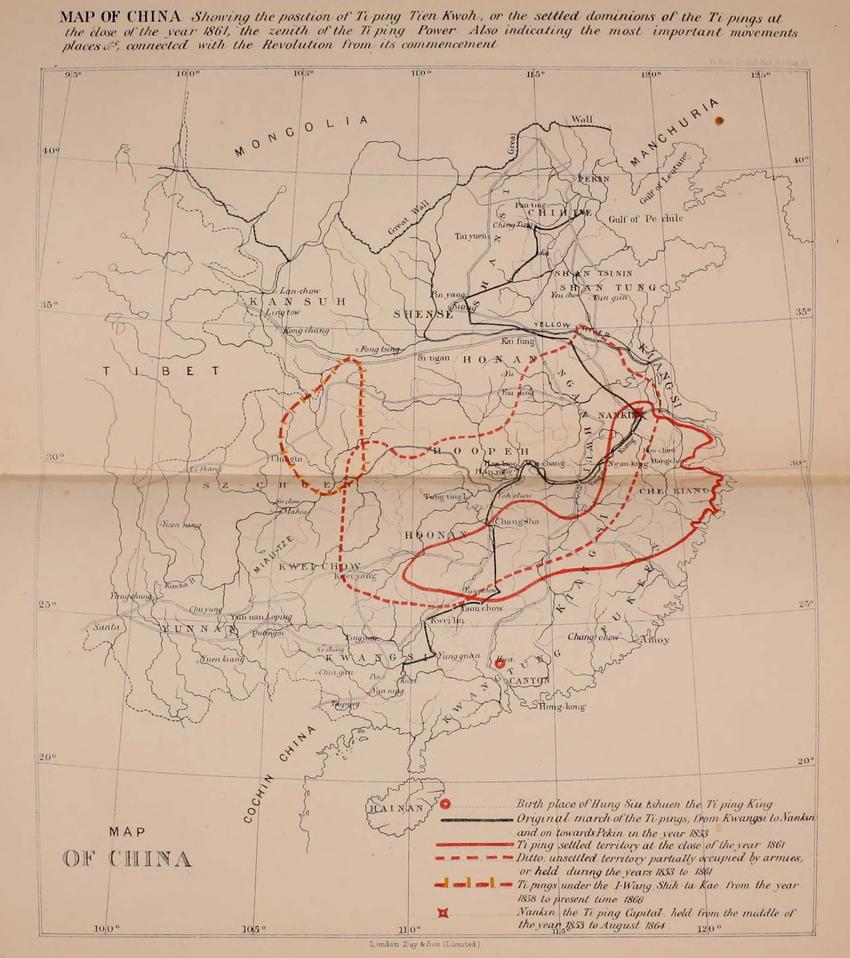
Hong also sent an army north towards Beijing. The Northern Expedition of 1853–1855 pushed deep into the north, reached the area near Tianjin (天津), and was destroyed. The failure ended Taiping hopes of taking the capital, but the kingdom held the lower Yangtze, the richest region of the empire, and for a decade the Qing could not dislodge it.
The Heavenly Kingdom
The Taiping state stood for a new order. In 1853 it proclaimed the Land System of the Heavenly Dynasty (Tianchao Tianmu Zhidu, 天朝田亩制度), under which land would be divided equally by household, with no private ownership in theory and produce held in common granaries. Land was the heart of the Chinese economy, and the programme struck at the root of the old order. But it was a programme on paper: the Land System was never fully put into practice, and in the lands the Taiping held, old ways of owning and working the land largely went on.
The kingdom’s social rules were just as sweeping, and they too were proclaimed rather than fully carried out. Men and women were organised in separate camps and armies. The kingdom held examinations for women, the first in Chinese history. Foot-binding was banned, as were the Manchu queue hairstyle, opium, alcohol, gambling and tobacco. Confucian temples and idols were destroyed, and the Sabbath was observed. For the poor, the message of equality was powerful; for the scholars and landowners who ran local society, it was a threat to everything they knew.
In 1859 Hong’s cousin Hong Rengan (洪仁玕) reached Tianjing and was made Shield King (Gan Wang, 干王). His programme, A New Work for the Aid of Government, published in 1859, proposed railways, steamships, banks, insurance, newspapers and foreign trade — a plan to build a modern state. It was never implemented, and the war left no room for it. The kingdom’s ideas outran what it could do, and its government struggled to turn preaching into administration.
The Tianjing Incident
By 1856 Yang Xiuqing, the East King, had gathered great power in his own hands, and Hong grew alarmed. In September 1856 Hong ordered Wei Changhui to kill Yang. Wei’s men killed Yang and thousands of his followers in a bloody purge. Estimates of the dead vary, and no reliable figure exists. The purge broke the trust at the heart of the movement.
Wei himself was killed soon after, on Hong’s orders. Shi Dakai, disgusted by the killings, left Tianjing in 1857 with a large army on a separate expedition. His expedition ended in 1863, when he was captured and executed in Sichuan (四川). The kingdom had lost its ablest commanders in a single stroke, and the unity of its early years was gone.
The Tianjing Incident was the turning point of the rebellion. The movement kept fighting for eight more years, but it never recovered its early discipline and drive. Its leaders were divided, its armies fought on without a clear plan, and the Qing, which had seemed on the edge of collapse, was given time to rebuild its strength.
The Qing Fight Back
The Qing recovery began with new armies. Zeng Guofan (曾国藩), a Hunan (湖南) scholar-official, raised a force from local militia, the Hunan Army (Xiang Army, 湘军), from 1852–53. It was loyal to its commander rather than to the distant court, and disciplined and well led. It retook Wuchang, and after a long siege it took Anqing in September 1861, opening the way down the Yangtze towards Nanjing.
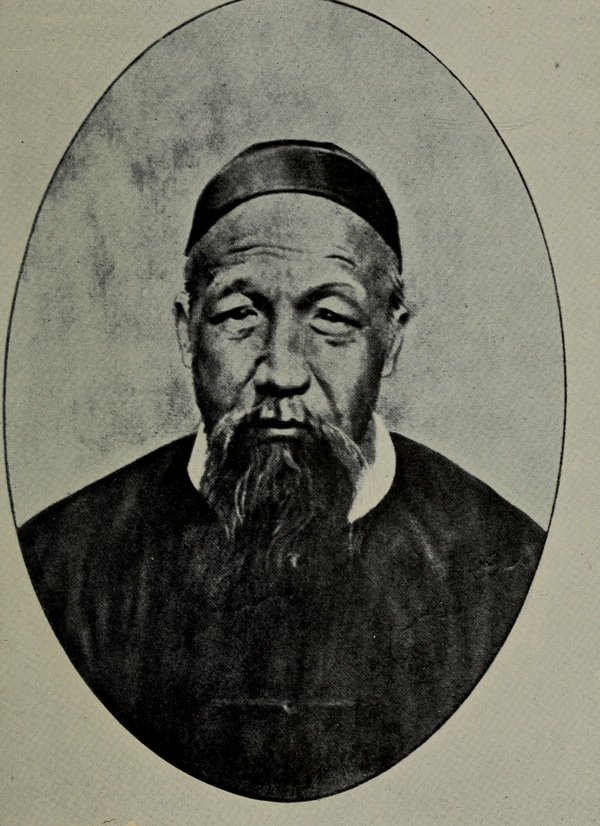
Others followed Zeng’s example. Li Hongzhang (李鸿章) raised the Huai Army (淮军) in 1862, and Zuo Zongtang (左宗棠) campaigned in Zhejiang (浙江). These regional armies, paid for by local taxes and led by men the court had to trust, became the real strength of the Qing war effort. The old imperial armies, the Banners and the Green Standard, had proved unable to stop the Taiping on their own.
Foreign powers played a growing part. At first Britain and France were neutral, and some foreigners were hopeful about the movement’s Christian language. But after the treaties of 1860, which replaced the old tribute system with a new diplomatic order, Britain and France sided with the Qing. Taiping attacks on Shanghai, where foreign trade was centred, were repulsed in 1860 and 1862.
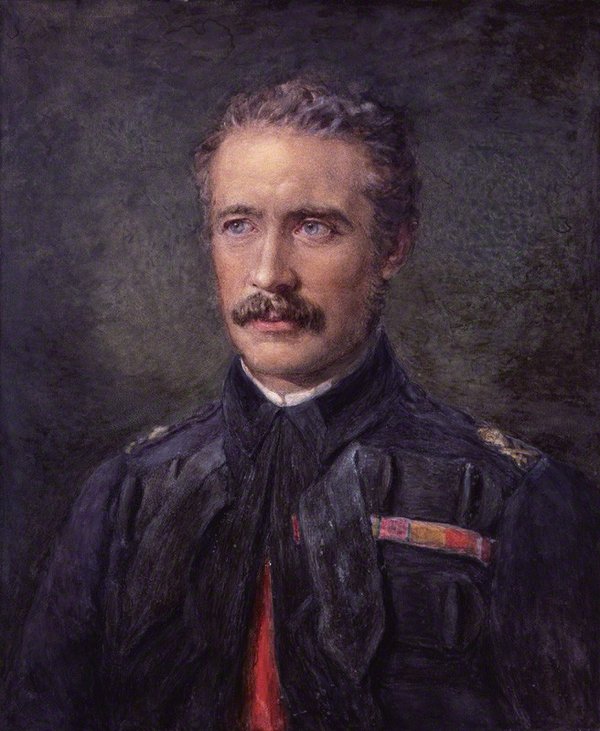
The most famous foreign force was the Ever Victorious Army, formed in 1860 by the American adventurer Frederick Townsend Ward to defend Shanghai. Ward was killed in 1862, and the British officer Charles Gordon, known as “Chinese Gordon”, took command in 1863. Gordon retook Suzhou (苏州) in December 1863, after its Taiping commanders surrendered and were then executed by Li Hongzhang’s forces, an act Gordon protested. With foreign guns and disciplined troops on the Qing side, the balance of the war had changed.
The Fall of Nanjing
From 1862 to 1864 Qing forces besieged Nanjing, cutting its supplies and digging closer to the walls. Inside the city, food ran short as the siege tightened, and the defenders waited for relief that never came.
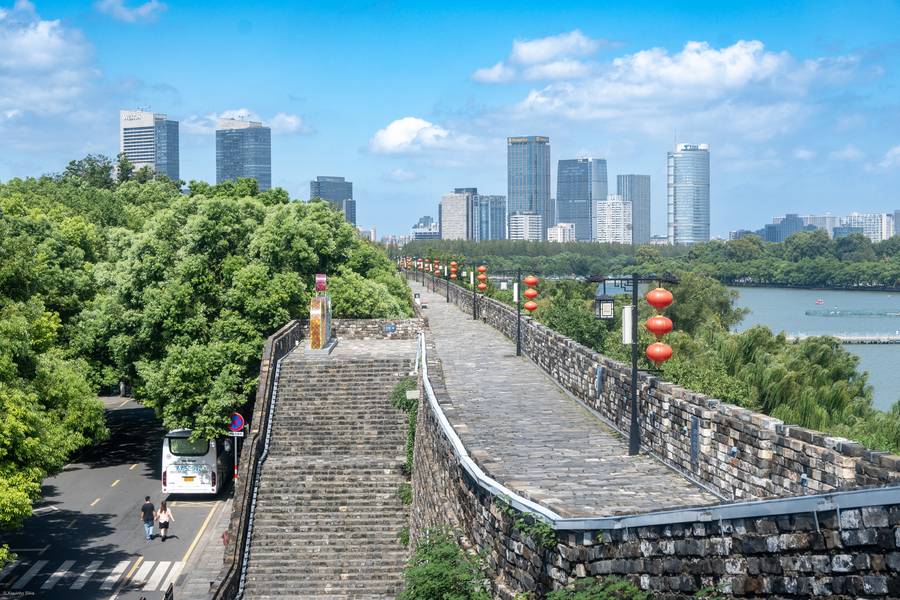
Hong Xiuquan died on 1 June 1864. The cause of his death is uncertain: accounts differ, and illness is the usual explanation. On 19 July 1864, after a mine explosion breached the city wall, Qing forces stormed Nanjing. Hong’s teenage son, Hong Tianguifu (洪天贵福), who had been proclaimed the Young Monarch, fled the city. He was captured in October 1864 and executed. Scattered Taiping remnants fought on for about two more years.
The human cost of the rebellion was immense, and it cannot be counted with any confidence. Estimates of the dead run to tens of millions, and they vary enormously. The figures include famine and disease as well as deaths in battle, and no reliable count exists. Whatever the true number, the rebellion ranks among the deadliest conflicts in human history, and the lower Yangtze, the heart of the fighting, was left devastated.
Consequences
The Qing dynasty survived the rebellion, but it was fatally weakened. Power had shifted to the regional commanders — Zeng Guofan, Li Hongzhang and Zuo Zongtang — whose armies answered to them first and to the court second. Their rise pointed towards the warlordism of the early twentieth century. The treasury was exhausted, and the lower Yangtze, the richest region of the empire, had been devastated by more than a decade of war.
The shock of the rebellion helped to drive the Self-Strengthening Movement of the 1860s to 1890s, an attempt to learn Western military and industrial techniques while keeping Chinese institutions intact. The rebellion’s aftermath also overlapped with other mid-century uprisings, the Nian (捻) and Muslim rebellions.
The Taiping programme did not die with the kingdom. Its calls for shared land, equal treatment for women, and railways, banks and foreign trade would be heard again in the reform movements of the decades that followed. The rebellion had shown that the old order could be challenged from below, and that the dynasty could only survive by leaning on regional armies and foreign help. China would not be the same again.
Summary
For fourteen years, from 1850 to 1864, the Taiping Rebellion shook China to its foundations. A failed examination candidate, believing himself chosen by God, built a rival state that held Nanjing for eleven years and proclaimed a new order of shared land and equality. The movement was broken from within by the Tianjing Incident of 1856, and from without by new Qing armies and foreign help. When Nanjing fell in July 1864, the Heavenly Kingdom fell with it.
The rebellion left the Qing dynasty standing but hollowed out, its power shared with the regional commanders who had saved it. It cost lives on a scale that defies counting, and it marked the beginning of the end for imperial China. The Taiping dream of a kingdom of peace ended in ruins — but the questions it raised, about land, equality and China’s place in the world, would shape the century that followed.
Read more: Chinese Dynasty Timeline