
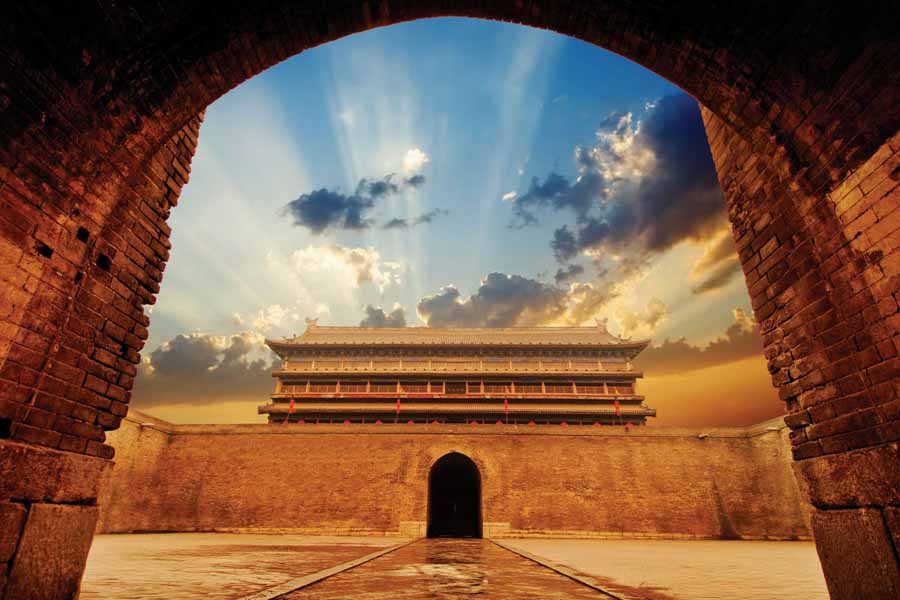
In the winter of 755, the Tang dynasty was the richest and most powerful empire on earth. Its capital, Chang’an, was the largest city in the world, crowded with merchants from Persia, India and Central Asia, and its armies guarded frontiers from Korea to the Pamirs. Within eight years, that empire lay in ruins. The man who broke it was one of its own generals: An Lushan (安禄山), a frontier commander of Sogdian and Turkic birth, who turned the empire’s largest army against it in December 755.
The rebellion that followed lasted until 763 and spanned the reigns of three emperors. Both capitals fell. The emperor fled, his favourite consort was strangled by his own guards, and the court survived only by borrowing foreign cavalry. When the war finally ended, the Tang dynasty still stood — but it never recovered its strength. The rebellion broke the golden age of Emperor Xuanzong (玄宗), and the China that emerged was a different country: divided among warlords, taxed in a new way, and turned inwards.
It is remembered as one of the great turning points of Chinese history: the hinge between the early Tang, open and expansive, and the late Tang, defensive and divided.
Key Facts
- Dates: December 755 to February 763 — eight years
- Rebel leader: An Lushan, a frontier general commanding three north-eastern commands
- Emperor at the outbreak: Xuanzong, in the 44th year of his reign
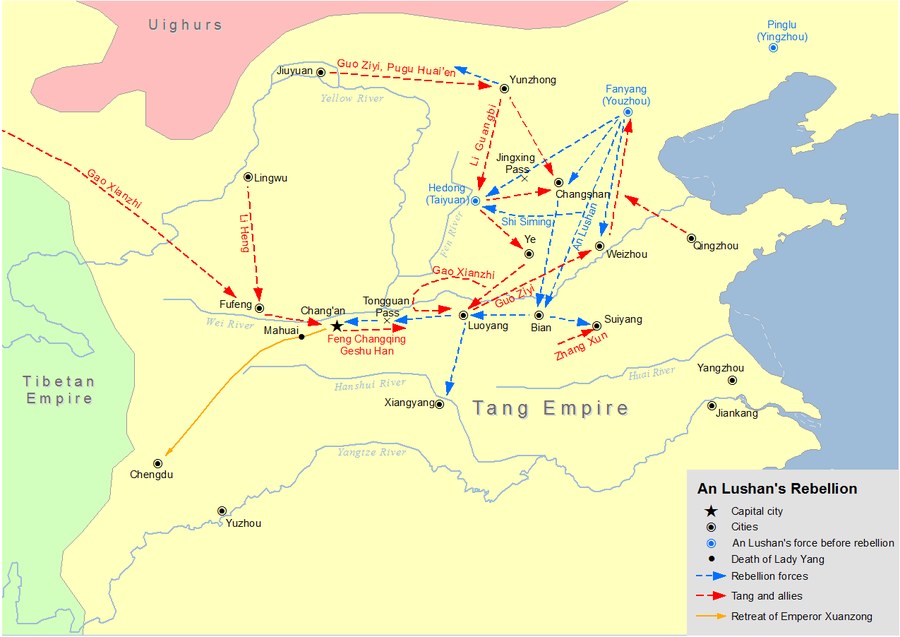
- Capitals lost: Chang’an and Luoyang, both taken by the rebels in 756
- Rebel state: proclaimed at Luoyang in February 756; four rulers, all of whom died violently
- Turning point: the recapture of both capitals in late 757, with Uyghur cavalry
- End: the last rebel ruler killed himself in early 763
- Registered population: about 52.9 million in 754; about 16.9 million in 764
- Legacy: warlord commands, a new tax system, and an empire that never regained its strength
The Cracks Under the Golden Age
Emperor Xuanzong came to the throne in 712, and for nearly thirty years his reign was a golden age. The empire was at peace and the treasury was full. But the army that guarded this empire had quietly changed. The old farmer-soldier militia had decayed beyond repair. In its place stood professional, long-service frontier armies under military commissioners with wide powers.
The militia system was called Fubing (府兵). It rested on the equal-field system, Juntian (均田), under which the state granted land to peasant families in return for tax and service. Both depended on the state holding land to give away, and by the eighth century great estates had swallowed it, the registers were full of gaps, and the militia could no longer raise the soldiers needed. The Han dynasty had fielded armies of conscripted peasants centuries earlier, but the Tang, with frontiers stretching from Manchuria to Central Asia, needed soldiers who stayed under arms for years.
The answer was the Jiedushi (节度使), the military commissioner. Each frontier command had one, and the commissioners combined military, civil and fiscal power in a single pair of hands. The system worked while the court was strong. But it piled enormous power on a few men on distant frontiers, and the Tang founders knew the danger — the Sui dynasty had broken itself within a generation by overtaxing its people for great projects and foreign wars. The frontier armies were meant to protect the empire; in the wrong hands, they could destroy it.
By the 740s, the ageing Xuanzong left government to favourites, and the court preferred foreign generals for the frontier commands: men with no family base at court, who — it was assumed — could never threaten the throne. It was a dangerous calculation.
Read more: Emperor Wu of Han, Insatiable Ambition for Territorial Expansion
The General Who Rebelled
An Lushan was born in 703, the son of a Sogdian father and a Turkic mother, on the north-eastern frontier. He rose through the frontier armies by talent for war — and for flattering the powerful. By the 750s he held three north-eastern commands at once: Fanyang (范阳), Pinglu (平卢) and Hedong (河东), with some 160,000 men under his orders — the largest army in the empire.
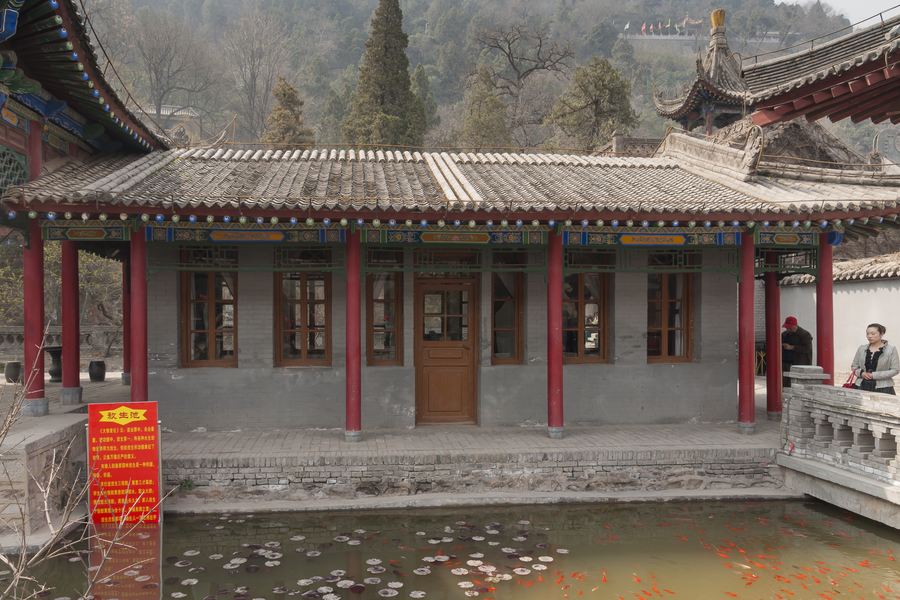
At court, An Lushan was a favourite of the emperor and of the emperor’s beloved consort, Yang Guifei (Yang Yuhuan, 杨玉环, 719–756). He played the loyal, bluff soldier, and Xuanzong trusted him completely. According to the traditional account, Yang Guifei even adopted the general, sixteen years her senior, as her son. True or not, it shows how close he stood to the throne. The emperor and his consort spent their winters at the hot springs of Huaqing Chi (华清池), near Chang’an, where the court followed them.
His enemy was the chief minister, Yang Guozhong (杨国忠), Yang Guifei’s cousin, who saw An Lushan as a rival. Yang Guozhong pressed Xuanzong to move against him, and An refused the court’s summons to the capital. In December 755, claiming that he marched to “clear the ruler’s side” of the wicked minister, he led his army south from Fanyang. The pretext fooled nobody: it was rebellion, and it was aimed at the throne itself.
Revolt: 755–756
The rebels moved fast. An Lushan’s army swept south along the Grand Canal route and took Luoyang, the eastern capital, in January 756, meeting little resistance. In February, An proclaimed himself emperor of a new dynasty, the Great Yan (Da Yan, 大燕). The Tang suddenly faced a rival emperor holding its second city.
The road to Chang’an ran through Tong Pass (Tongguan, 潼关), a fortress in the mountains where the Yellow River turns east. The veteran general Geshu Han (哥舒翰) held it, planning to wait: the rebels’ supply lines were long, and time was on the Tang side. But Xuanzong, pressed by Yang Guozhong, ordered him to attack. Geshu Han obeyed against his judgement, was defeated, and was captured. In July 756 the pass fell, and the road to the capital lay open.
Xuanzong fled Chang’an for Chengdu, travelling with Yang Guifei, Yang Guozhong and a small escort of guards. At Mawei (马嵬) station, west of the capital, the guards mutinied. They blamed Yang Guozhong for the disaster, killed him, and demanded the death of Yang Guifei as well. The emperor, powerless to refuse, agreed. Yang Guifei was strangled, and the court marched on to Sichuan without her.
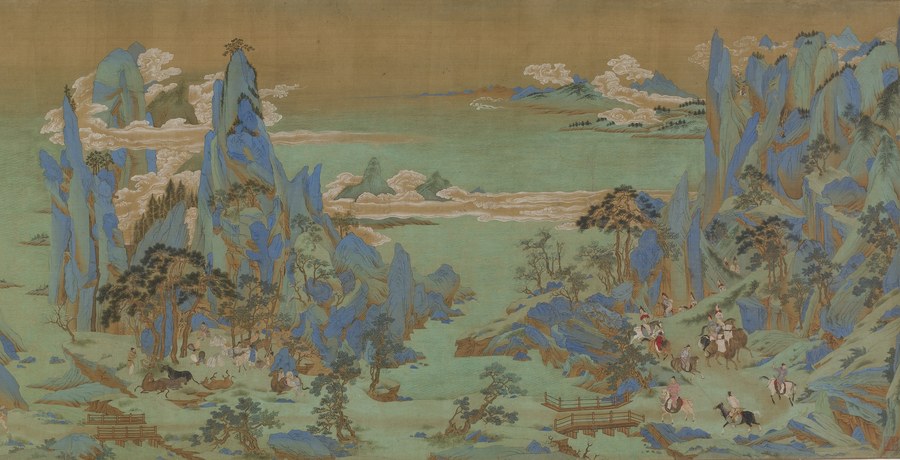
The crown prince, Li Heng (李亨), had turned north instead of following his father. At Lingwu (灵武), on the northern frontier, he had himself proclaimed emperor, taking the title Suzong (肃宗). The empire now had two emperors: a father in exile and a son holding the north-west. Xuanzong did not object; he would die in 762, a year before the war ended, never having regained his throne.
Eight Years of War: 757–763
Suzong gave the command to two generals, Guo Ziyi (郭子仪) and Li Guangbi (李光弼), and bought the help of the Uyghur Khaganate, the steppe empire to the north. Bayanchur Khan, the Uyghur khagan, sent some 4,000 horsemen. In October 757 Tang and Uyghur forces retook Chang’an; a month later they retook Luoyang. According to the traditional account, Suzong had promised the Uyghur horsemen the right to loot the recaptured capital; persuaded to spare Chang’an, they plundered Luoyang instead. The price of foreign help was paid by the people of the eastern capital.
But the rebellion did not die with its leader. In January 757, An Lushan was murdered by his own son, An Qingxu (安庆绪), who had been helped by one of his father’s advisers. An Lushan was ill and blind by then. An Qingxu took the Yan throne and proved a weak ruler. In 759 he was murdered in turn by Shi Siming (史思明), An Lushan’s old lieutenant, who seized the throne for himself. In 761 Shi Siming was murdered by his own son, Shi Chaoyi (史朝义). All four Yan rulers died violently: a dynasty that destroyed itself from within.
The war’s most famous siege took place at Suiyang (睢阳), a city guarding the canal route to the south. The Tang commander Zhang Xun (张巡) held it for months against rebel attacks, tying down rebel armies that would otherwise have marched south to the Yangtze delta. When the city finally fell in late 757, Zhang Xun was captured and executed. Traditional accounts say the starving defenders had resorted to eating human flesh. The siege became a byword for loyalty — and for the war’s cost.
The war dragged on for five more years across the north China plain. In late 762, with the help of Uyghur horsemen led by Bögü Qaghan, the son and successor of Bayanchur Khan, Tang forces retook Luoyang a second time. The new emperor, Daizong (代宗), offered pardons to rebel generals who surrendered, and one by one they came over. In early 763 Shi Chaoyi, abandoned by his own men, killed himself, and the rebellion was over.
Read more: Qin Shi Huang, China’s First Emperor
The Cost
The cost was terrible — and easy to state wrongly. The Tang census recorded about 52.9 million registered people in 754. Ten years later, in 764, it recorded about 16.9 million — a fall of two-thirds. The fall is sometimes misread as a death toll. It is nothing of the kind. The census counted registered people, and the registers collapsed with the government that kept them: millions fled and were never counted again, whole provinces stopped reporting, and territory was lost to rebels and Tibetans. People died in huge numbers — from war, famine and disease — but the census figures cannot be read as a count of the dead.
The destruction was enormous. Chang’an and Luoyang were occupied, plundered and damaged. The canals and granaries that fed the capitals were wrecked. The north China plain, the empire’s heartland, was fought over for eight years, and its farming villages were emptied. Even the most cautious estimates make it one of the deadliest conflicts in history — not because of any single battle, but because war, famine and the collapse of government struck together, over most of a decade.
A Changed China
The war’s deepest wound was political. To end the fighting, the court pardoned surrendered rebel generals and left them in command of their armies and territories. In the north-east, in modern Hebei (河北), three commands — Chengde (成德), Weibo (魏博) and Lulong (卢龙) — became Fanzhen (藩镇), military provinces that kept their own taxes, appointed their own officials and passed power from father to son. The court never regained full control of the north-east. China had seen this pattern before, in the warlord age of the Three Kingdoms: the Tang survived for another century and a half, but as a patchwork of commands that obeyed the throne only when it suited them.
The war also broke the old way of paying for the empire: the equal-field system was dead, the land registers gone, and the state no longer had land to grant. In 780 the minister Yang Yan (杨炎) replaced the old head taxes with the two-tax system, Liangshuifa (两税法), which taxed land and wealth twice a year, in summer and autumn, instead of taxing heads. At the same time the court leaned on the salt monopoly, rebuilt by Liu Yan (刘晏), which by 780 supplied more than half of the central government’s cash revenue. The empire that emerged from the war was financed in a new way — by taxing property and trade, not by counting heads.
The empire also shrank. While Tang armies fought in the east, the Tibetans (Tubo, 吐蕃) seized the corridor to the Western Regions, and the far-western garrisons, cut off from the capital, fell over the following decades. In 763 Tibetan horsemen briefly occupied Chang’an itself before withdrawing. The Silk Road routes to Central Asia were lost, and the open, westward-looking empire of the early Tang was gone. The court never trusted frontier generals in the same way again, and the cosmopolitan confidence of the golden age never fully recovered.
Finally, the war shifted the balance of China itself. The fought-over, depopulated north lost ground to the south, which had escaped the worst of the fighting. The south’s share of registered population and tax revenue rose sharply, and the economic centre of gravity moved towards the Yangtze delta — a shift that continued into the Song dynasty. The standard reading is that the Song, founded two centuries later, drew the lesson and kept its generals under tight central control, never again letting a frontier commander hold such power. The Tang’s catastrophe became the next dynasty’s founding caution.
The Rebellion in Poetry and Memory
The rebellion lived on in poetry. Du Fu (杜甫, 712–770), the greatest poet of the age, was trapped in occupied Chang’an in the spring of 757, and his poem “Spring View” (Chun Wang, 春望) opens with the most famous lines the war produced: “The country is broken, yet mountains and rivers remain.” His “Three Officials” and “Three Departures” poems described conscription’s human cost: villagers dragged from their homes, families broken by the demand for soldiers.
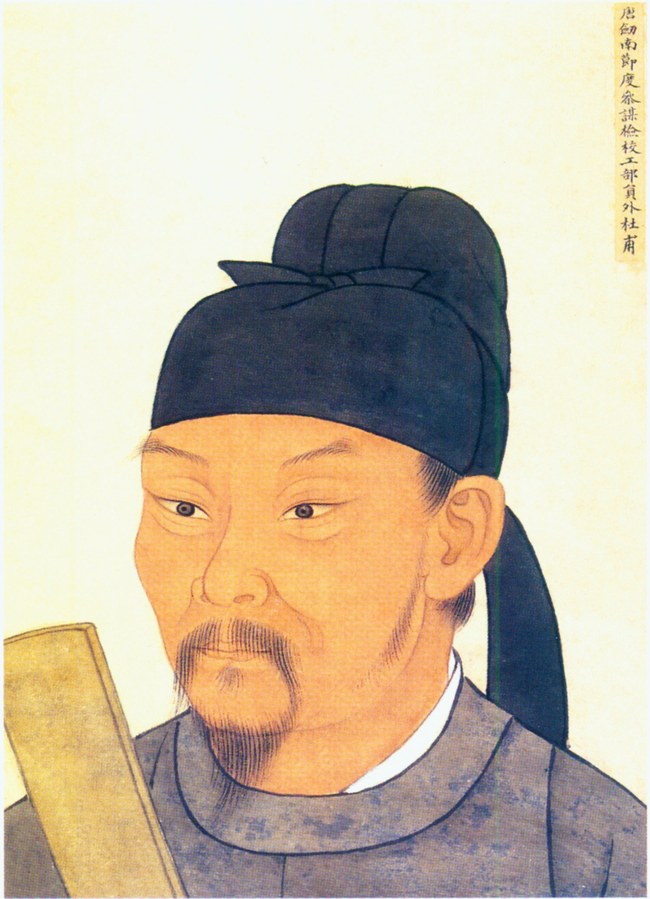
Half a century later, Bai Juyi (白居易, 772–846) wrote “Song of Everlasting Sorrow” (Chang Hen Ge, 长恨歌), the poem that turned Xuanzong and Yang Guifei into one of China’s great love stories. It was written in 806, fifty years after Mawei, and it is a work of imagination, not history. The romance it tells is largely Bai Juyi’s invention, and it has coloured every retelling since. The real Yang Guifei was a political figure, the centre of a powerful family faction; the poem made her a tragic heroine. Li Bai (李白, 701–762), the other great poet of the age, also saw his world broken by the war; he spent its years in wandering and died before it ended.
Du Fu’s lines about the broken country are still among the best-known in Chinese poetry, and the name of An Lushan is still a byword for treacherous rebellion. The war lasted eight years; its shadow lasted far longer.
Summary
The An Lushan Rebellion began with one general’s ambition and ended with a changed China. It broke the Tang golden age, emptied the registers, and left the empire to warlords, new taxes and shrunken frontiers. It also produced some of China’s greatest poetry, written from inside the disaster. The Tang survived the rebellion by 144 years, but never again ruled as the confident, expansive empire of Xuanzong’s youth. The war is a reminder that the greatest danger to a powerful state is often not the enemy beyond the frontier, but the army it built to guard it.
Read more: Chinese Dynasty Timeline