
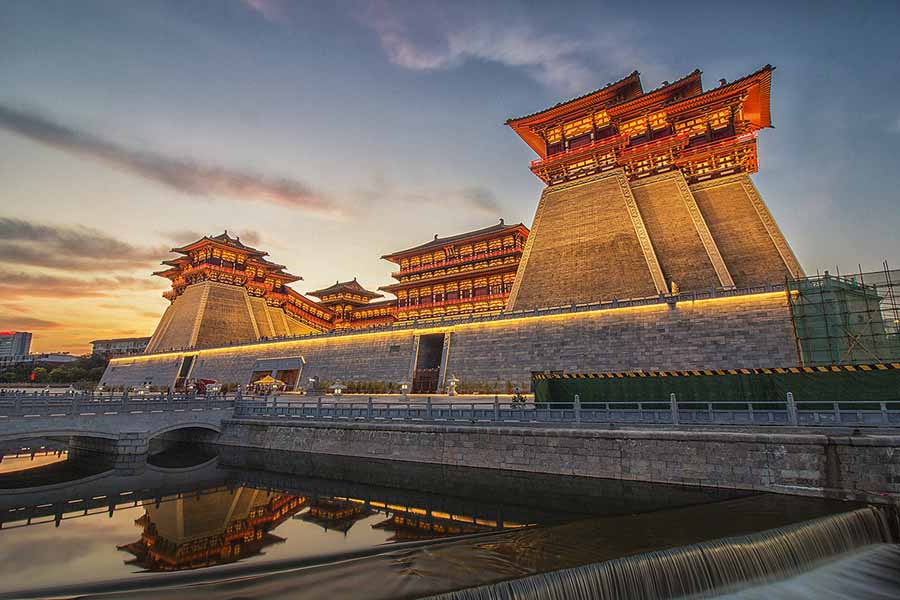
The Jin dynasty (266 – 420 AD) achieved in 280 AD what no ruler had managed for a century: it reunified China. Yet the reunion lasted barely a generation. Civil war among its own princes and revolts in the north destroyed the Western Jin, and for its last century it survived only in the south, as the Eastern Jin. Politically weak, it was culturally one of China’s most brilliant ages — the age of Wang Xizhi’s calligraphy, Tao Yuanming’s poetry, and Buddhism’s great advance.
The Jin is divided into two distinct periods – the Western Jin and the Eastern Jin. In the Western Jin period (266 – 316 AD) the capital was Luoyang, and from 280 AD the dynasty ruled all of China. After Luoyang and Chang’an fell, a Jin prince refounded it in the south in 317 AD, at Jiankang (建康, modern Nanjing). This Eastern Jin period (317 – 420 AD) was a refugee state whose northern émigré families shared power with the emperor; the north was never won back.
One confusion should be cleared away first. This Jin (晋), the Sima family’s dynasty, is written with the character for ‘advance’. It is not the later Jurchen Jin (金), ‘gold’, of 1115 – 1234 AD, which belongs to the Song age, seven hundred years later.
Key Facts
- Dynasty dates: 266 – 420 AD.
- Western Jin: 266 – 316 AD, capital Luoyang. Eastern Jin: 317 – 420 AD, capital Jiankang (modern Nanjing).
- Preceding period: the Three Kingdoms, 220 – 280 AD. Jin replaced the state of Wei in 266 AD and conquered Wu in 280 AD.
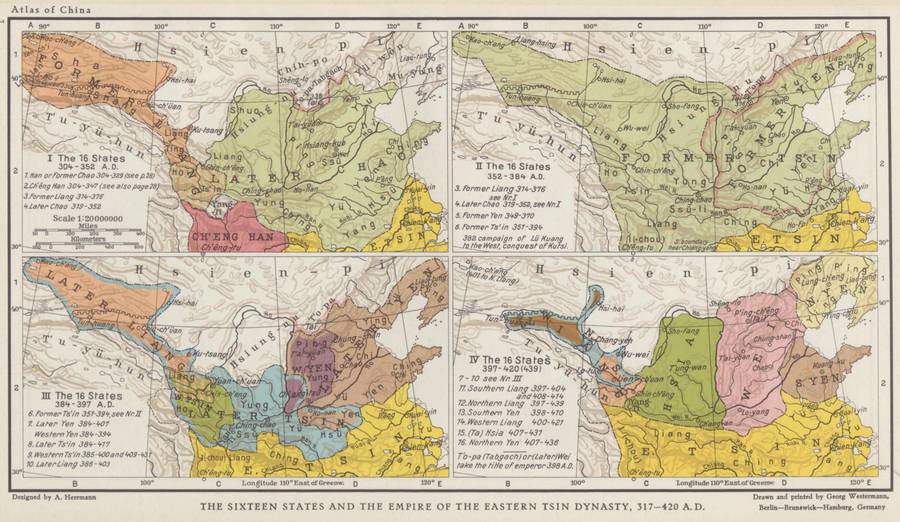
- Subsequent dynasty: Liu Song, 420 – 479 AD, the first of the Southern Dynasties. (In the north, the Sixteen Kingdoms period had already begun after 316 AD.)
- First Jin emperor: Wu (Sima Yan, 司马炎), reigning from 266 to 290 AD.
- Total number of Jin emperors: 15 – four of Western Jin and eleven of Eastern Jin.
- Longest Jin emperor reign: Wu, twenty-four years, reigning from 266 to 290 AD.
- Final Emperor: Gong, reigning from 419 to 420 AD.
The Founding of the Jin Dynasty
The Jin was founded not in revolution but inside another dynasty’s palace. The Simas had served Wei for two generations. In 249 AD Sima Yi (司马懿), Wei’s senior general and statesman, seized power in the Gaoping Tombs coup, destroying his rivals whilst the emperor was away at the imperial tombs. When Sima Yi died in 251 AD his elder son Sima Shi (司马师) succeeded him, and on Shi’s death in 255 AD his younger brother Sima Zhao (司马昭) succeeded him. For over fifteen years the Simas ruled Wei through puppet emperors — an extreme case of how ancient China’s government was run when emperors reigned but did not rule — whilst their armies finished Cao Cao’s work: in 263 AD Wei conquered Shu Han. In 264 AD Sima Zhao took the title King of Jin. On his death in 265 AD his power passed to his son, Sima Yan, who in 266 AD forced the last Wei emperor, Cao Huan (曹奂), to abdicate — as Wei had forced Han to abdicate — and took the throne as Jin’s first emperor.
The Jin Dynasty Founder and First Emperor – Wu
Emperor Wu (born in 236 AD, and died in 290 AD) was born Sima Yan. He reigned from 266 to 290 AD, and his great ambition was to complete his family’s work and reunify China: in 279 AD he launched the conquest of Wu.
Yet Wu planted two seeds of disaster. The first was the princes. Believing Wei’s Cao family had fallen because its princes were too weak to defend the throne, he enfeoffed more than twenty of his own relatives as kings within the empire, each with his own court and officials — and, fatally, his own army. The second seed was his heir. His eldest surviving son was plainly incapable of governing — the histories say others had to write the prince’s answers when he was tested. But Wu would not set him aside — partly from convention, partly for the sake of the son’s formidable wife, Jia Nanfeng (贾南风). When Wu died in 290 AD, an incapable emperor and an ambitious empress inherited an empire crowded with armed princes.
The Jin Dynasty at its Height – Reunification and the Taikang Era
In the winter of 279 AD Jin finished the work: Emperor Wu attacked Wu from six directions at once. A fleet built in Sichuan sailed down the Yangtze past Wu’s iron river chains. In 280 AD Jin forces entered Jianye (建业), and Sun Hao (孙浩), the last emperor of Wu, surrendered, as Liu Shan (刘禅) of Shu Han had surrendered to Wei seventeen years before. For the first time since the fall of the Han dynasty in 220 AD, all of China obeyed one emperor.
The decade that followed, the Taikang era (280 – 289 AD), was remembered as an age of peace and plenty: wars ended, and trade and farming revived. But the recovery rested on a shattered base: the Jin census of 280 AD registered about 16 million people, against almost 60 million registered by Han at its height — registered figures, not a true count, but proof of a shattered society.
Read more: Top 10 Capital Cities of Ancient China
The War of the Eight Princes and the Fall of Western Jin
Emperor Hui (reigned 290 – 307 AD) could not govern. The histories tell the famous story that, told his people were starving for want of rice, he asked why they did not eat meat porridge instead. Whether or not he ever said it, others ran the empire — first regents, then his empress Jia Nanfeng, who seized power in a coup in 291 AD and in 300 AD had the crown prince killed, provoking the princes to rise in arms.
The War of the Eight Princes (291 – 306 AD) was a civil war within the imperial family, among the armed kings Emperor Wu had created. Princes marched their private armies on Luoyang, deposed and murdered one another, hired non-Han horsemen, and plundered the capital again and again. Fifteen years of it ruined the north and destroyed the court’s authority. Hui died in 307 AD, said to have been poisoned, and his brother Huai succeeded him.
The non-Han peoples settled inside the northern frontier — Xiongnu, Xianbei, Di, Qiang, and Jie, grouped by historians as the Five Barbarians — had farmed and soldiered under Jin, and suffered under corrupt officials. In 304 AD the Xiongnu leader Liu Yuan (刘渊), whose family had lived within the empire since Han times, founded a state of his own, naming it Han, and overwhelmed a north bled white by the princes’ wars. In 311 AD his son’s forces took Luoyang, and Emperor Huai was captured and later killed — the catastrophe remembered as the Yongjia (永嘉) disaster. The last Western Jin emperor, Min, held out at Chang’an until it starved into surrender in 316 AD; he was taken away and killed in 318 AD. The north now passed to a succession of rival kingdoms.
The Eastern Jin – Survival in the South
In 317 AD Sima Rui (司马睿), an imperial prince, proclaimed himself King of Jin at Jiankang, and in 318 AD, on the news of Emperor Min’s death, took the imperial title. With the court came tens of thousands of northern refugees. They named new southern districts after their lost northern homes, and over the following century the Yangtze delta became China’s richest region: the empire’s centre of gravity had moved south.
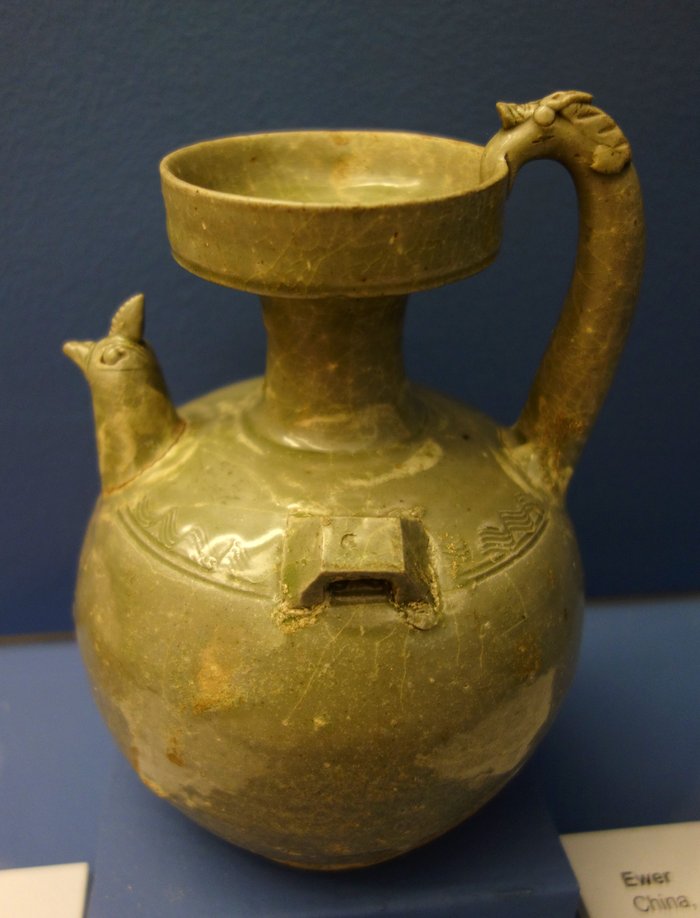
The restored dynasty was weak. Sima Rui owed his throne to the great families, above all to the statesman Wang Dao (王导), whose clan shared power so openly that contemporaries said ‘the Wangs and the Simas rule the empire together’. A succession of clans — Wang, Yu, Huan, and Xie — dominated the court in turn and, with the Nine-Rank system grading every candidate for office, monopolised how government officials were chosen in ancient China. The court outlasted even the revolts of Wang Dao’s cousin Wang Dun (王敦), who twice marched on the capital in 322 – 324 AD.
The dynasty’s strongest subject was the general Huan Wen (桓温). From 347 AD he dominated the court, conquered Cheng Han in Sichuan, and led northern expeditions in 354 – 356 AD and 369 AD that briefly recovered Luoyang. In 371 AD he deposed an emperor and set up another, yet died in 373 AD without taking the throne himself.
Its salvation came in 383 AD. Fu Jian (苻坚) of the Di (氐) people, who had reunified the north under his Former Qin state by 376 AD, now invaded with an enormous army — the histories speak of hundreds of thousands of men, figures certainly exaggerated. Against him, the chancellor Xie An (谢安) kept calm in the capital whilst his nephew Xie Xuan (谢玄) commanded the Beifu Army (北府兵), some 80,000 veterans raised from northern refugees. At the Battle of Fei River (淝水) in modern Anhui, the Jin charged as the Former Qin host began an orderly withdrawal; the withdrawal turned to panic, the vast army dissolved, and Fu Jian fled wounded. Within two years Fu Jian was dead (385 AD), his empire shattered, the north divided again — and Eastern Jin saved for another generation.
Art and Culture During the Jin Dynasty
Politically the Jin failed; culturally it was a golden age, its brilliance largely the work of men in retreat from politics. Scholars turned to xuanxue, the ‘dark learning’ that re-read the Confucian classics through Daoist ideas, and to qingtan (清谈), ‘pure conversation’ — elegant philosophical debate, the favourite pastime of an aristocracy devoted to the Daoist ideal of governing through non-action.
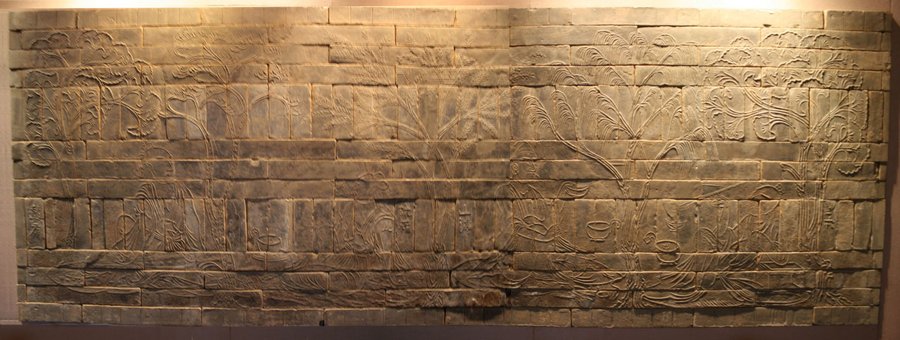
The pattern had been set by the Seven Sages of the Bamboo Grove, poets and musicians of the Wei–Jin transition who drank and wrote rather than serve regimes they despised. Ji Kang (嵇康), the most gifted of them, was executed in 262 AD — under Wei, four years before the Jin existed — for offending the Sima regime. Ruan Ji (阮籍) survived by playing the drunken eccentric. Treasured for centuries, their image fills brick reliefs in aristocratic tombs outside Jiankang, following the funeral customs of the age.
Calligraphy reached its classical peak. Wang Xizhi (王羲之, 303 – 361 AD), honoured ever since as the Sage of Calligraphy, brought the running script to perfection. In 353 AD, at a spring gathering at the Orchid Pavilion (Lanting, 兰亭) near modern Shaoxing, he wrote his Preface to the Orchid Pavilion Poems, a draft he could never equal afterwards. Tradition says the original was buried with the Tang emperor Taizong; through copies it still stands at the centre of ancient Chinese education in the art of the brush.
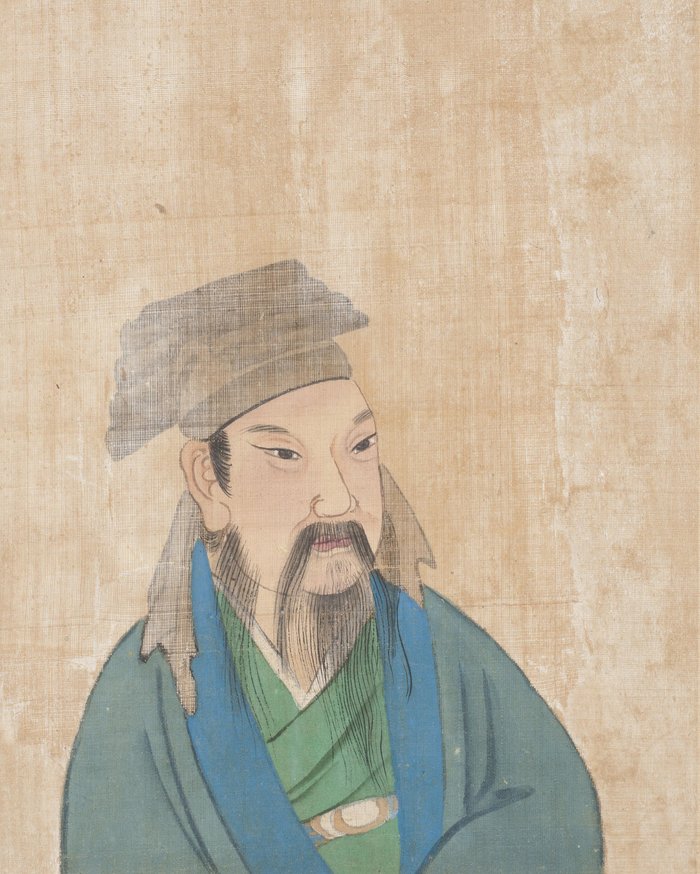
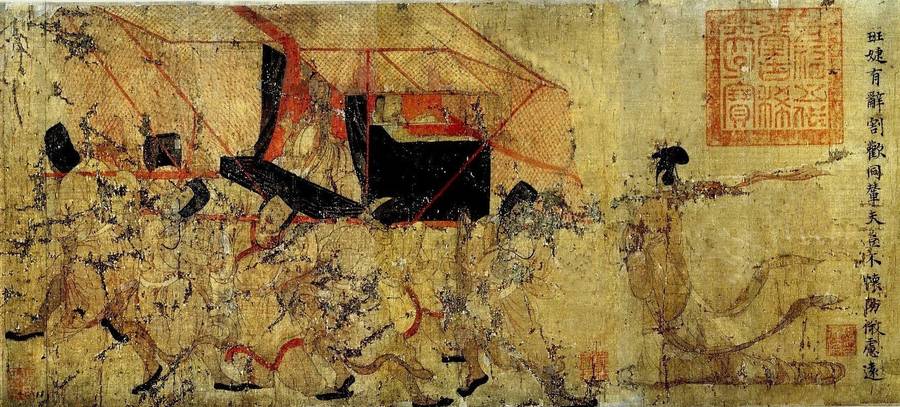
The dynasty’s painter was Gu Kaizhi (顾恺之, c. 344 – 406 AD), whose Admonitions Scroll survives in a later copy, famous for its flowing line and gift for character.
The age also produced Pei Xiu (裴秀, 224 – 271 AD), whose six principles of map-making made him the father of Chinese cartography, and Gan Bao’s ghost-story collection, In Search of the Supernatural (Soushen Ji, 搜神记). At the dynasty’s end came its greatest poet, Tao Yuanming (陶渊明, 365 – 427 AD): he resigned a magistrate’s post — ‘I cannot bow and scrape for five pecks of rice’ — farmed in poverty, and wrote the Peach Blossom Spring, the fable of a hidden valley at peace, untroubled by dynasties.
Religion During the Jin Dynasty
Confucianism remained the official framework of the state: emperors performed its sacrifices, and its classics were still studied for office. But the collapse of Western Jin had shattered its prestige, and the age belonged increasingly to the other two teachings.
Buddhism, which had entered China under the Han, now spread through every region and class. On Mount Lu (庐山), the monk Huiyuan (慧远, 334 – 416 AD) made his community the intellectual centre of southern Buddhism; he argued that monks, having left the world, owed no bow to emperors. In 399 AD the monk Faxian (法显) set out overland through Central Asia to India, spent years collecting scriptures, and returned by sea in about 412 AD; his travel record is still a priceless source for the India of his day.
Daoism was changing, too. Ge Hong (葛洪, 283 – 343 AD) wrote the Baopuzi (抱朴子), a vast work on alchemy, herbal medicine, and the prolonging of life, which tried to give Daoist teaching a systematic form. The Celestial Masters tradition, descended from the Way of the Five Pecks of Rice, spread among the southern great families — and one household might combine a Confucian career, Buddhist devotion, and Daoist practice.
Read more: What Were the Rituals and Laws in Ancient China?
The Fall of the Jin Dynasty
After the Fei River, Eastern Jin lived on borrowed time. Emperor Xiaowu (372 – 396 AD) was murdered in his palace in 396 AD; his son Emperor An (397 – 419 AD) was as incapable as Hui had been, and warlords tore at the state — Huan Xuan, Huan Wen’s son, seized the throne itself in 403 AD.
The man who ended the dynasty had risen through the Beifu Army of Fei River fame. Liu Yu (刘裕, 363 – 422 AD) was a poor man’s son who rose by ability alone: he crushed the rebels, destroyed Huan Xuan and restored the emperor, then led its last great northern expeditions (409 – 417 AD), recovering Luoyang in 416 AD and Chang’an in 417 AD. But his eyes were on the throne: he hurried back to Jiankang to secure it, and within a few years both recovered cities were lost again. In 419 AD he had the helpless Emperor An killed and installed An’s brother as Emperor Gong. In 420 AD Gong was made to abdicate to him, and the Liu Song dynasty began. A year later the deposed Gong was murdered too — the first deposed emperor of the age to be killed after abdicating.
Summary
The Jin lasted just over 150 years and had fifteen emperors. Its achievement was reunification: in 280 AD it ended a century of division. Its tragedy was how quickly the achievement was thrown away — first by the War of the Eight Princes, a civil war within its own family, then by the loss of the north, so that the dynasty spent its last century as a southern refugee state, preserved less by its emperors than by great families and one great victory on the Fei River.
Yet the ‘brief reunion’ changed China permanently. The migration of 317 AD moved the empire’s wealth and people towards the Yangtze. The great-family aristocracy that ran the Eastern Jin dominated Chinese politics for centuries. Buddhism became a central force in Chinese life. In calligraphy, painting, and poetry its standards have never been surpassed. The Jin failed as a dynasty; as a civilisation, it glittered.
Read more: Ancient Chinese Dynasty Timeline