
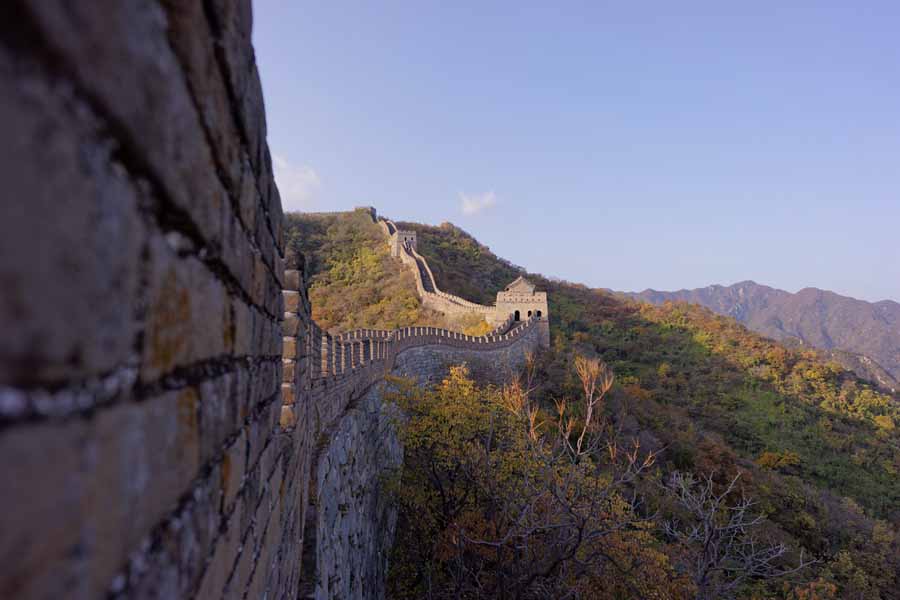
No structure on earth is more famous than the Great Wall of China, and few are more misunderstood. It is not one wall, built at one time, by one emperor. It is a whole family of walls, built, rebuilt, abandoned and rebuilt again over more than two thousand years, from the seventh century BC to the seventeenth century AD. In Chinese it is the Changcheng (长城), the “Long Wall”, and in its grandest form the Wanli Changcheng (万里长城), the “Ten-thousand-li Long Wall” — a li is about half a kilometre. A 2012 survey by the State Administration of Cultural Heritage measured all the walls of all periods, including trenches and natural barriers, at 21,196.18 kilometres, across fifteen provinces, municipalities and autonomous regions. The brick-and-stone wall tourists visit is only the youngest part: the Ming wall, about 8,850 kilometres long. The Great Wall joined the UNESCO World Heritage List in 1987.
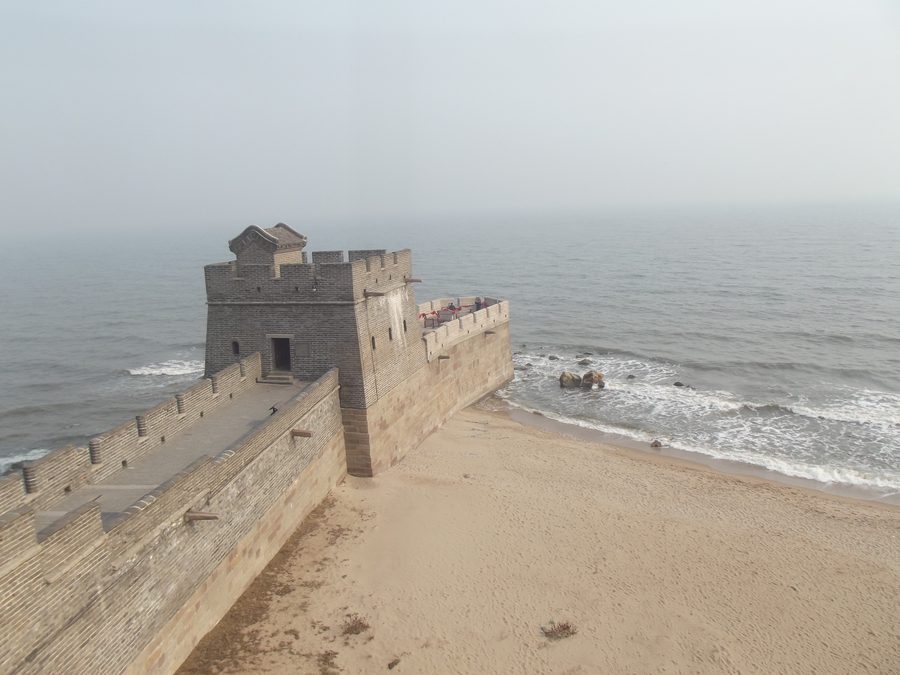
What visitors see is a dragon of stone and brick winding along mountain ridges, tower after tower, as far as the eye can follow. At its eastern end it runs down to the sea at the Old Dragon’s Head. But in the western deserts the wall is a low ridge of crumbling earth, and in many places it has vanished altogether. The wall was a fortification, a road, a customs barrier and a signalling line all at once. Its story ends with a paradox: it never did the one thing it is famous for — it never kept invaders out. Yet it became the best-known symbol of China in the world.
Key Facts
- Chinese name: Changcheng, “Long Wall”; Wanli Changcheng means “Ten-thousand-li Long Wall”.
- Total length: 21,196.18 kilometres, from the 2012 national survey — all walls of all periods, across 15 provinces, municipalities and autonomous regions.
- The Ming wall alone: about 8,850 kilometres.
- Building periods: from the seventh century BC (Warring States) to the seventeenth century AD (Ming).
- The Ming wall runs from Jiayuguan (嘉峪关) in the west to Shanhaiguan (山海关) in the east.
- Typical Ming dimensions: 6–7 metres high, 4–5 metres wide along the top.
- UNESCO World Heritage List: 1987.
- Most visited section: Badaling (八达岭), about 70 kilometres from Beijing, first opened to tourists in 1957.
- Protection: the first national Great Wall Protection Regulations came into force in 2006.
The First Walls
Long before there was a single China, there were walls. In the seventh century BC, the state of Qi, in what is now Shandong, built a long defensive wall along its southern border to hold back its rival Chu — the earliest wall in the Great Wall story. Chu built walls of its own. By the Warring States period (475–221 BC), Yan, Zhao, Wei and Qin all raised long walls of rammed earth, partly against each other and partly against the northern steppe peoples.
These early walls were raised from whatever lay to hand — earth pounded hard between wooden frames, stones piled where stone was plentiful — and each state walled only its own frontier. The northern peoples gave wall-building its lasting purpose. Beyond the farming lands of the north China plain lay the steppe, home to mounted nomads, a permanent threat to settled farmers. The most formidable, in the centuries around 200 BC, were the Xiongnu (匈奴), a confederation of tribes whose horsemen could strike and vanish into the grasslands before a Chinese army could catch them. Walls could not catch horsemen, but they could slow them, channel them towards guarded passes, and give warning of their approach.
Qin: One Wall for One Empire
In 221 BC the Qin dynasty ended the Warring States period and united China for the first time. Its ruler, Qin Shi Huang, ordered the northern walls of the former states of Qin, Zhao and Yan to be joined into a single frontier defence, running from Lintao (临洮) in the west to Liaodong (辽东) in the east. The traditional account credits the general Meng Tian (蒙恬) with supervising the work, at the head of a labour force drawn from soldiers, peasants and convicts. What he built was mostly rammed earth, following the older walls where they suited his purpose and striking out on new lines where they did not.
The work was harsh: labour was corvée — unpaid service owed to the state — and the men on the frontier faced cold, hunger and disease, far from home. A folk saying claims that every stone in the wall cost a life; no reliable figure for the dead exists, and none should be invented. The Qin dynasty lasted only fifteen years, from 221 to 207 BC, and almost nothing of its wall survives above ground: rammed earth, left unmaintained, melts back into the landscape within centuries. Yet the idea survived — one empire, one frontier, one wall.
The Han Wall Goes West
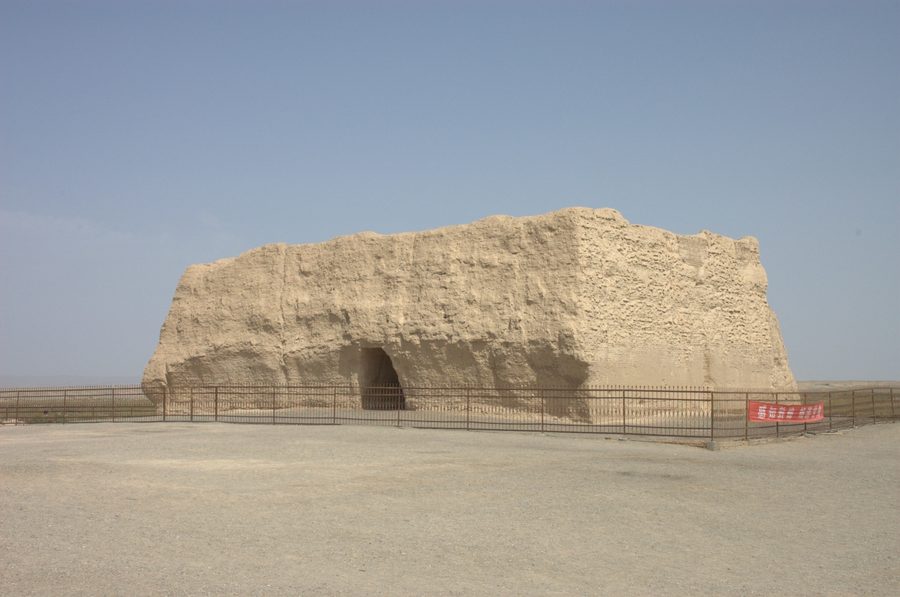
The Han dynasty (202 BC–220 AD) repaired the Qin wall, but its great contribution was to push the frontier far to the west. Under Emperor Wu of Han, whose armies drove the Xiongnu back, the wall was extended along the Hexi Corridor (河西走廊) — the oasis country between the mountains and the desert — to Dunhuang (敦煌) and the Jade Gate, Yumenguan (玉门关), the western gateway of the empire. Beyond it lay the deserts and oasis states of Central Asia, and the trade routes later called the Silk Road.
In the desert the builders had no stone and little timber, so they used what the desert offered: layers of rammed earth and gravel, laid alternately with reeds and tamarisk branches, which bound the earth together. The result was a low wall, rarely more than a few metres high, running beside a chain of beacon towers. The towers were the frontier’s nervous system: garrisons watched from them, and at the first sign of raiders lit fires that passed the warning from tower to tower. The Han wall also guarded trade, protecting the caravans that carried silk west and brought horses, glass and gold east, whilst customs posts taxed goods and checked travellers.
Read more: The Silk Road: History, Routes, Trade and Culture
The Ming Wall: The Wall We See Today
The wall that fills the world’s photograph albums is the work of the Ming dynasty (1368–1644), which built on a scale no earlier dynasty had matched. The Ming had driven the Mongols out of China and lived in fear of their return. That fear turned to panic in 1449, when Mongol forces captured the young Emperor Yingzong (英宗) at Tumu Fort (土木堡), in the disaster known as the Tumu Crisis. A century later, in 1550, the Mongol leader Altan Khan raided to the suburbs of Beijing. After that, the Ming state poured money and manpower into its northern frontier as never before.
The new wall ran from Jiayuguan, the great fort at the western end of the Hexi Corridor, to Shanhaiguan, the pass where the mountains meet the sea. Much of it was brick and stone, with watchtowers at regular intervals and a paved walkway along the top. The most famous sections near Beijing, such as Badaling, were built or rebuilt in this period, and it is the Ming wall that millions photograph and walk today.
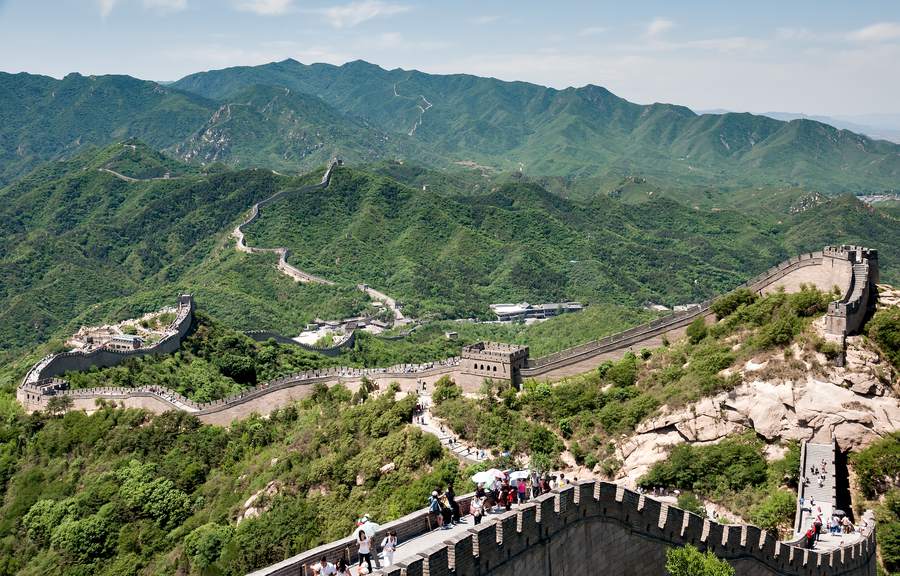
The greatest name in Ming wall-building is the general Qi Jiguang (戚继光), who oversaw the frontier defences of the Jizhen (蓟镇) garrison, east of Beijing, from 1567 to 1583. Qi rebuilt his stretch of the frontier to a new standard: taller walls, stronger towers, and more than a thousand new watchtowers, many of them solid brick structures that could shelter a garrison.
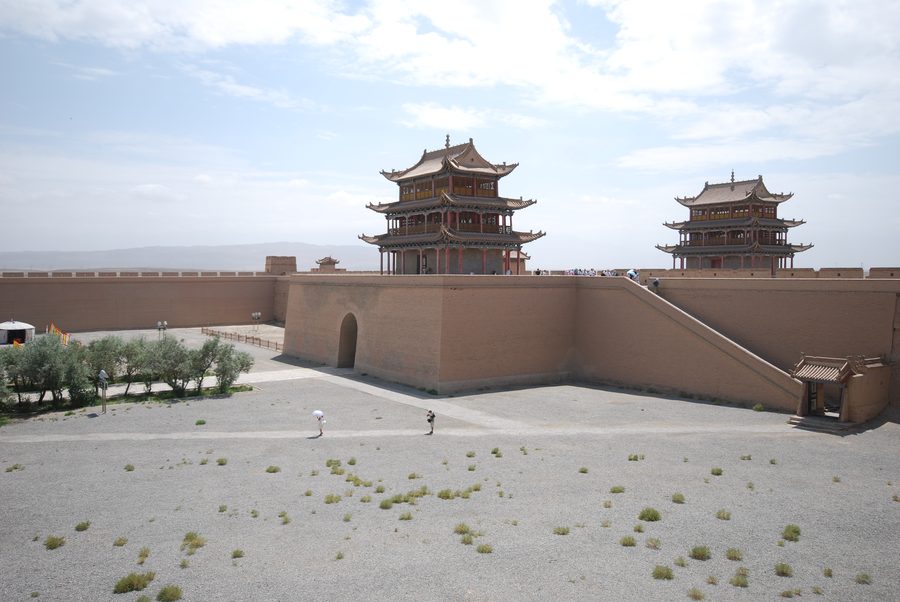
At its western end, the Ming wall was anchored by the fort of Jiayuguan, a rammed-earth fortress guarding the pass between the mountains and the desert. Jiayuguan was called the “First and Greatest Pass Under Heaven” (天下第一雄关). At its eastern end, Shanhaiguan was called the “First Pass Under Heaven” (天下第一关). The two titles sound alike, but they are not the same.
Read more: Zhu Yuanzhang: From a Beggar to an Emperor
How the Wall Was Built
The wall was built from the landscape it crossed. In the mountains, builders used stone, quarried nearby; on the plains, rammed earth, pounded layer by layer between wooden frames until it set almost as hard as concrete; in the deserts, sand, gravel and reeds. The Ming added brick, fired in kilns set up along the line of the wall, and faced its core with brickwork that has survived far better. Modern research has found Ming mortar mixed with sticky rice, which made it stronger and more water-resistant — practical chemistry, not a folk tale.
A typical stretch of the Ming wall stands 6–7 metres high and 4–5 metres wide along the top, with a parapet on the outer side and crenellations through which defenders could shoot. Watchtowers served as barracks, stores and lookouts. Beacon towers, built on high ground behind the wall, carried the signalling system: smoke by day and fire by night, passed from tower to tower in a chain that carried warnings across hundreds of kilometres far faster than any rider. Traditional accounts claim that a signal could reach the capital within a day.
Building it was back-breaking work. The labour force was a mixture of soldiers, peasants called up for corvée service, and convicts, working in all weathers, short of food, water and shelter. Stone and brick were carried on men’s shoulders, in baskets and on barrows, up slopes too steep for carts. The builders left few records, but the scale of what they made measures the human cost behind every section.
Did the Wall Work?
As a barrier, the honest answer is no — not against a determined enemy. The Mongols under Genghis Khan broke through the northern defences in 1211–1215, going around the wall’s western end and forcing the passes, and within generations they had conquered all of China. The Ming wall fared no better: in 1644 the Manchus entered China through Shanhaiguan, and according to the traditional account the Ming general Wu Sangui (吴三桂), who held the pass, opened the gates to them — a decision that ended the Ming dynasty and brought the Qing dynasty (1644–1912) to power. A wall, however strong, is only as loyal as the men who guard its gates.
But to judge the wall only by its failures misses what it was for. A wall cannot stop an army willing to pay the price of going around it, but it can do a great deal else: it deters small raids, the commonest form of steppe warfare; it channels movement towards guarded passes, where goods can be taxed and travellers checked; and it slows an attacker down, buying time for the armies of the interior to gather. For most of its history the wall was the backbone of a managed frontier, and as a managed frontier it worked for centuries.
Under the Qing, the wall lost its purpose altogether. The Qing rulers were themselves Manchus, from beyond the wall, and their empire stretched far past it in every direction. The garrisons were withdrawn, and for two and a half centuries the wall was left to weather and to farmers who took its bricks for houses and field walls. Neglect, not invasion, did the most damage to the wall in its later centuries.
Legends of the Wall
No monument in China has gathered more stories than the Great Wall, and the most famous is a love story. According to legend, set in the time of Qin Shi Huang, a young woman named Meng Jiangnu (孟姜女) married a scholar who was then seized for labour on the wall. When winter came and she had no news of him, she travelled to the frontier with warm clothes she had made for him, only to learn that he had died and been buried beneath the wall. She wept so bitterly, the legend says, that a stretch of the wall collapsed, revealing her husband’s bones. The tale is legend, not history — no Qin-period record of it exists — but it has been told for two thousand years.
A second legend is modern, and it is simply false. It is often claimed that the Great Wall is the only man-made object visible from space with the naked eye. It is not. The wall is long but narrow — no wider than a country road — and from orbit it is lost among the mountains of northern China. Astronauts, including Yang Liwei (杨利伟), China’s first man in space, who flew in 2003, have said plainly that they could not see it.
The Wall Today
The wall’s modern life began in 1957, when Badaling was restored and opened to tourists. Badaling remains the most visited section, its name known to every Chinese schoolchild through a line from a 1935 poem by Mao Zedong about Mount Liupan (六盘山): “He who has not been to the Great Wall is not a true man.” Its fame spread abroad when President Richard Nixon walked on it in February 1972.
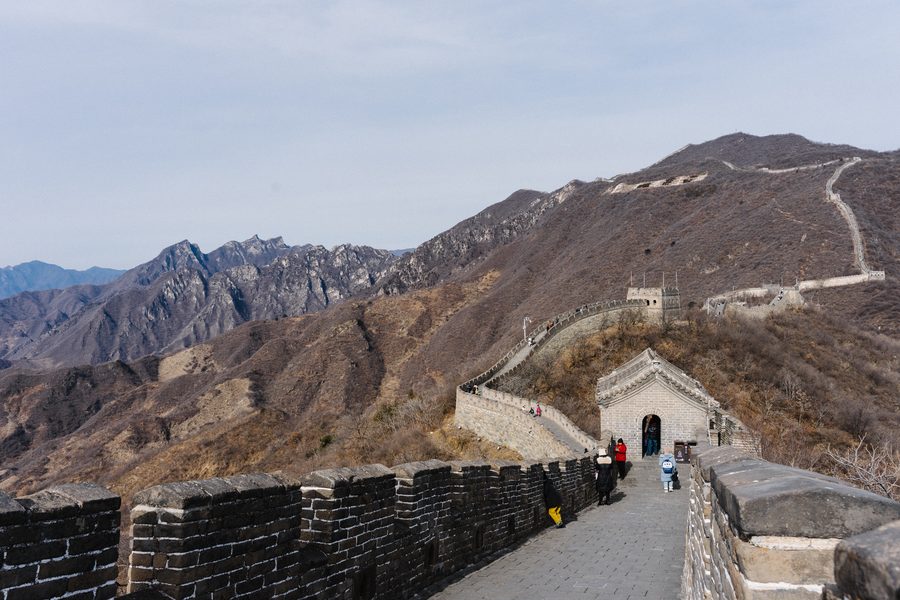
Other sections followed Badaling into the tourist age. Mutianyu (慕田峪), north-east of Beijing, is praised for its restoration and mountain scenery; Jinshanling (金山岭), further east, is loved by walkers for the way its towers march over empty ridges; Juyongguan (居庸关) guards the pass on the road to Beijing. Between them lies the “wild wall” — unrestored stretches such as Jiankou (箭扣), where the brickwork is crumbling and the towers roofless.
Preservation has become the wall’s most urgent modern story. The first national Great Wall Protection Regulations came into force in 2006, making it an offence to damage the wall or take bricks and stones from it. The need was real: a 2015 survey reported by the China Great Wall Society found about 30 per cent of the Ming wall already gone, through erosion, farming, quarrying and building work.
Summary
The Great Wall is not a single building but a two-thousand-year argument about where China ends. It began as rival walls of warring states, was joined into an imperial frontier by the Qin, pushed into the desert by the Han, and rebuilt in brick and stone by the Ming. It never kept out the Mongols or the Manchus, but for centuries it guarded a frontier, managed trade and carried signals. Today it is something its builders never imagined: a symbol of endurance, of the scale of Chinese civilisation, and of the human effort of holding a frontier for two thousand years. The wall that failed as a barrier succeeded as an idea.
Read more: Ancient Chinese Dynasty Timeline