
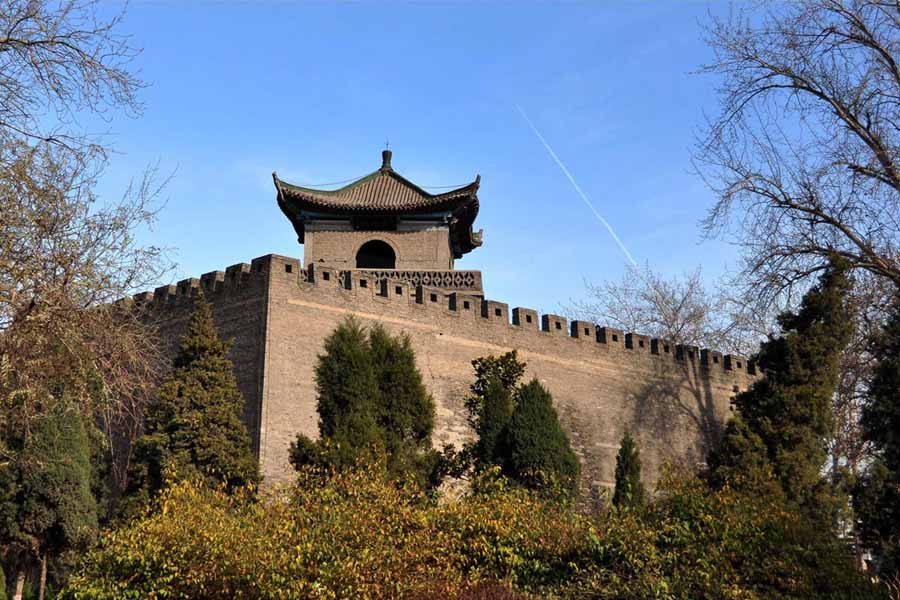
The Five Dynasties and Ten Kingdoms period (907 – 960 AD) is the half-century of division that separates two of China’s greatest dynasties, the Tang (618 – 907 AD) and the Song (960 – 1279 AD). In the north, five dynasties replaced one another in just fifty-three years, most founded by soldiers who seized the throne by force. In the south, China broke into a patchwork of regional kingdoms, most of them richer and more peaceful than the war-torn north. ‘Five Dynasties and Ten Kingdoms’ is not a name anyone used at the time — later historians invented it to make sense of a crowded age.
One confusion should be cleared away first: the five northern dynasties each took a famous old name — Later Liang, Later Tang, Later Jin, Later Han, Later Zhou — but none was a continuation of the earlier dynasty of that name. The Later Tang was not the Tang dynasty, the Later Han was not the Han dynasty, and the Later Jin (937 – 947 AD) had nothing to do with the Jin dynasty (266 – 420 AD). The ‘Later’ in their names, added by historians, is the warning label.
Yet this was not an age of mere chaos. Whilst the north exhausted itself in coups, the southern kingdoms grew wealthy on tea, salt, silk and sea trade. The age produced the first great state printing project, some of China’s finest painting, and its most heartbreaking poetry. And it ended with one outstanding emperor, Chai Rong, who came within a step of reunifying China — and with the general who finished the job and founded the Song.
Key Facts
- Period dates: 907 – 960 AD (the Five Dynasties in the north). The southern kingdoms lasted longer: Northern Han, the last, fell only in 979 AD.
- Preceding dynasty: Tang, 618 – 907 AD.
- Subsequent dynasty: Song, 960 – 1279 AD, which completed reunification in 979 AD.
- Later Liang: 907 – 923 AD, capital Kaifeng, founded by Zhu Wen.
- Later Tang: 923 – 937 AD, capital Luoyang, founded by Li Cunxu of the Shatuo Turks.
- Later Jin: 937 – 947 AD, capital Kaifeng, founded by Shi Jingtang.
- Later Han: 947 – 951 AD, capital Kaifeng, founded by Liu Zhiyuan.
- Later Zhou: 951 – 960 AD, capital Kaifeng, founded by Guo Wei.
- The Ten Kingdoms: Wu (907 – 937), Wuyue (吴越, 907 – 978), Min (909 – 945), Chu (907 – 951), Southern Han (917 – 971), Former Shu (907 – 925), Later Shu (934 – 965), Jingnan (924 – 963) and Southern Tang (937 – 975) in the south, plus Northern Han (951 – 979) in the north. Not all existed at the same time.
- Total number of emperors of the Five Dynasties: 14 – three of Later Liang, four of Later Tang, two of Later Jin, two of Later Han and three of Later Zhou. The kings of the Ten Kingdoms are not included in this number.
- Longest reign of the Five Dynasties: Li Siyuan, Emperor Mingzong of Later Tang, reigning from 926 to 933 AD — about seven years. No emperor of the five kept the throne for eight years.
- Final northern emperor: Gong of Later Zhou, a boy of seven, deposed in 960 AD.
The Fall of Tang and the Five Dynasties
The Tang dynasty had been dying for decades before 907 AD. The great Huang Chao (黄巢) rebellion (875 – 884 AD) had burned its way across the empire, and real power had passed to the jiedushi (节度使), military governors who ruled their provinces as private kingdoms and treated the emperor’s orders as advice. The court survived as a prize to be captured — a lesson in how ancient China’s government was run when the forms of rule outlive the power behind them.
The strongest of the governors was Zhu Wen (朱温), himself once a general of the rebel Huang Chao, who had surrendered to Tang and been rewarded with armies of his own. In 907 AD he forced the last Tang emperor, the boy Ai, to abdicate, and founded his own dynasty, Later Liang, at Kaifeng (开封). The next year he had the deposed emperor murdered. Zhu Wen was himself murdered by his own son in 912 AD, and his dynasty never escaped its bloody beginnings.
His great rivals were the Shatuo (沙陀) Turks of the north, a steppe people who had served Tang as its fiercest soldiers. In 923 AD the Shatuo prince Li Cunxu (李存勖) destroyed Later Liang and proclaimed Later Tang, ruling from Luoyang as a self-styled restorer of the Tang — although his family was Turkic, not Chinese. Three of the five northern dynasties — Later Tang, Later Jin and Later Han — would be ruled by Shatuo houses, a last chapter of the fusion of steppe and Chinese that had shaped the north for centuries. Li Cunxu, a brilliant general and a disastrous ruler, was killed in a mutiny in 926 AD. His successor Li Siyuan (李嗣源), Emperor Mingzong, ruled from 926 to 933 AD and gave the age its most stable northern government: taxes were eased, the armies kept in order, and the court governed frugally.
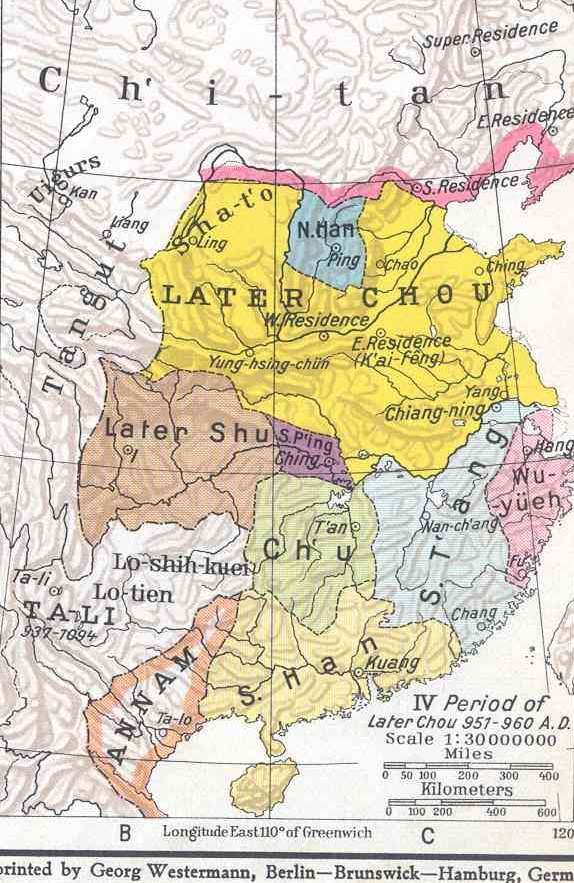
Later Tang fell to another Shatuo strongman. In 936 AD the general Shi Jingtang (石敬瑭) rebelled and bought the help of the Khitan Liao dynasty of the steppe with a fateful bargain: in 938 AD he formally handed Liao the Sixteen Prefectures (燕云十六州), the line of fortified cities, including modern Beijing, that guarded China’s northern frontier. The wall of the north was gone, and Chinese dynasties — above all the Song — would pay for Shi Jingtang’s bargain for the next four centuries. When his successor tried to defy Liao, Khitan armies invaded, destroyed Later Jin in 947 AD, and briefly occupied Kaifeng itself. As they withdrew, another Shatuo general, Liu Zhiyuan (刘知远), took the throne and founded Later Han — but he died within a year, his teenage son proved incapable, and in 951 AD the general Guo Wei (郭威) seized power and founded the fifth and last dynasty, Later Zhou.
Read more: Wu Zetian – the First and Only Female Emperor of China
Chai Rong – The Emperor Who Nearly Reunified China
Guo Wei died in 954 AD and was succeeded by his adopted son, Chai Rong (柴荣), Emperor Shizong of Later Zhou. In five years on the throne (954 – 959 AD) Chai Rong did more than any ruler of the age to end it. He rebuilt the imperial guard into the finest army in China, cashiering weak soldiers and promoting talent. He reformed the finances of the state and equalised the land tax, continuing the long Chinese argument about how land was held in ancient China. In 955 AD he struck at the wealth of the Buddhist church: unlicensed temples were closed by the tens of thousands, and their bronze statues were melted down to mint coins — an economic measure, not a war on faith, as the religion section explains.
Then he campaigned. In the west he took border prefectures from Later Shu. In 956 – 958 AD he drove south against Southern Tang and seized the rich Huainan lands between the Huai River and the Yangtze — the greatest conquest any northern ruler of the age achieved. In 959 AD he turned north, recovered prefectures that Liao had held since 938 AD, and was marching on the great city of Youzhou, modern Beijing, when sickness forced him to stop. Weeks later he was dead, aged thirty-eight.
Chai Rong left his empire to a son of seven, and its armies to his most trusted general. Within months, that combination meant the end of Later Zhou — but also, thanks to the machine Chai Rong had built, the reunification of China.
The Ten Kingdoms – The Prosperous South
South of the Huai River, China had divided into kingdoms that mostly preferred profit to conquest. The ten never all stood at once, and their collective name is a later historians’ label. But together they changed China’s balance for good. Refugees from the northern wars streamed south with their skills, books and crafts. The southern states taxed the trades the north neglected: tea from the Fujian hills, salt from the coast, silk, porcelain, and the sea trade that carried Chinese goods to Southeast Asia, India and Arabia along the maritime routes of the Silk Road.
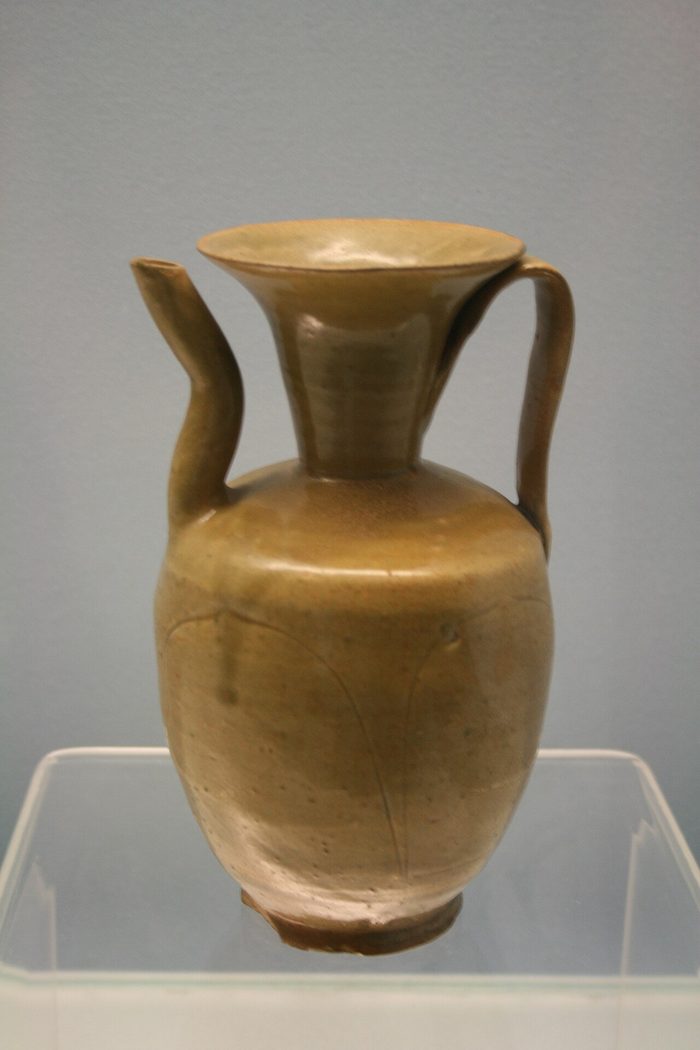
The model southern state was Wuyue, ruled from modern Hangzhou by the Qian family. Its kings accepted the northern dynasties as overlords, spent on sea walls and irrigation instead of armies, and kept their small kingdom at peace for seventy years. Its last king, Qian Hongchu (钱弘俶), reigned from 948 to 978 AD — thirty years, longer than any northern emperor of the age by a factor of four.
Largest and most brilliant of the southern states was Southern Tang, founded in 937 AD as successor to Wu and ruling from modern Nanjing. Its emperors ran the age’s most cultured court, where painting, poetry and scholarship were royal passions. But culture did not save it: after Chai Rong stripped its northern lands in 958 AD, Southern Tang survived as a shadow of itself, and its last ruler — remembered not as a king, but as a poet — belongs to the next section.
Read more: Top 10 Capital Cities of Ancient China
Art and Culture During the Five Dynasties and Ten Kingdoms
The age’s most far-reaching achievement was quiet and made of wood. In 932 AD the chancellor Feng Dao (冯道) proposed that the state carve the Confucian classics onto wooden blocks and print them — the first great government printing project in Chinese history. The work took more than twenty years, outlasting four of the five dynasties, and was finished in 953 AD. Its printed classics were the ancestors of the book culture of the Song, and printing would take its place among the four great inventions of ancient China.
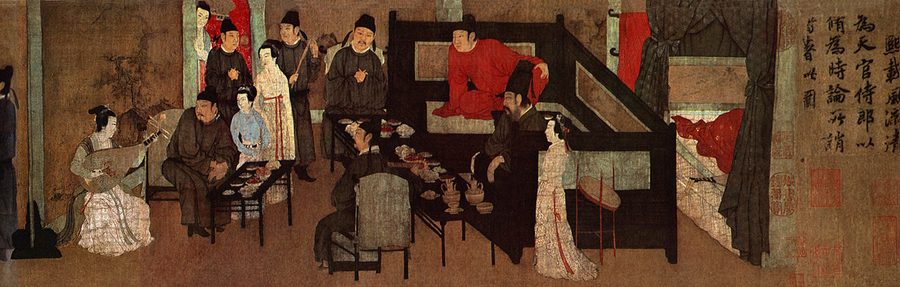
Painting, too, was maturing in the sheltered southern courts. The hermit Jing Hao (荆浩), who lived through the fall of Tang in the Taihang mountains, wrote the first great theory of landscape painting and taught painters to seek the truth of mountains rather than their decoration. At the Southern Tang court, art became an instrument of the state in the strangest way: the emperor, worried by reports of his minister Han Xizai’s (韩熙载) wild night parties — and suspecting the minister was feigning decadence to escape high office — sent the court painter Gu Hongzhong (顾闳中) to attend one and paint what he saw. The result, the Night Revels of Han Xizai, follows the party hour by hour — musicians, dancers, drinking games, and guests drifting home at dawn. It is one of the most famous paintings in Chinese art, and it began as an emperor’s spy report.
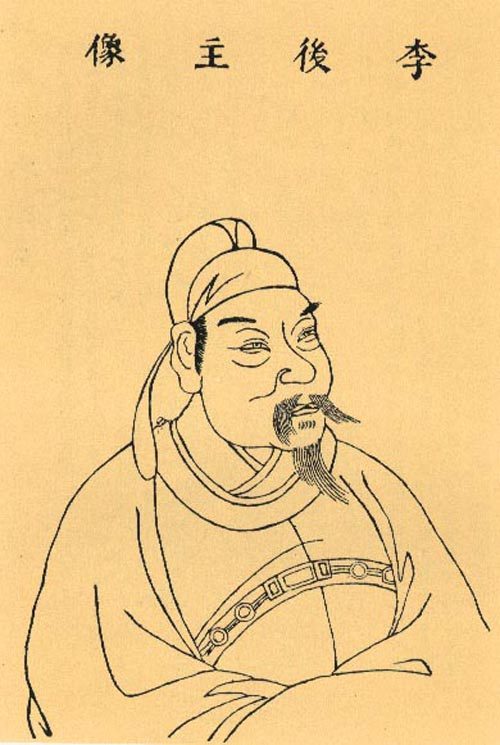
Above all, the age produced Li Yu (李煜, 937 – 978 AD), the last ruler of Southern Tang (reigned 961 – 975 AD). As a king he was a failure: gentle, artistic and indecisive, he lost his state’s remaining lands piece by piece and surrendered to Song in 975 AD. Taken north to Kaifeng as a prisoner, he poured his grief into ci lyrics, a form he raised to greatness. ‘How much sorrow can one man hold? As much as a river of spring water flowing east.’ Poems like that, written in captivity, made the failed emperor immortal; he died in 978 AD, but his lines are still quoted in China today wherever people speak of loss.
Religion During the Five Dynasties and Ten Kingdoms
Buddhism, battered in the north, flourished under southern patronage. The kings of Wuyue were its greatest sponsors: Qian Hongchu had Buddhist texts printed in huge numbers, filled his kingdom with pagodas and temples, and made Hangzhou a centre of the faith. In the Shu kingdoms of Sichuan, printers at Chengdu were already producing Buddhist images and texts, and Daoist temples and Confucian state rites continued everywhere — every new dynasty, however short-lived, hastened to perform the sacrifices that proclaimed it legitimate.
The north’s great exception was Chai Rong’s campaign of 955 AD. It was aimed at copper, not doctrine: unauthorised temples were dissolved — the histories speak of more than thirty thousand closed — and bronze Buddha statues were melted for coinage in a state desperate for metal. Ordained monks in registered temples kept their status, and Buddhism in the north recovered under Song. The printing of the Confucian classics in the same decades was the other face of the age’s religion: a state, however fragile, reasserting the old canon as the foundation of order.
Read more: What Were the Rituals and Laws in Ancient China?
The Fall of the Five Dynasties
Chai Rong died in 959 AD, and his seven-year-old son took the throne as Emperor Gong of Later Zhou, with generals and officials ruling in his name. In the first days of 960 AD, word came of a Liao invasion, and the palace guard marched out of Kaifeng under its commander, Zhao Kuangyin (赵匡胤), Chai Rong’s most trusted general. At Chenqiao (陈桥), a post station north-east of the capital, the army stopped — and, by the traditional account, Zhao’s soldiers draped a yellow imperial robe over their commander’s shoulders and acclaimed him emperor. He led them back into Kaifeng, the boy emperor abdicated peacefully, and Zhao Kuangyin took the throne as the first emperor of the Song dynasty.
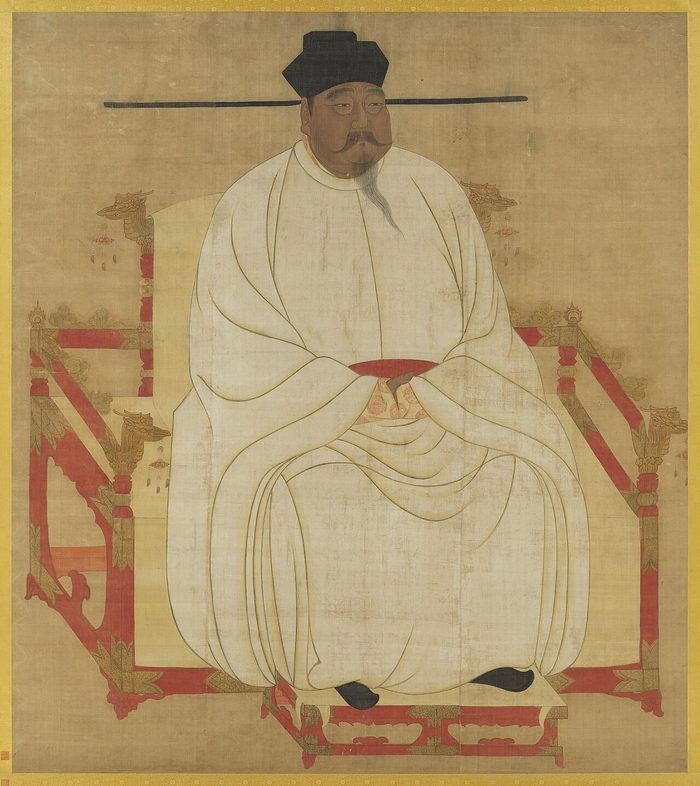
What followed was Chai Rong’s plan, executed by his successor. Zhao Kuangyin, who had served in the Later Zhou campaigns, spent two decades finishing the reunification Chai Rong had begun: Jingnan fell in 963 AD, Later Shu in 965 AD, Southern Han in 971 AD, and Southern Tang in 975 AD. In 978 AD Wuyue’s king Qian Hongchu peacefully handed his kingdom over, and in 979 AD Song destroyed Northern Han, the last of the ten kingdoms. For the first time since 907 AD, China was one empire again.
Summary
The Five Dynasties and Ten Kingdoms lasted just fifty-three years and saw fourteen emperors, none of whom reigned as long as eight years. Judged by its northern throne, it was the most unstable age in China’s imperial history. But the half-century was a bridge, not a void. The north learned, at terrible cost, that military governors with private armies meant permanent civil war — and Song, founded by a general who took care that no general could ever do to Song what he had done to Later Zhou, built its whole system on that lesson. The south, meanwhile, had quietly become China’s economic heartland: its ports, tea, salt, silk and printing presses were the inheritance on which the Song golden age was built. The ‘forgotten half-century’ is where that golden age began.
Read more: Ancient Chinese Dynasty Timeline