
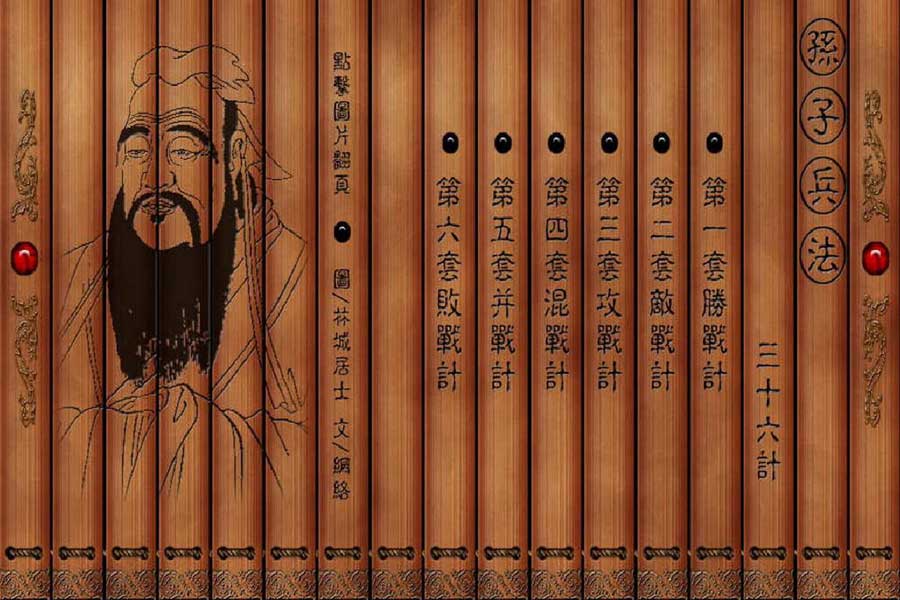
Sun Tzu is the most famous military writer who may never have existed. He is said to have been a general named Sun Wu (孙武), known respectfully as Sunzi (孙子), “Master Sun” — Sun Tzu is the older Wade-Giles spelling of the same name. He served a king in the south of China some 2,500 years ago, and his book, The Art of War (Sunzi Bingfa, 孙子兵法), has been read by generals and emperors for more than two thousand years, and by business managers today. It is still in print in many languages. Yet the man behind the book is barely more than a name, and almost everything else about him is uncertain.
That uncertainty is the point of this article. It keeps three things apart that are often mixed together: Sun Wu the man, about whom the evidence is thin; the book itself, a short work in thirteen chapters that certainly existed by the Han period; and the legend that grew around both, from the first commentaries to the modern boardroom. The book is real, and it changed the world. The man remains a shadow.
What follows begins with the story as the ancient historians told it, then asks what can be believed, then turns to the book itself — what its thirteen chapters actually say, how it survived for two thousand years, and why people far from any battlefield still quote it today.
Key Facts
- The man: Sun Wu, known as Sunzi, “Master Sun”
- Lived: 6th–5th century BC; traditional dates c. 544–496 BC
- Served: King Helü (阖闾) of Wu (吴), r. 514–496 BC
- The book: The Art of War, in thirteen chapters
- Period: late Spring and Autumn period (770–476 BC)
- Earliest surviving commentary: 3rd century AD
- Official classic: first of the Seven Military Classics, 1080
- Standard English translation: Lionel Giles, 1910
- Later life: unknown — no reliable record survives
Sun Wu the Man
Sun Wu lived in the last century of the Spring and Autumn period, when the old order of the Zhou dynasty was breaking down and rival states fought for survival. War was already an old business in China: the kings of the Shang dynasty had led chariot armies into battle centuries earlier. What changed in Sun Wu’s time was the scale and the stakes, as large states swallowed small ones and war became a matter of planning as much as courage. The Zhou king still reigned in name, but real power lay with the rulers of a dozen rival states, and alliances shifted with every campaign. He lived at about the same time as Confucius, though the two men moved in different worlds.
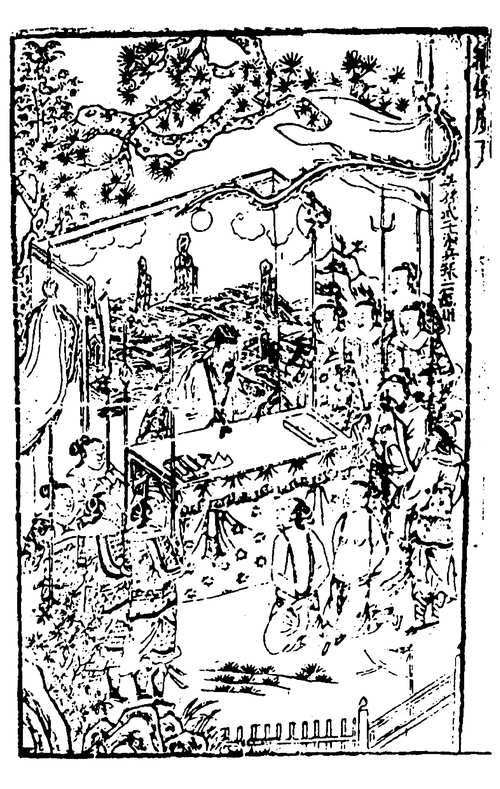
Almost everything we are told about Sun Wu comes from a single source: the historian Sima Qian (司马迁), who wrote his Shiji (史记, Records of the Grand Historian) around 100 BC, four centuries after Sun Wu’s lifetime. Sima Qian says Sun Wu was a native of Qi (齐), in the north-east, who came south to Wu and presented his thirteen chapters on war to King Helü. The king, the story goes, asked whether the theory could be tested — on the women of his palace. The Shiji tells how Sun Wu divided 180 palace women into two companies, placed one of the king’s favourite concubines at the head of each, and gave the order to drill. The women laughed. Sun Wu had the two captains beheaded for disobeying clear orders, over the king’s protest. He is said to have answered that a general on campaign need not obey every order from his ruler. The women then drilled perfectly, and the king made him a general. It is a famous story. It is also the Shiji’s story, written centuries after the event, and it cannot be checked against any other source. Sima Qian’s account is the only biography we have, and it reads like a tale told to make a point about discipline.
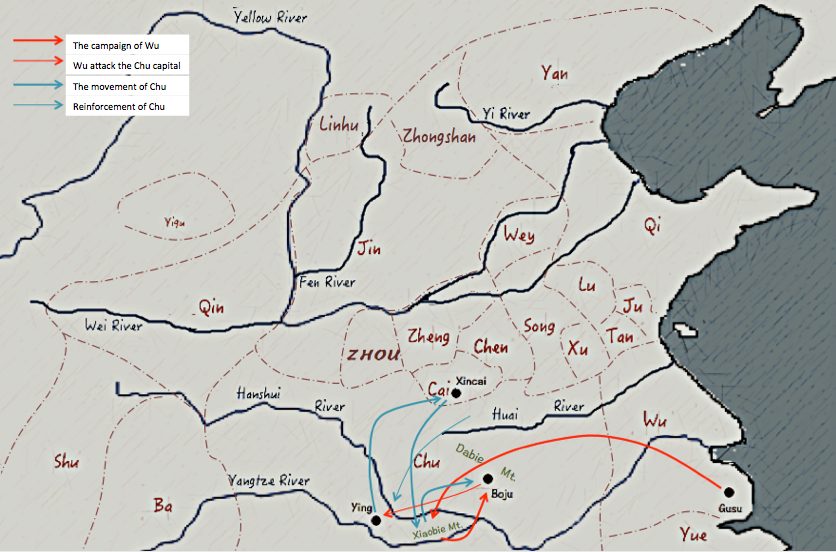
The Shiji then places Sun Wu at the great campaign of 506 BC. In that year the army of Wu marched on Chu (楚), the great southern state, defeated it at the Battle of Boju (柏举), and took its capital, Ying (郢). The battle and the fall of Ying are solidly recorded. Sun Wu’s personal part in the victory is another matter: it rests on tradition, and the campaign’s other leading figure, Wu Zixu (伍子胥), Helü’s minister and general, is at least as prominent in the records. Sun Wu’s role is traditionally credited, not proved, and this article does not present it as more than that.
What became of Sun Wu afterwards is not recorded. No reliable source gives his later life or his death, and none is invented here. Wu itself did not last: under Helü’s son and successor Fuchai (夫差), it was destroyed by the neighbouring state of Yue (越) in 473 BC, a generation after Boju. Whether Sun Wu lived to see that defeat is unknown.
Who Was Sunzi?
For centuries, readers assumed the book had one author. Then a second Sun appeared in the records: Sun Bin (孙膑), a descendant of Sun Wu who served as a strategist to the state of Qi more than a century later. Sun Bin wrote a military work of his own, the Sun Bin Bingfa (孙膑兵法). Over time the two men’s books were confused — both men were called Sunzi, “Master Sun”, by later writers — and some scholars began to wonder whether Sun Wu had ever existed at all — whether “Sunzi” was really Sun Bin, or a name attached to a book with no single author.
Sun Bin’s own story is told in the Shiji too, and it is dramatic enough. Serving Qi, he defeated the army of Wei (魏) at Guiling (桂陵) in 353 BC by marching on the Wei capital while its army was away campaigning — the stratagem of besieging Wei to rescue Zhao (赵) — and he defeated Wei again at Maling (马陵) in 342 BC, where the Wei general Pang Juan (庞涓) died. The Shiji says Pang Juan had earlier had Sun Bin crippled by the removal of his kneecaps, and that the punishment is said to have given him his name, Bin. All of this is the Shiji’s account, and it is told here as the Shiji’s.
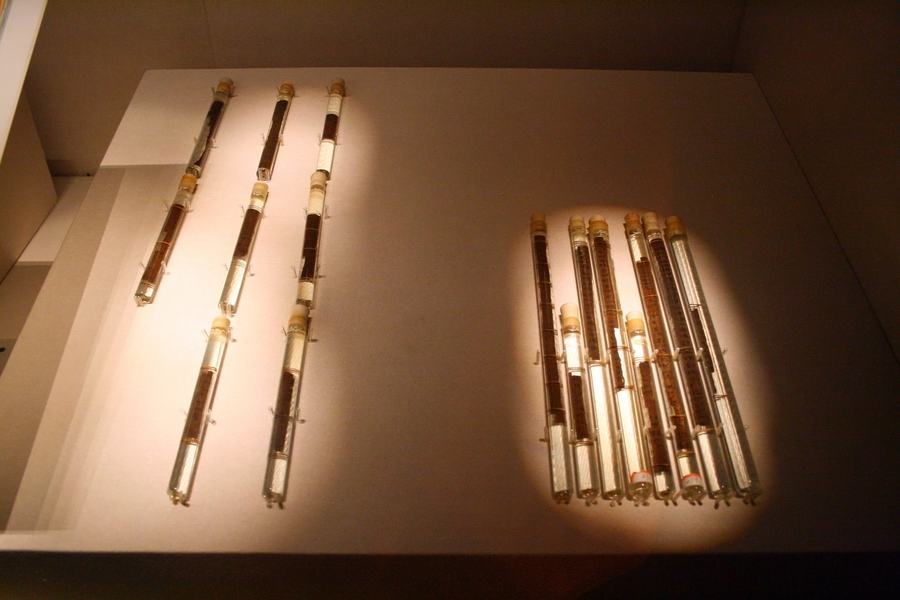
The question of the two Suns was settled, in part, in 1972. In that year archaeologists excavating a Han-dynasty tomb at Yinqueshan (银雀山), in Shandong (山东), found bamboo slips dating to the 2nd century BC. The slips contained two military texts: the Sunzi and the Sun Bin Bingfa, buried together in the same tomb. The find proved that the two works were distinct books, and that both already existed by the Han period. It did not prove that Sun Wu wrote the thirteen chapters. Most scholars now think the text took shape over generations, during the Warring States period (475–221 BC), and that whether a man named Sun Wu wrote all of it — or any of it — cannot be settled. Some doubt he existed at all.
What is certain is the book. The Warring States period ended when the state of Qin unified China in 221 BC. The book passed into the empire that followed, and by the Han dynasty it was already a classic, copied, quoted, and argued over. The Han imperial catalogue listed the Sunzi among the works on war. The author’s biography stayed uncertain. The text did not.
The Thirteen Chapters
The book itself is short: thirteen terse chapters of general advice, with hardly a story in it and no account of any battle. Its titles, in Lionel Giles’s 1910 translation, are these:
- Laying Plans (Shi Ji, 始计) — estimating the war before it begins
- Waging War (Zuo Zhan, 作战) — the cost of war
- Attack by Stratagem (Mou Gong, 谋攻) — winning by planning, not battle
- Tactical Dispositions (Xing, 形) — defence and attack
- Energy (Shi, 势) — momentum and surprise
- Weak Points and Strong (Xu Shi, 虚实) — emptiness and fullness
- Manoeuvring (Jun Zheng, 军争) — movement and position
- Variation of Tactics (Jiu Bian, 九变) — adapting to circumstances
- The Army on the March (Xing Jun, 行军) — moving through country
- Terrain (Di Xing, 地形) — six kinds of ground
- The Nine Situations (Jiu Di, 九地) — nine varieties of ground
- The Attack by Fire (Huo Gong, 火攻) — fire as a weapon
- The Use of Spies (Yong Jian, 用间) — five kinds of spies
A note on names: the Shi Ji of the first chapter, meaning “initial estimations”, is a different word from the Shiji, the history by Sima Qian, though the two sound alike in English.
The book’s advice is general, not specific. It names no battle, tells no anecdotes, and gives no dates. Its chapters read like notes for a commander: short, dense, and meant to be studied rather than read through once. That generality is part of its strength, and part of the reason it has survived translation into so many languages. The last chapter, on spies, insists that no general should move without information: foreknowledge, the book argues, is what separates the wise commander from the ordinary one.
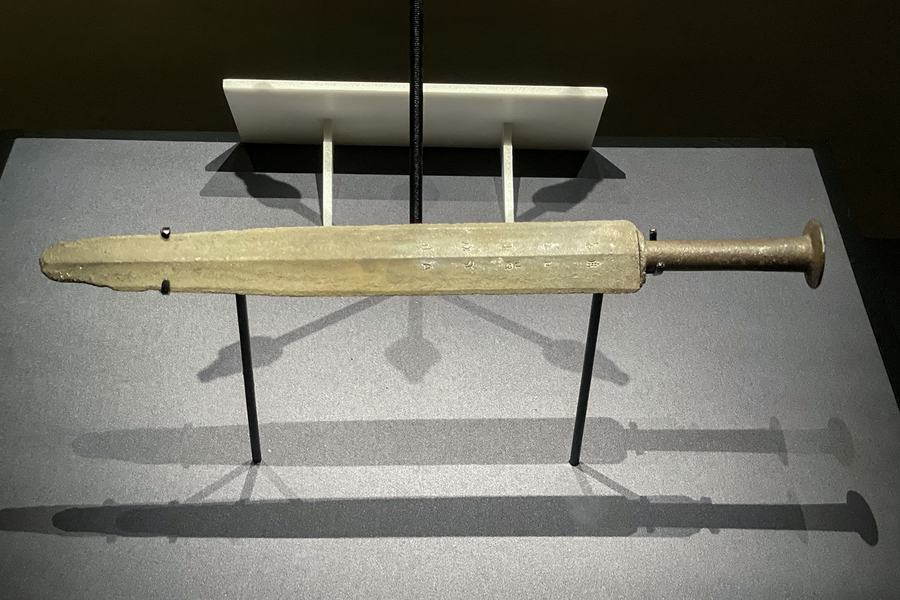
Two ideas run through the whole book. The first is that the best victory is the one won without fighting. In Giles’s translation, chapter 3 says: “supreme excellence consists in breaking the enemy’s resistance without fighting.” The general should win by planning, by diplomacy, and by dividing the enemy’s alliances — “the highest form of generalship is to baulk the enemy’s plans,” again in Giles’s words — and treat battle as the last resort. Sieges are the worst policy of all, because they cost the most and gain the least.
The second idea is knowledge, and it is stated in the book’s most quoted lines, again in Giles’s translation. “If you know the enemy and know yourself, you need not fear the result of a hundred battles,” says chapter 3. “All warfare is based on deception,” says chapter 1, in Giles’s words. Knowledge means calculation before the battle, spies during it, and deception throughout. The book’s general wins by knowing more, moving faster, and striking where the enemy is weak — never by courage alone.
Why It Lasted Two Thousand Years
The book survived because soldiers kept using it, and the first reader whose notes survive was a soldier himself. Cao Cao (曹操), the warlord who dominated northern China in the last years of the Han, wrote a commentary on the Sunzi in the 3rd century AD — the earliest commentary that survives. The arrangement of the text as we have it traditionally follows his version, though that, too, is tradition rather than proof. Cao Cao’s interest fixed the book’s place: it was studied by the generals of the Three Kingdoms period and the dynasties that followed. His commentary is still printed with the book today.
Commentators of the Tang dynasty added their notes, and under the Song dynasty the book became part of the state itself. In 1080, under Emperor Shenzong (神宗), the court made the Seven Military Classics (Wujing Qishu, 武经七书) the official military curriculum, with the Sunzi first. An edition of about 1190 gathered the commentaries of eleven earlier scholars, Cao Cao among them, and that “eleven schools” edition carried the text through the later centuries.
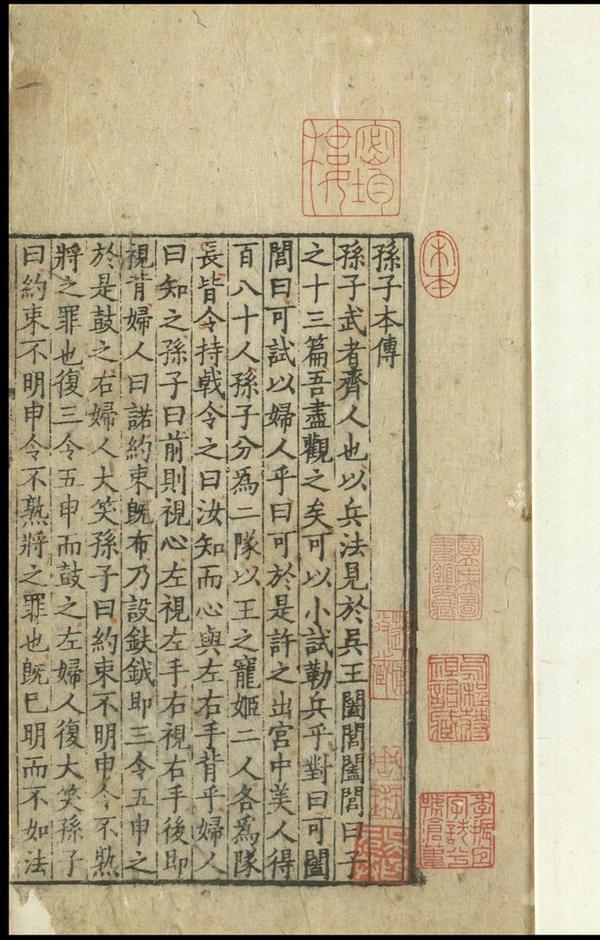
Europe met the book late. The first European translation was French, by the Jesuit Jean Joseph Marie Amiot, published in 1772 in a French collection of writings on China. Amiot’s version took great liberties with the text — Giles later judged it harshly — but it put Sun Tzu’s name before European readers. The first English translation followed in 1905, by Captain E. F. Calthrop. Giles, working at the British Museum, judged it poor and produced his own in 1910, calling the book “the oldest military treatise in the world” on his title page. His translation, with its introduction and notes, became the standard English Sun Tzu, and it is the version quoted in this article.
Beyond the Battlefield
In the twentieth century the book left the battlefield. Military academies teach it, generals quote it, and it appears on professional reading lists for officers in several countries. Business books, negotiation manuals, and sports coaches have adopted it as a guide to competition of every kind. Much of this afterlife would have surprised its author. The Sunzi is a book about war between states, written for generals: its advice on spies, terrain, and supply has no exact equivalent in a sales meeting, and the modern uses are analogies, not applications.
Readers should also be careful with the quotations. Many lines passed around as Sun Tzu’s words are modern paraphrases, or inventions with no source in the text. The lines quoted in this article are all from Giles’s 1910 translation, and they can be checked. A good rule is simple: if a “Sun Tzu quote” has no chapter behind it, treat it as doubtful.
One confusion deserves a sentence of its own. The Thirty-Six Stratagems (Sanshiliu Ji, 三十六计) — “besiege Wei to rescue Zhao” is one of them — is a separate, later compilation, of Ming-era date, whose origins are debated. It is not part of The Art of War, and it is not Sun Wu’s work, though the two are often shelved together.
Summary
The man, the book, and the legend can now be put back together. Sun Wu may have been a real general who served King Helü and helped defeat Chu; or the name may be all that survives of a longer story. The book is certain: thirteen short chapters that already existed by the Han period, were commented on by Cao Cao, were made an official classic under the Song, and reached Europe in French and English. Its advice — win without fighting, know the enemy and yourself, adapt to the ground — has outlived the state it was written for and every army that first used it. That is why a book about war is still read by people who will never fight one. The questions about Sun Wu will probably never be settled, and they do not need to be: the book stands on its own, as it has for two thousand years.