
Chaozhou might be the best food city in China that most foreigners have never heard of. That is a bold claim for a place that barely registers on the usual tourist map, and I am making it anyway, because I have eaten my way through a lot of China and no city of this size has fed me this well, this cheaply, and this consistently — beef sliced to order and cooked in seconds, goose braised in a brine older than some restaurants, rice sheets steamed with peanut sauce for breakfast, and tea poured for you at every hour of the day, whether you asked for it or not.
Chaozhou (潮州) sits in eastern Guangdong, on the Han River (韩江), not far from the Fujian border. It is one of the oldest cities in the region, a former prefectural capital with a thousand-year-old bridge, a temple to a banished Tang poet, and a food culture so particular that the locals treat eating as a daily discipline and tea as a social test. The old town is small enough to walk in two days, and that is exactly what this guide does: two days in the ancient city, on foot, eating constantly.
A note before we start: Chaozhou rewards the slow and punishes the rushed. The old town is stone-paved, the streets are narrow, and the best things here — a wood carving you have to look up to see, a tea poured in a circle so every cup is even, a goose liver you have to ask for by name — do not announce themselves. Slow down, look up, and ask.
At a Glance
- How long: Two days, one night. The ancient-city core is compact and walkable; a third day only makes sense if you want to add Phoenix Mountain or the Raoping coast, and this guide treats those as optional extensions rather than a third day.
- Getting there: Book your high-speed train to Chaoshan Station (潮汕站), then take the direct bus or a taxi to the old town, about half an hour. Chaozhou Station (潮州站) has no passenger trains, so do not book to it by mistake. Do not confuse Chaoshan Station with Chao’an Station (潮安站), a different station with very few trains.
- Getting around: On foot, inside the old town. For most of the day, cars and e-bikes are kept out of the old core, so walking is not a choice but the rule. Cross-river trips and anything out of town need a taxi or a chartered car.
- Where to stay: In or just beside the ancient city, near Paifang Street or Guangji Lou, so you can walk everywhere and eat at the morning markets.
- Best time: December is the most comfortable month, according to the bloggers — not cold, not hot, and few people. Avoid public holidays, especially Spring Festival, when the old town is packed.
- What to eat: Beef hotpot, braised goose with white congee, changfen (肠粉), guo zhi (粿汁), wu mi guo (无米粿), duck-mother twist (鸭母捻), and gongfu tea (工夫茶) all day.
- Watch out for: The floating section of Guangji Bridge is taken apart in the late afternoon, so cross it in the daytime. Do not eat by default on Paifang Street, and do not take rickshaws.
Day One — The Ancient City Loop
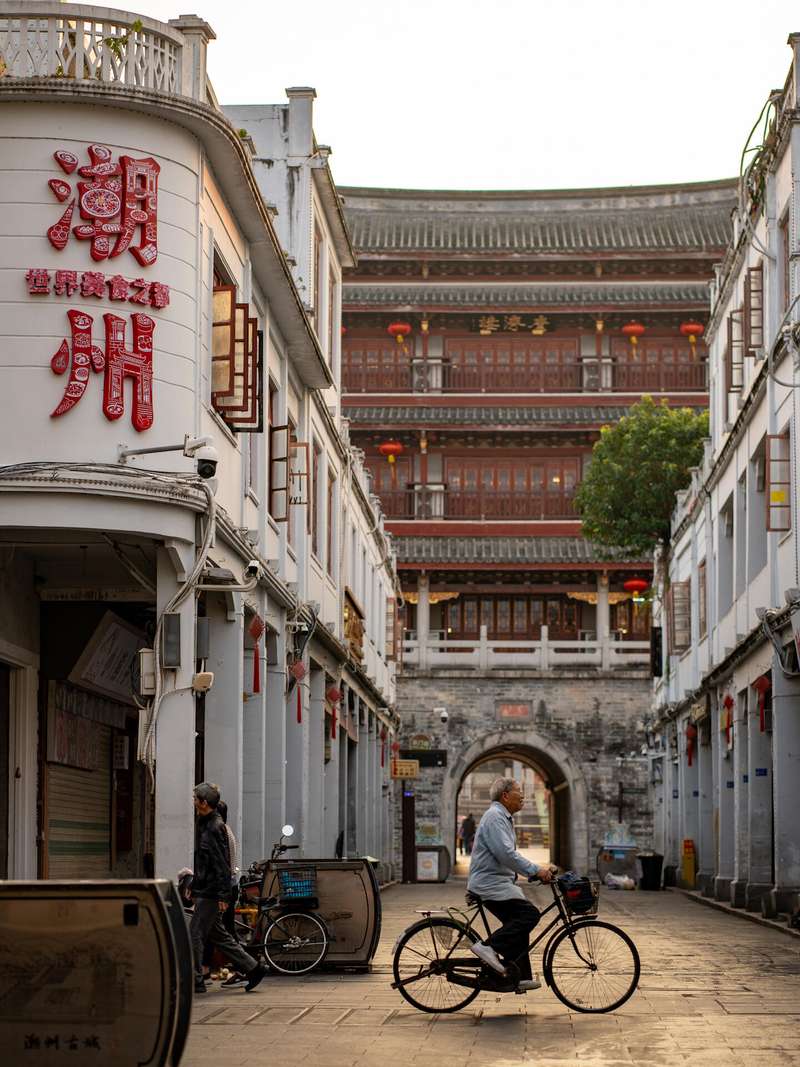
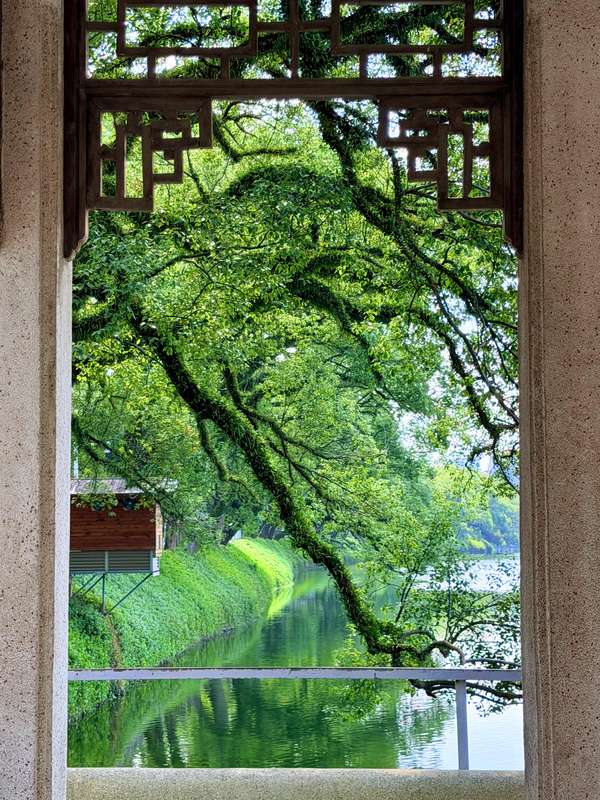
Start on Paifang Street (牌坊街), the old town’s main street, and go early, before the afternoon crowds arrive. The street is lined with 23 Ming and Qing dynasty stone archways — the official count, though locals still quote the old saying of twenty-two arches in twenty-two styles, from the restoration count — and it is the most photographed street in Chaozhou. It is also the most touristified: the souvenirs are mostly generic goods you could buy anywhere, and locals rarely shop here. Walk it once for the arches, then turn off into the side lanes, because the small alleys off the main street are more Chaozhou than the main street itself.
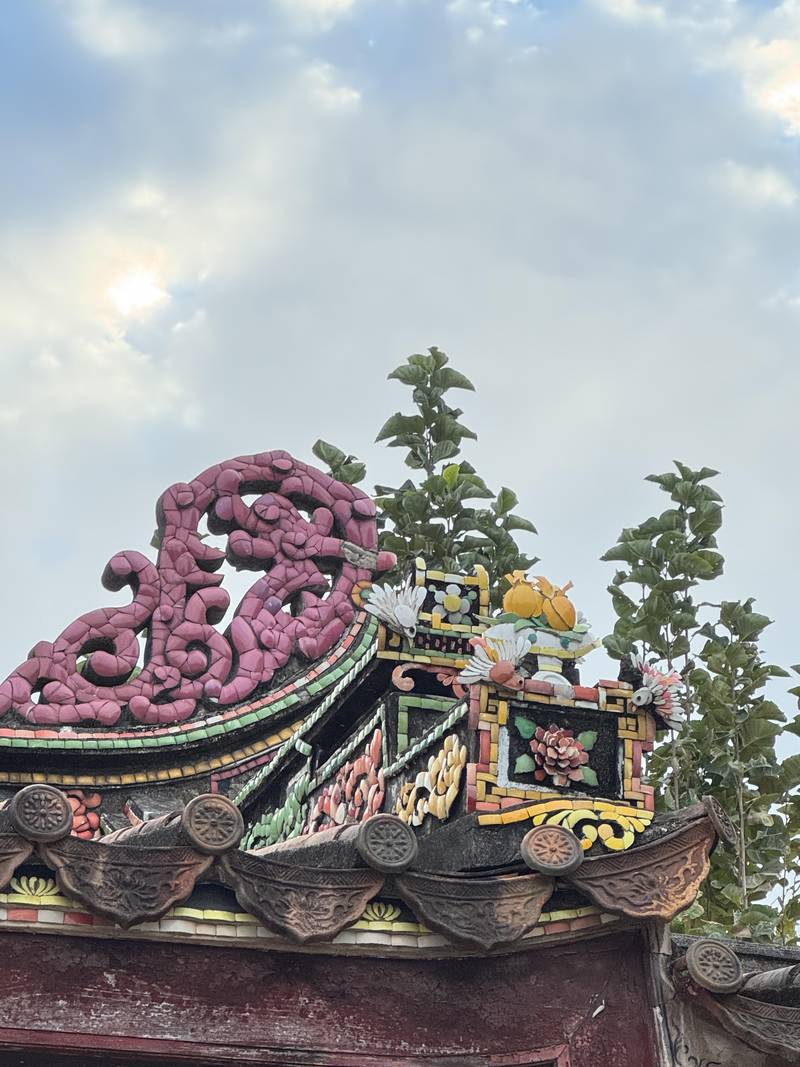
From Paifang Street, walk to Kaiyuan Temple (开元寺), the first ancient temple of eastern Guangdong, a Tang dynasty (唐朝) Buddhist temple that has stood here for over a thousand years. Entry is free, and so are the three incense sticks you are offered — do not buy expensive incense from anyone pressing it on you. The temple is famous for its porcelain mosaic (嵌瓷), coloured porcelain cut into pieces and set into plaster reliefs on the roof ridges, a craft that survives typhoons and humidity without fading. Look up at the ridge ends, the “厝角头”, where opera scenes play out in porcelain. The temple itself is a quiet, ordinary stroll rather than a spectacle, and that is part of its charm.
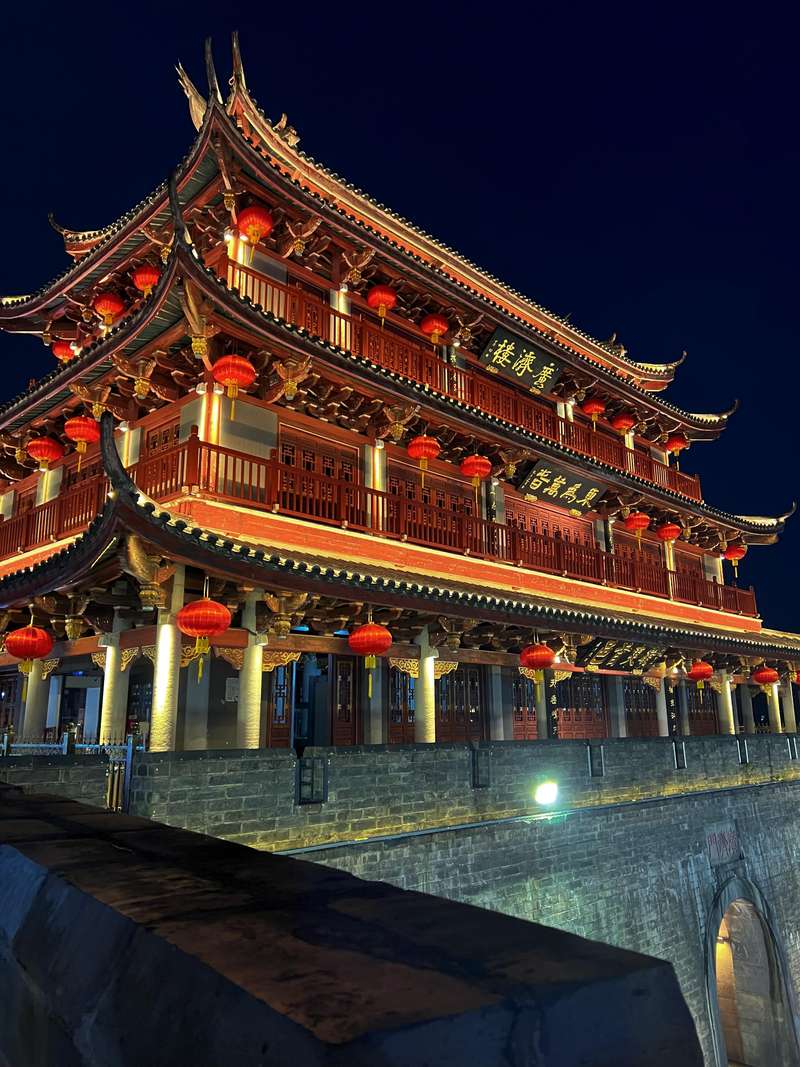
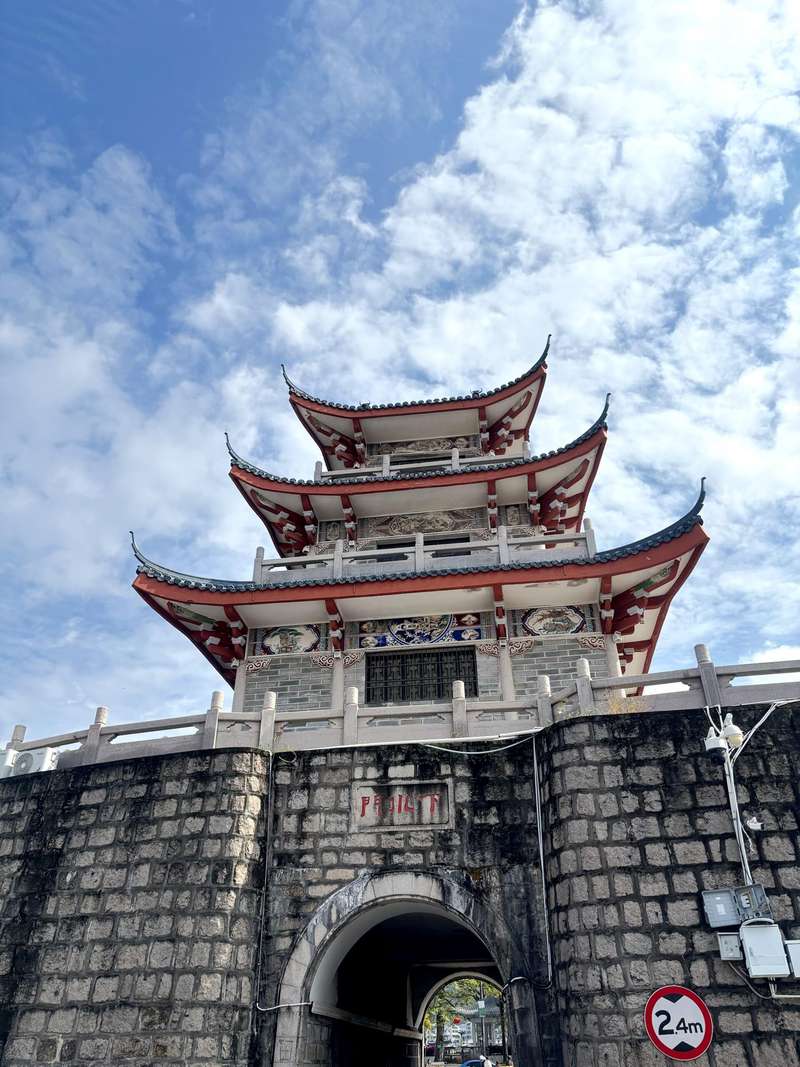
Then walk to Guangji Lou (广济楼), the old city-gate tower at the eastern end of the old town, good for photographs and for getting your bearings.
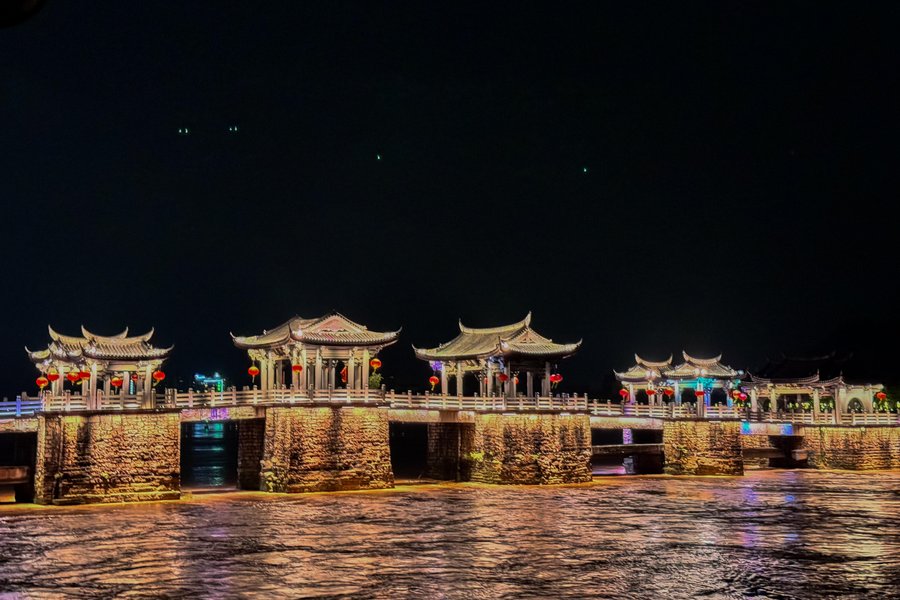
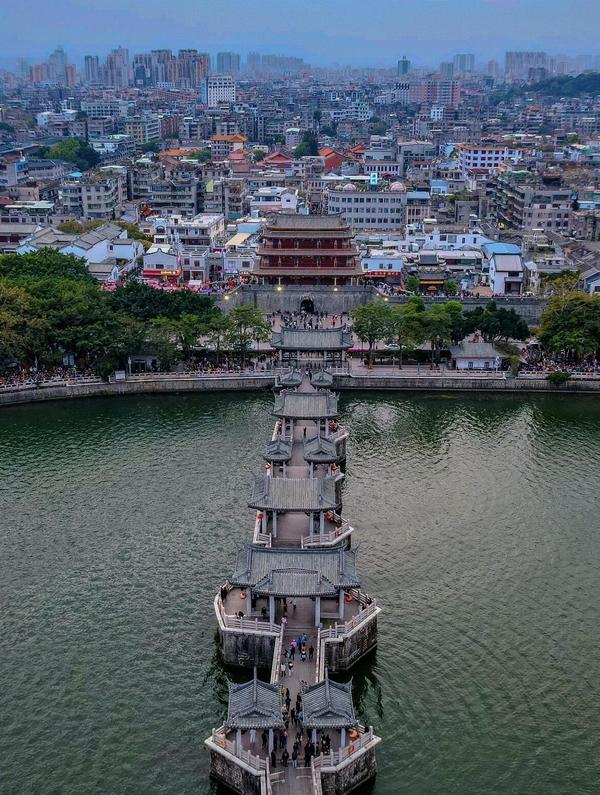
Guangji Bridge (广济桥) is a short walk away, and it is the sight Chaozhou is known for. Built in the Song dynasty (宋朝) and rebuilt in the Ming dynasty (明朝), it is one of China’s four famous ancient bridges, and the only one of its kind still working: a pontoon bridge, with a floating section of boats in the middle that opens and closes. Cross it in the daytime, because the floating section is taken apart in the late afternoon and you cannot cross after that. Here is my honest advice, and the bloggers agree with me: you do not need to pay to cross it. The best view of the bridge is from the outside — from the riverbank, from the Binjiang Corridor, or from across the river at Hanwen Gongci — where you can see the whole span at once. Paying to walk across it buys you a closer look at the pavilions and not much else.
Walk back through the old town along West Horse Road (西马路) and Jia Di Lane (甲第巷), the lanes of old official residences.
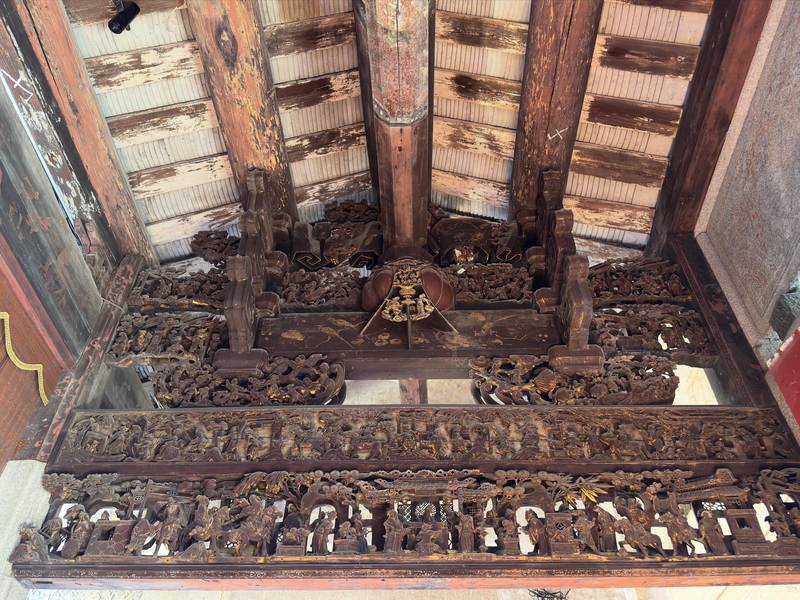
Stop at Jilue Huang Gongci (己略黄公祠), a small ancestral hall that holds the finest Chaozhou wood carving (潮州木雕) you will see anywhere. The carving here is gold-lacquer wood carving, a national intangible cultural heritage, made with real gold and carved so finely that a lion’s mane is made of tiny scholars. Local lore says two teams of carvers worked on either side of a screen in competition, and the result is the peak of the craft. The trick is to look up: the best work is on the beams, not at eye level. The hall has a weekly closing day, so check before you go.
In the evening, walk the Binjiang Corridor (滨江长廊), the riverside promenade on the east bank, and watch the bridge light up across the water. The light show divides opinion — one local blogger calls it tacky, others still recommend it — but from the opposite bank, for free, it is a pleasant end to the day. If Paifang Street is packed, Chaoren Park (潮人公园) is a quieter alternative for the evening.
Day Two — Across the River
Start the morning at Xiping Road (西平路), where the morning market is already busy, and eat breakfast the way locals do — changfen from a neighbourhood shop, not an internet-famous one.
Then cross the river to Hanwen Gongci (韩文公祠), the memorial to Han Yu (韩愈), the Tang dynasty poet and official who was banished here in 819 and stayed only eight months, yet is remembered a thousand years later. The city renamed its river, its mountain and its lake after him. Inside the temple, which sits at the foot of Han Mountain (韩山) and is reached by a long staircase from the riverside, there is a statue of Han Yu and a copy of his famous essay, the proclamation he read aloud to the crocodiles in the Han River, ordering them to leave. Read the crocodile story before you visit — it makes the place come alive. The temple’s Shilang Pavilion (侍郎阁) looks straight back across the river to Guangji Bridge, one of the best viewpoints in the city. The temple has a weekly closing day, so check before you go, and note that entry requires a reservation.
From Hanwen Gongci, walk to the Thai Buddha Hall (泰佛殿), a Thai-style temple that is free to enter and takes about fifteen minutes to see. My advice is blunt: if you have been to Thailand, skip it. It is one building, and it will not surprise you. If you have never seen a Thai temple, it is a pleasant curiosity.
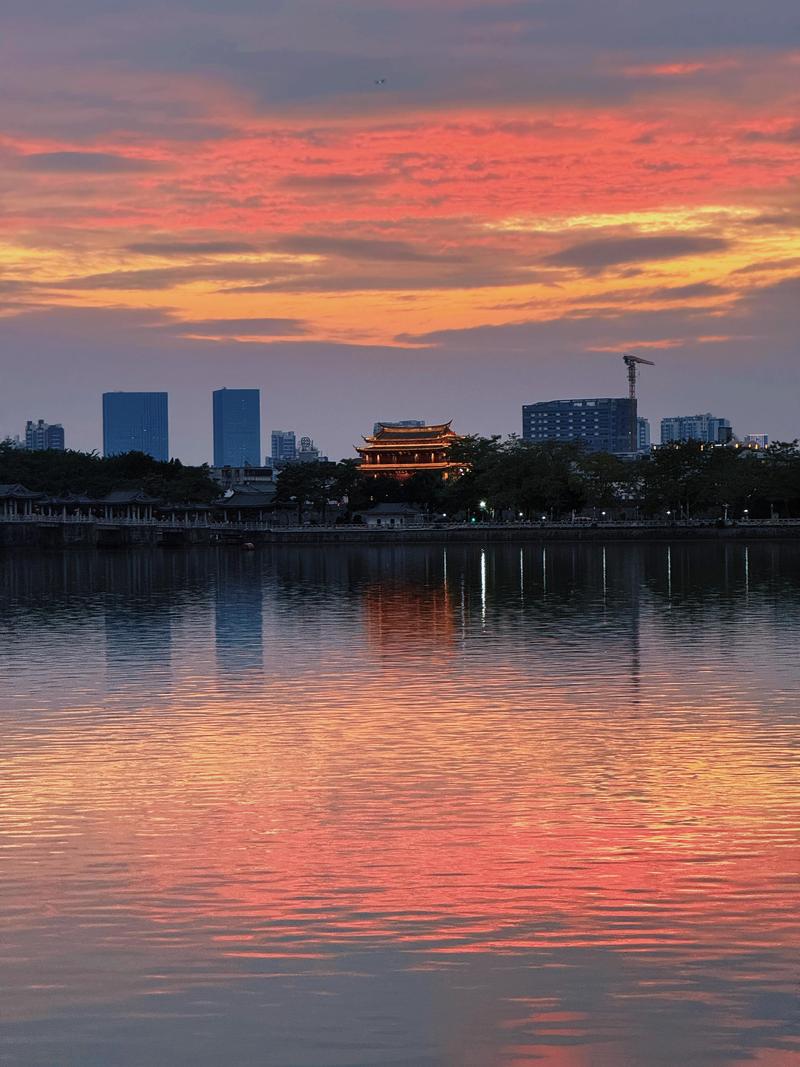
Next is Qinglong Ancient Temple (青龙古庙), free to enter and famous for its roof porcelain mosaic. Visitors from Fujian may find it familiar — the style crosses the provincial border — but the mosaic work on the roof is worth looking up at. Then walk to Fenghuangzhou Park (凤凰洲公园) for the late afternoon and sunset. Inside the park are Tianhou Palace (天后宫) and the glowing Kui Pavilion (奎阁), and from the river edge at Fenghuangtai you get the full Han River view with the bridge lights coming on across the water. The park is very close to Paifang Street, so do not take a taxi — walk the riverside road to the bridge, cross it, and you are ten minutes from the old town.
If you still have energy, West Lake (西湖) is the local park at the edge of the old town, free, very local, and the opposite of a tourist attraction. Its highlight is Huanbi Lou (涵碧楼), and the local trick is to enter by one gate and leave by another, so you see the whole lake. It is a good place to sit with a cup of tea and do nothing, which in Chaozhou counts as doing something.
What to Eat
Chaozhou’s Chaoshan cuisine is the reason to come, and it is also the reason to plan carefully, because the difference between a great meal and a tourist trap here is often one street. The rule the bloggers repeat is simple: do not eat inside the ancient city by default. Eat at the markets — Shangpu Market (上埔市场) in the morning, Xixin Market (西新市场) — and eat small amounts, many times.
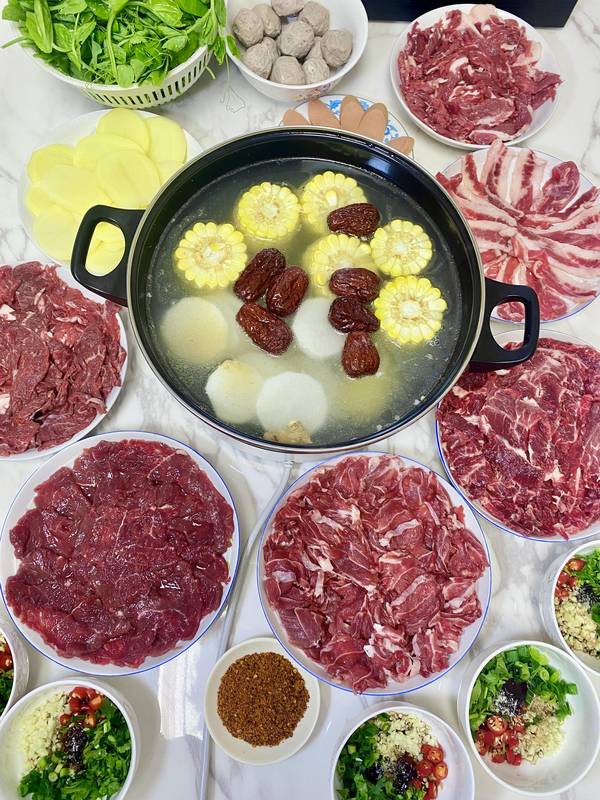
Beef hotpot (牛肉火锅) is the dish Chaozhou is proudest of. The broth is clear beef broth, the beef is cut to order, and each piece is flash-cooked in the broth for seconds. The test the locals use is whether the beef stands on the plate without sliding off — fresh beef is that firm. Order by cut: snowflake (雪花), diaolongban (吊龙伴), five-flower toe (五花趾), chest oil (胸口油), and add hand-beaten beef balls. The best shops are not the internet-famous ones. Bloggers recommend Longxing Xiao Feiniu (龙兴小肥牛) near Chaoshan Station, precisely because it is not a standardised internet-famous shop, and Guantang Ayuan Beef (官塘阿圆牛肉), whose owner does his own wholesale and brings beef in fresh daily. Avoid Guantang Brothers (官塘兄弟), which several bloggers call a chain that fools out-of-towners, with snowflake beef that is not snowflake at all. Good cuts sell out fast at the popular shops, so pick a less-hyped one and go early.
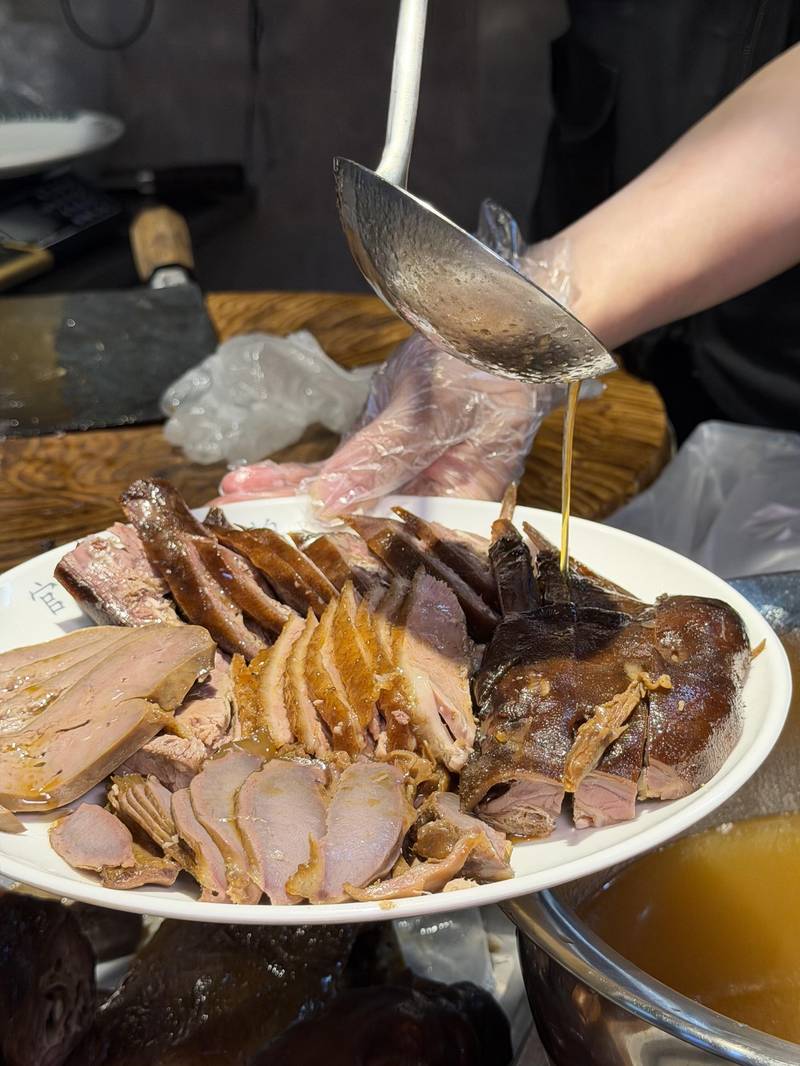
Braised goose (卤鹅) is the other great dish, and it comes with its own rules. Chaozhou’s goose is the lion-head goose (狮头鹅), braised in an old brine, cut to order, and eaten with plain white congee (白粥) — the congee is treated as the co-star, not a side dish. Ask for fengan (粉肝), the powdery goose liver, which is soft and tender and different from ordinary goose liver, and for goose blood. The classic dip is garlic and vinegar. Trusted picks are Wuji Ming (乌记明卤鹅), opposite Liubu on Paifang Street, where you can order a full-goose set with congee and upgrade to fengan; Qiangji Goose (强记鹅肉) at Beimen Market, a market-side old shop where the goose is braised fresh daily with no overnight stock; and the husband-and-wife cart at the north side of Xixin Market, known as Sanhao Lu (三号卤), where the meat is thin and bony and fun to gnaw, the liver is very tender, and the goose blood trembles in garlic vinegar. Ask for a half portion — several shops have hidden half portions you only get by asking.
One shop needs a warning rather than a recommendation. Liubu (刘卜卤鹅) on Paifang Street is contested: one blogger calls it the worst meal of her whole trip, with hard dry liver and wings far too salty and sweet, while another calls it the best braised goose in Chaozhou, and several commenters defend its fengan. I am presenting it as inconsistent, not banned — go if you want to judge for yourself, but do not make it your first goose.
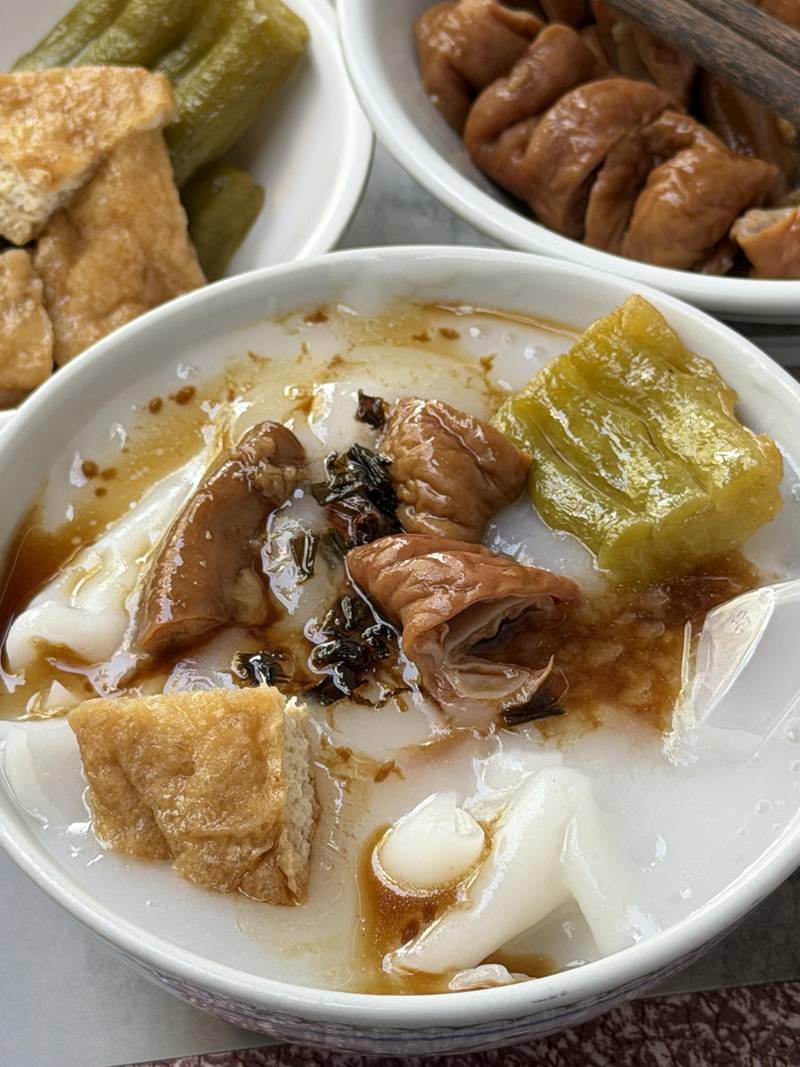
Changfen (肠粉) is breakfast. Thin steamed rice sheets, usually only pork and egg as the meat, with cabbage and golden-needle mushroom, and the soul is each shop’s own peanut sauce — Chaozhou changfen is defined by peanut sauce, while Shantou’s is defined by sweet soy sauce and bean sprouts. Add vinegar if it feels greasy. The local advice is not to chase internet-famous shops: the nearest tasty one is the best, and shops open in the afternoon are mostly tourist shops. Named local spots include the iron-gate shop at Xixin (西新铁闸门) and Yinji Changfen (银记肠粉) at Shangpu Market.
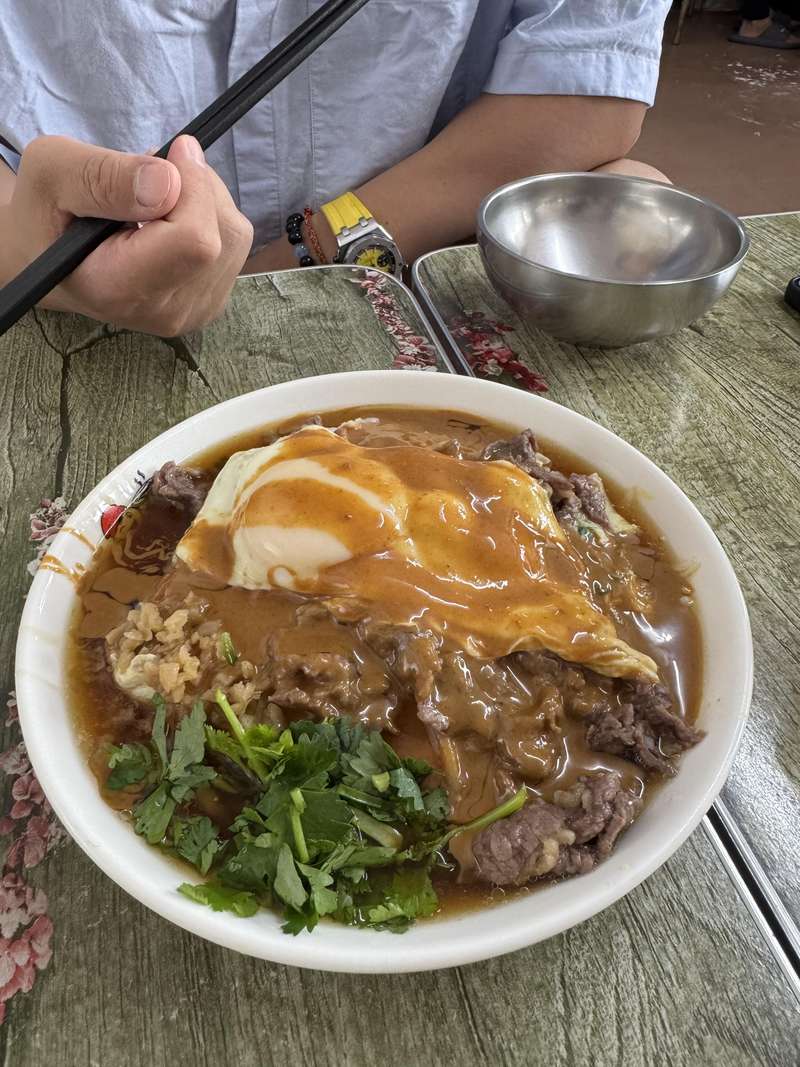
Guo zhi (粿汁) is rice-milk sheets cooked in a pork and bone broth until it thickens like a savoury porridge, topped with braised offal and fried bits. There are two styles: old-style guo zhi, like a braised-meat congee, and guo zhi pi, the sheet version. The old-style shops cluster in Fengxi and Beiguan, and one tip worth remembering is that proper Chaozhou guo zhi uses scallion oil, not garlic oil. One shop to avoid is Dadi Guo Zhi (大弟粿汁), where a blogger found a cockroach leg in the food and the owner only apologised, with no refund.
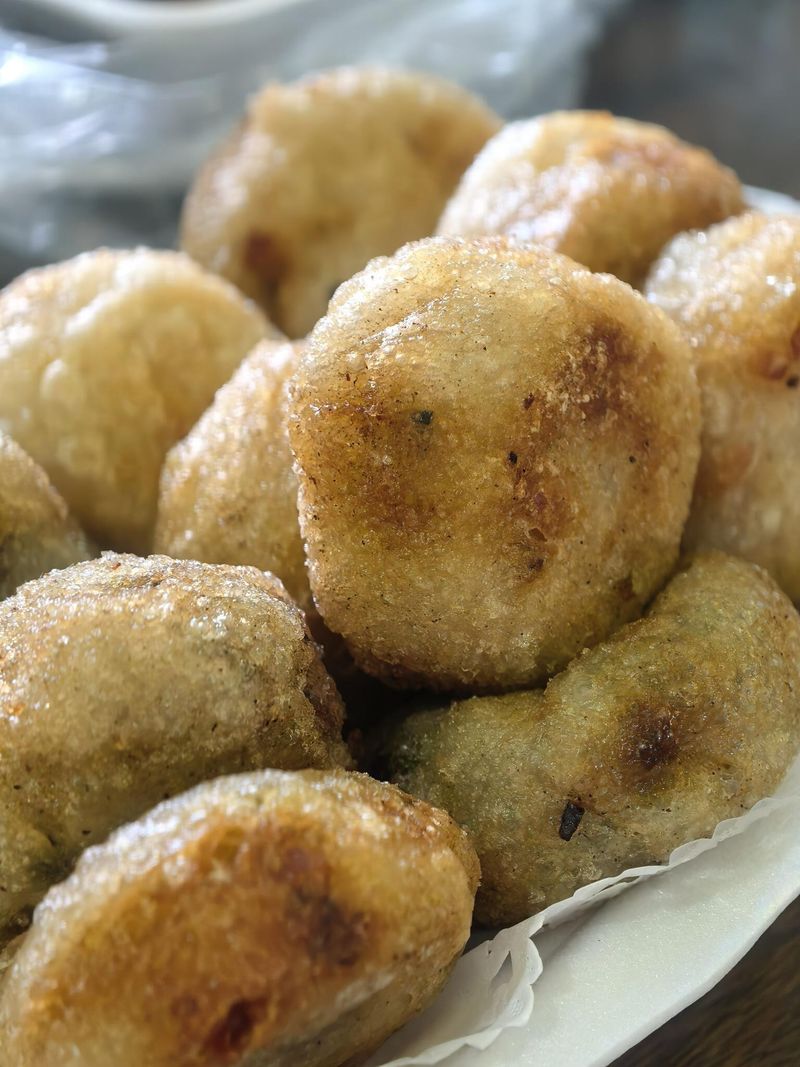
Wu mi guo (无米粿) is a rice cake with no rice — a sweet-potato-starch skin wrapped around fillings and steamed, best eaten hot, when the skin is at its best. The best-named pick is in Shangjin Village (上金村), at the Shangjin Supermarket crossroads, from the afternoon onwards.
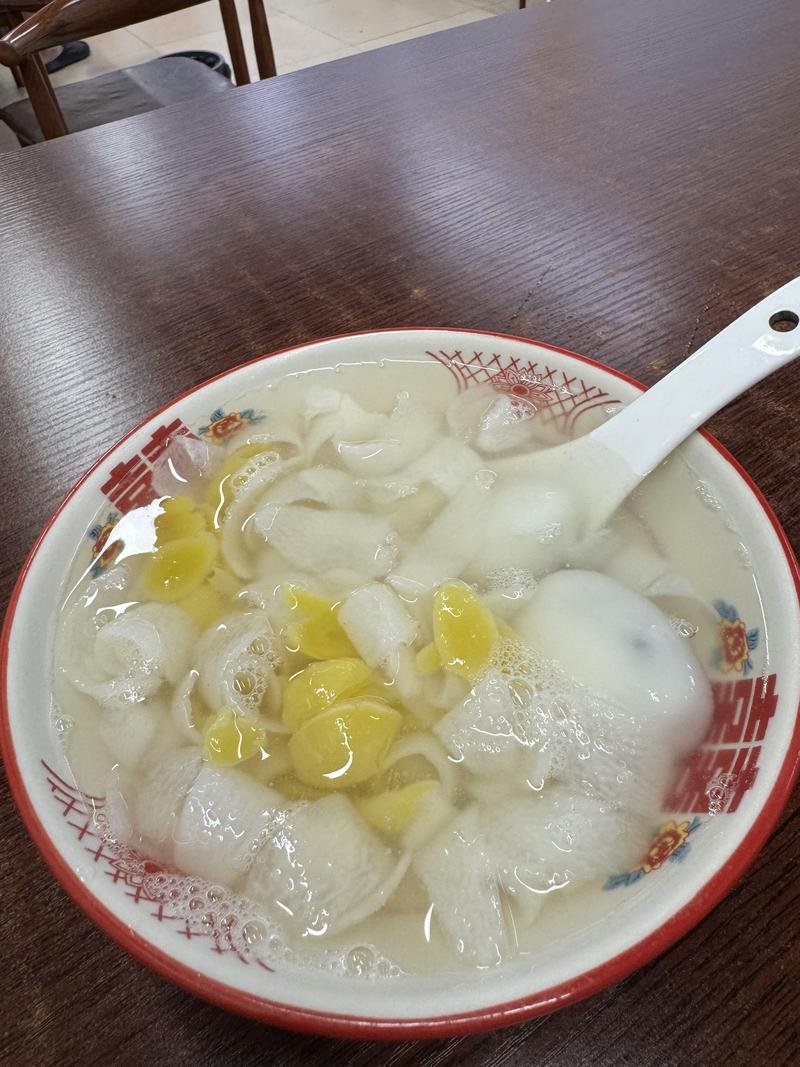
Duck-mother twist (鸭母捻) is the dessert: glutinous-rice balls in sweet ginger soup, named for their shape, like a mother duck with ducklings — no duck involved. The century-old Hurongquan (胡荣泉) on Paifang Street makes four fillings in four shapes: taro paste, mung bean, red bean and sesame sugar. It sells out in the afternoon, and the local rhythm is afternoon duck-mother twist with gongfu tea.
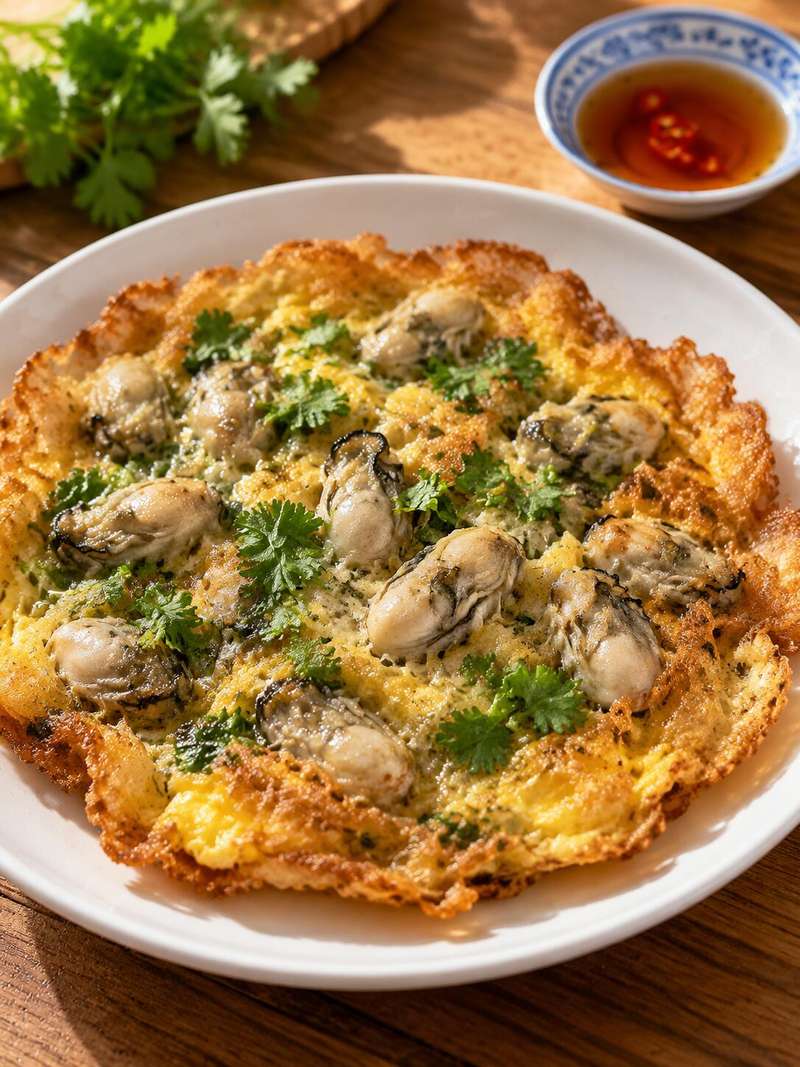
Oyster omelette (蚝烙) needs an honest note. The real thing is fresh oysters, egg and sweet-potato starch, pan-fried until golden and crisp on both sides, eaten hot with fish sauce and pepper — the sauce is the soul. But much of what is sold on Paifang Street is deep-fried, not pan-fried, and is not the real thing at all. One blogger flatly says there is no good oyster omelette in Chaozhou city. The most praised oyster omelette in my research is not in Chaozhou at all but in Raoping, at Binji (彬记蚝烙) in Jingzhou (汫洲). Treat the city version as a minor dish and save your appetite for the goose and the hotpot.
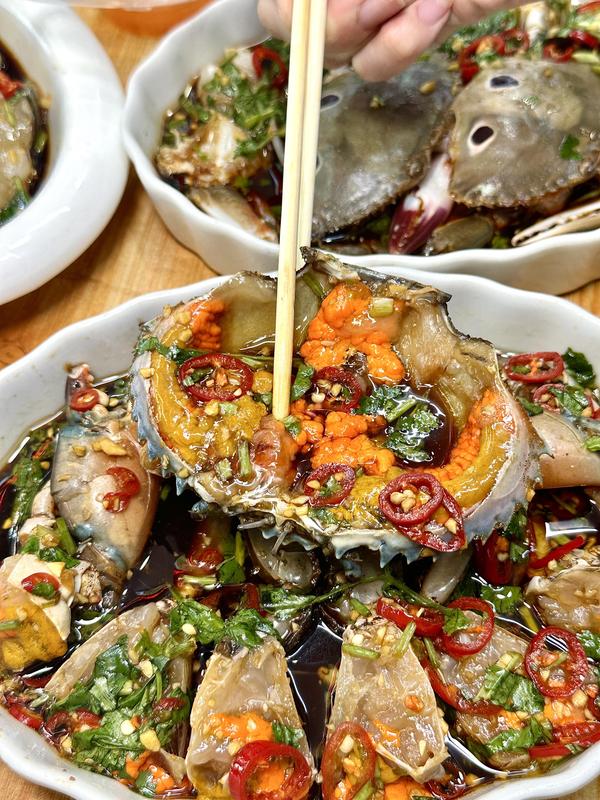
Shengyan (生腌), raw seafood cured in soy sauce, garlic, chilli and white wine, is addictive and salty, and it carries a real risk. Bloggers warn that newcomers report stomach upset, and my personal rule is the same as it was in Xiamen: eat a small amount first, and only from a place the locals queue for. In Chaozhou city the named venue is Fengchun White Congee (枫春白粥); most of the top shengyan results are actually Shantou shops.
And then there is gongfu tea (工夫茶), which is not a drink in Chaozhou but a way of life. Tea is poured constantly, at every hour, and a guest is judged by how they receive it. The ritual uses a small pot and three tiny cups set in the shape of the character 品 — for tasting tea, tasting character, and tasting life — with the pouring done in a circle, Guan Gong patrolling the city (关公巡城), so every cup is even, and the last drops shared out evenly, Han Xin counting his soldiers (韩信点兵). Even one person drinking alone uses three cups. Tea accompanies everything: congee, snacks, afternoon duck-mother twist. If you want to try it, the honest advice from the bloggers is to ask a local privately for a tea shop, because the famous shops on the market are largely not good, and nobody would name a good one in public.
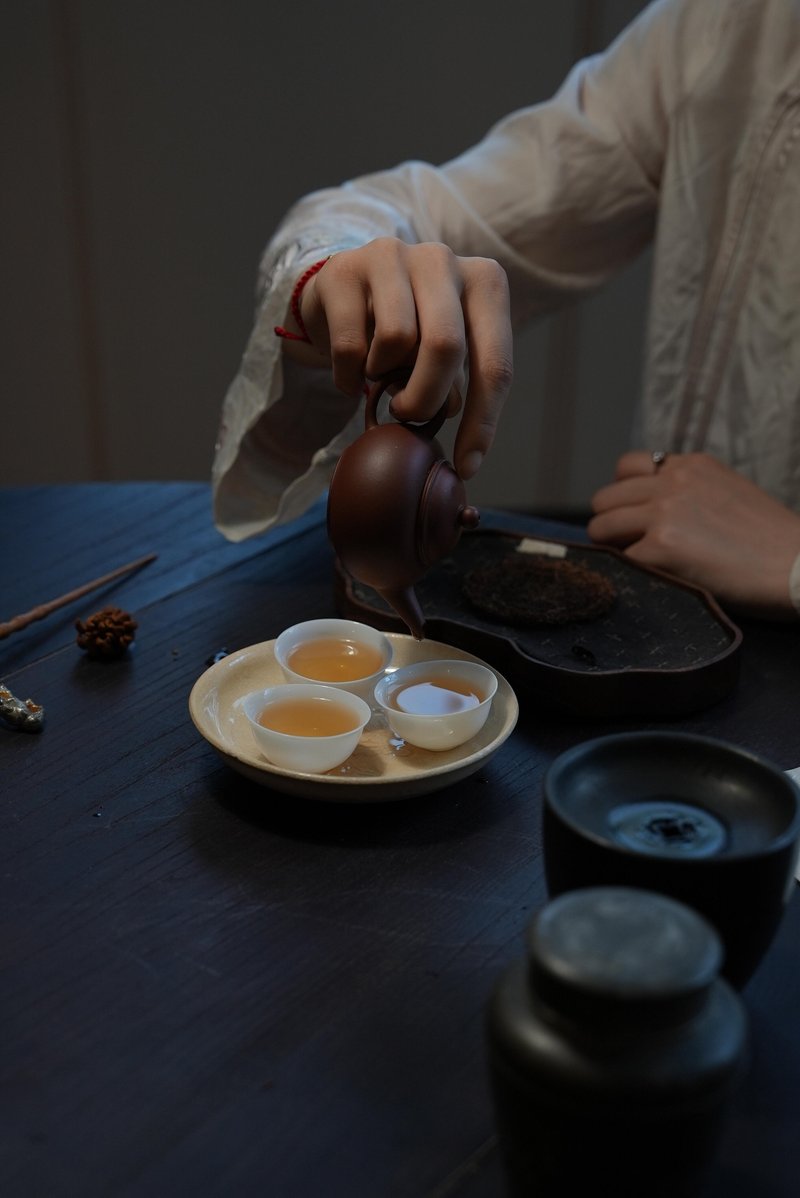
If you want to buy Phoenix Dancong (凤凰单丛) tea to take home, the bloggers’ five pitfalls are worth knowing. Do not buy by fragrance name alone — duck-dropping fragrance (鸭屎香) and honey-orchid fragrance (蜜兰香) are aroma types, not quality grades, and names are copied freely. Do not be fooled by pretty dry leaves: true single-bush leaves are varied in size and not uniform, and a single bush is a single tree, so the output is small and the price cannot be very low. Do not trust old-bush claims — many sellers cannot prove the tree’s age, and older is not automatically better. Do not trust origin stories — Phoenix Mountain or another mountain, origin is not quality. And do not judge by how fragrant the first brew is: good Dancong shows lingering aftertaste, not just a strong first aroma. Start with a mid-priced tea, do not buy a lot of one tea at first, taste it yourself, and compare several shops. For the full story of how tea became this central to Chinese life, I wrote about Chinese tea culture in a separate guide, and the small clay teapot at the centre of the ritual is often a Yixing clay teapot.
Booking, Honestly
Getting to Chaozhou is the one genuinely awkward part, and it is worth getting right before you book anything. Chaozhou has no high-speed-rail station of its own that you can use. Book to Chaoshan Station (潮汕站), and from the station’s south square take the direct bus, one stop to Paifang Street, or a taxi — about half an hour either way. There is no direct bus at night, so take a taxi then. And I will say it once more, because it is the mistake people actually make: do not book to Chaozhou Station. It has no passenger trains. Do not confuse Chaoshan Station with Chao’an Station either, which is a different station with very few trains. One useful correction to a common confusion: despite its name, Chaoshan Station is in Chaozhou’s territory, not in Shantou.
Inside the old town, you walk. For most of the day, cars and e-bikes are kept out of the old core, so walking is the only option, and the distances are short. For cross-river trips — Hanwen Gongci is across the river, and Longhu Ancient Village is further still — take a taxi, and arrange ride-hailing pickup outside the ancient city, where cars can actually reach you. E-bikes are everywhere and fast, so watch the corners, especially at intersections. If you are driving yourself, park the car outside the core and walk in.
Where to stay is a genuine argument among the bloggers, and both sides have a point. The dominant advice is not to stay inside the ancient city: parking is inconvenient, it is noisy, and the rooms in converted old houses can be small, thin-walled and poorly soundproofed. The counter-advice is that Manxin (漫心) on Paifang Street is the most recommended stay in the city — quiet in the bustle, standardised, and unlikely to go wrong — and that Atour (亚朵) Ancient City is the newer chain alternative, near the Xixin morning market. My honest take: if you want to walk everywhere and eat at the morning markets, stay in or just beside the old town, and choose a chain or a well-reviewed hotel over a cheap homestay. Inspect the room before paying if you do book a homestay, and check the price by date — holiday surges are steep. One chain to avoid, on the strength of a bad experience reported by a blogger, is the Orange Hotel (桔子酒店) at Fortune Centre and People’s Square.
What I’d Skip
I would skip the Thai Buddha Hall if you have been to Thailand — one building, fifteen minutes, and nothing you have not seen better elsewhere. I would skip paying to cross Guangji Bridge and admire it from the riverbank instead, where the view is better and free. I would skip the souvenirs on Paifang Street, which are mostly generic goods, and spend the money on tea or beef balls to take home instead. I would skip Longhu Ancient Village unless you genuinely love old architecture: it is quiet, slow and beautiful to the right visitor, and a pile of old houses to everyone else, and it needs half a day and a car. And I would skip the idea of Xunzhou Island as a beach resort — it is a quiet, undeveloped island, and the bloggers who call it a wasteland are not entirely wrong.
Summary
Chaozhou is a two-day city, and two days is enough to do it properly: one day in the ancient city, one day across the river, and both days eating. What makes it special is not any single sight — the bridge is beautiful, the temple is moving, the wood carving is extraordinary — but the combination of all of them with food this good and tea this constant. It is a city that rewards the unhurried, and punishes the visitor who tries to tick boxes. Walk the small lanes, look up at the beams, ask for the goose liver by name, and let someone pour you tea. That is Chaozhou.
If you have a third day, you have two good choices. One is Phoenix Mountain (凤凰山), for Dancong tea gardens, a high mountain lake, and a sunrise above a sea of clouds — but only on a clear day, and only with a car, because fog can swallow the whole mountain and leave you with nothing. The other is Raoping (饶平), for the octagonal earth building of Daoyun Lou (道韵楼), a 400-year-old tulou laid out like a bagua, and the strange rock potholes of Qinglan Geological Park. Either way, you will come back to the old town for dinner, because that is where the food is.