
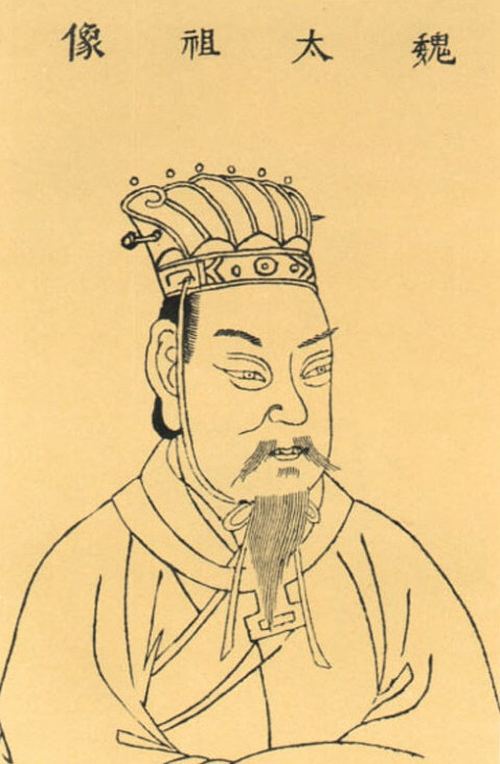
Cao Cao (曹操, 155–220) was the most powerful man in China in his lifetime, and the most argued about ever since. In an age when the Han dynasty was collapsing into civil war, he rebuilt an army from almost nothing, took the emperor under his protection, and conquered the whole of northern China. He came closer than any man of his generation to reuniting the empire. He never took the throne himself: it was his son who forced the last Han emperor to abdicate and founded the state of Wei (魏).
Yet the Cao Cao most people know is a villain. In the later novel that retells his age, he is cunning, suspicious and ruthless, a man who would betray anyone to get his way. The history written closest to his lifetime tells a different story: a brilliant general, a stern and effective administrator, and a genuine poet. The gap between the two versions is the real subject of this article. It says as much about the winners who wrote the history as about Cao Cao himself.
What follows keeps the two apart. The campaigns, the reforms and the poems are history, recorded by writers close to the events. The best-known stories about him — the murders, the treachery, the famous one-liners — mostly come from the novel, written more than a thousand years after his death. Where this article retells them, it says so.
Key Facts
- Lived: 155–220, dying at the age of 65
- Background: grandson of a powerful palace eunuch; rose as an officer in the wars that ended the Han dynasty
- Power: held the Han emperor at his capital from 196; Chancellor from 208; King of Wei from 216
- Greatest victory: 200, over the strongest warlord of the north
- Greatest defeat: the winter campaign of 208–209, which left China divided into three states
- Reforms: military farms that fed the army; promotion by ability rather than reputation
- Writings: poems that are still read today
- Death: March 220, at Luoyang; his son founded the state of Wei later that year
- Reputation: a capable statesman in the histories; a byword for treachery in the later novel
A Young Officer in a Collapsing Empire
Cao Cao, whose courtesy name was Mengde (孟德), was born in 155 in Qiao (谯), a county in the east of the empire. His grandfather Cao Teng (曹腾) was a powerful eunuch at the Han court, and his father Cao Song (曹嵩) was Cao Teng’s adopted son. The family was rich and well connected, but the eunuch connection was a stain in aristocratic eyes, and Cao Cao’s enemies mocked his background all his life.
The Han dynasty, founded nearly four centuries earlier by Liu Bang, was falling apart. In 184 the Yellow Turban Rebellion, a vast peasant rising led by a religious movement, shook the empire, and Cao Cao served as an officer against the rebels. In 189 the general Dong Zhuo (董卓) seized Luoyang, deposed the young emperor, and took control of the court, and the empire broke into warlord states. Cao Cao fled the capital, raised an army of his own in 190, and joined the coalition against Dong Zhuo. The coalition soon fell apart, and China was left to its warlords.
In 192 Cao Cao took Yan Province (Yanzhou, 兖州) and accepted a large force of surrendered Yellow Turban fighters into his own army, giving him the soldiers he needed. In 193 he marched into Xu Province (Xuzhou, 徐州) against its governor, Tao Qian (陶谦), to avenge his father’s murder while travelling through Tao’s territory. The campaign is remembered for a massacre: Cao Cao’s troops killed large numbers of civilians in Xu Province, an atrocity recorded in the histories. While he was away, Zhang Miao (张邈) and Chen Gong (陈宫), men he had counted as allies, revolted in Yan Province and invited the warrior Lü Bu (吕布) to join them. Cao Cao returned, retook his base by 195, and in 198 captured and executed Lü Bu.
Holding the Emperor
In 196 Cao Cao made the move that defined his career. He welcomed Emperor Xian, the Han emperor, to Xuchang (许昌), his own base, and made it the imperial capital. From then on he ruled in the emperor’s name. His defenders said he protected the emperor; his critics said he used him. The phrase used ever since, “hold the emperor to command the lords”, can be read either way, and historians still argue about which reading is fairer. The emperor gave Cao Cao what no other warlord had: the authority to issue orders in the name of the Han dynasty.
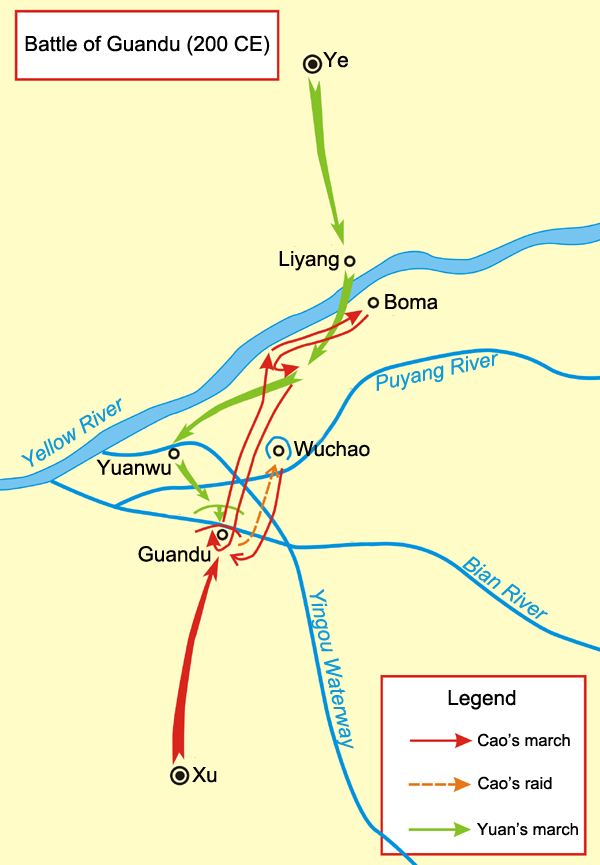
His great rival was Yuan Shao (袁绍), the strongest warlord of the north, who held the lands beyond the Yellow River. In 200 the two armies met at Guandu (官渡). Cao Cao was greatly outnumbered, and for months the armies faced each other across the river plain. The turning point came when Yuan’s adviser Xu You (许攸) defected and told Cao Cao where Yuan’s grain was stored. Cao Cao led a night raid on the supply depot at Wuchao (乌巢) and burned it. Yuan Shao’s army, starving, collapsed.
Yuan Shao died in 202, and by 207 Cao Cao had defeated Yuan’s sons and their Wuhuan (乌桓) allies in the far north-east, completing his conquest of the north. He had lost his most brilliant young adviser, Guo Jia (郭嘉), who died in 207 at the age of thirty-eight. In 208 Cao Cao had himself made Chancellor, restoring an office that had been abolished, and turned his eyes south. He held the north, the emperor and the machinery of the Han government. Only the south stood in his way. The campaign that followed would end at Red Cliffs (Chibi, 赤壁).
Red Cliffs: The Limit
In the autumn of 208 Cao Cao marched south with a great army. Liu Biao (刘表), the governor of Jing Province (Jingzhou, 荆州), died as Cao Cao approached, and his young son surrendered the province without a fight. Liu Bei (刘备), a rival warlord sheltering in Jing Province, fled south with his followers. Cao Cao pursued him to the Yangtze, where Liu Bei joined forces with Sun Quan (孙权), the ruler of the south-east.
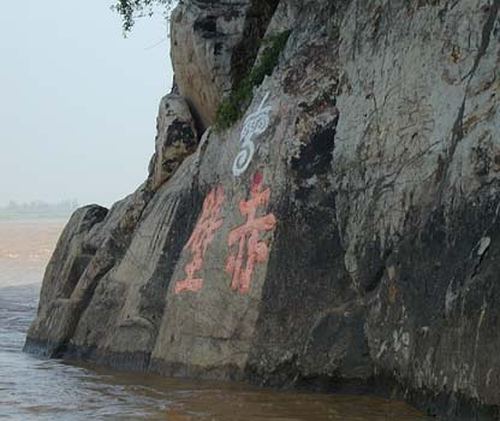
The two sides met at Red Cliffs in the winter of 208–209. Sun Quan’s commander, Zhou Yu (周瑜), led the allied fleet against Cao Cao’s much larger force. The allies destroyed Cao Cao’s fleet with a fire attack, driving burning ships into his anchored vessels, and disease was already spreading through Cao Cao’s northern troops, unused to the southern climate. Cao Cao claimed to have led 800,000 men; historians put the real figure far lower, at roughly 220,000 including non-combatants and recently surrendered troops, against about 50,000 allies. Whatever the true numbers, the defeat was total, and Cao Cao retreated north. The battle fixed the division of China into the Three Kingdoms.
After Red Cliffs, Cao Cao is said to have lamented, “If only Guo Jia were alive”, according to the traditional account. In 211 he defeated the north-western warlords Ma Chao (马超) and Han Sui (韩遂) at Tong Pass (Tongguan, 潼关). He became Duke of Wei in 213 and King of Wei in 216. But the limits of his power were now fixed: in 217–219 he lost Hanzhong (汉中) to Liu Bei, and in 219 Guan Yu (关羽), Liu Bei’s general, attacked Fancheng (樊城), and Cao Cao considered moving the capital until Sun Quan turned on Guan Yu from behind and had him captured and executed. The three-way division held.
The Statesman
Cao Cao’s lasting achievement was not on the battlefield but in the fields. Years of war had emptied the north: farms lay abandoned, and armies lived by plunder. In 196, on the proposal of his adviser Zao Zhi (枣祗), Cao Cao set up Tuntian (屯田), military-agricultural colonies, on abandoned land. Soldiers and resettled farmers worked state farms, and the harvest fed the army and the court. The idea was not new: Emperor Wu of Han had used soldier-farmers on the frontier, but Cao Cao applied it across the north, and within a few years the granaries were full.
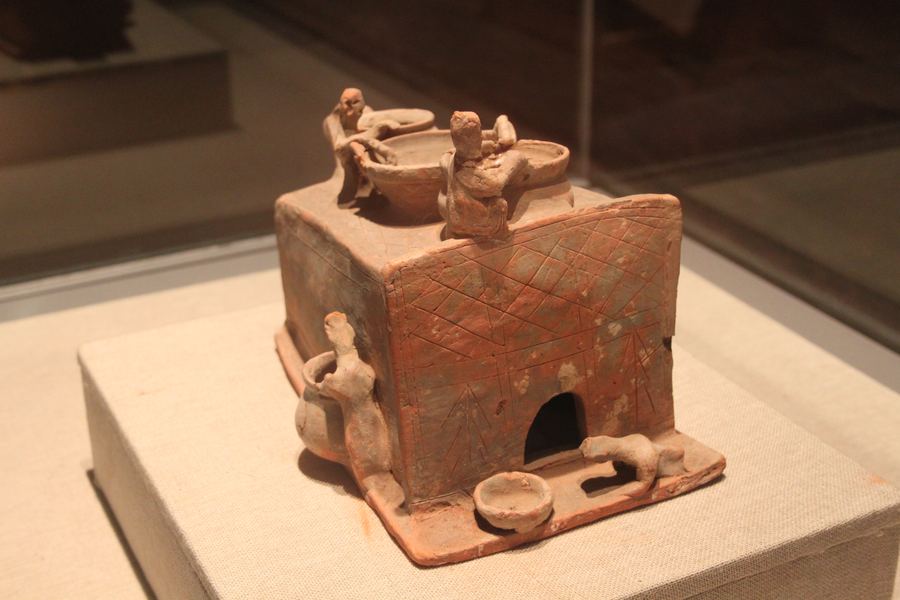
He was equally practical about men. In three orders seeking talent, issued in 210, 214 and 217, he ordered that men of ability be promoted regardless of their reputation or character. This broke with the teaching of Confucius, which held that a ruler should choose men of virtue. Cao Cao wanted results: if a man could fight, govern or count, his past did not matter. The policy brought able but rough men into his service, and shocked the old families.
His chief strategist, Xun Yu (荀彧), was the man who had urged him to take the emperor under his protection in 196, and for years he was Cao Cao’s most trusted adviser. But Xun Yu opposed Cao Cao’s promotion to Duke of Wei, seeing it as a step too far towards the throne, and he died in 212. According to the traditional account, Cao Cao sent him an empty food box; Xun Yu understood the hint and took his own life. Whether the story is true or not, the break with Xun Yu marked the point at which Cao Cao’s oldest allies began to fear where his ambition was leading.
The Poet
Cao Cao was also a poet, and his poems are still read today. The poetry of his age is called Jian’an (建安) literature, after the Jian’an era (196–220), the reign-period of Emperor Xian during which Cao Cao held power. Cao Cao and his sons Cao Pi (曹丕) and Cao Zhi (曹植) are known together as the Three Caos (San Cao, 三曹). Cao Zhi, the younger son, was the most gifted poet of the three.
Cao Cao’s own poems are plain, direct and full of ambition. In “Short Song” (Duan Ge Xing, 短歌行), a drinking song that is really about his longing for talented men to join him, he asks, “How can I relieve my worries? Only with Du Kang”, Du Kang being the legendary inventor of wine. In “Viewing the Sea” (Guan Canghai, 观沧海), written on the northern campaign, he looks out over the ocean and imagines great deeds. In “Though the Tortoise Lives Long”, written in his later years, he declares, “An old steed in the stable still aspires to gallop a thousand li.” The poems show a man who never stopped planning, even as he grew old.
The family produced one more famous story. The “seven-step poem”, in which a jealous Cao Pi forces his brother Cao Zhi to compose a poem in seven steps or die, is a later legend, not history. And a younger son, Cao Chong (曹冲, 196–208), appears in a famous traditional anecdote in which the boy weighs an elephant by floating it on a boat and marking the waterline.
Villain or Hero?
The history written closest to Cao Cao’s lifetime is the Records of the Three Kingdoms (Sanguozhi, 三国志), written by Chen Shou (陈寿) in the third century. Chen Shou, writing under the Jin dynasty that had replaced Wei, praised Cao Cao’s ability while noting his faults. The most famous judgement of all is the appraisal traditionally attributed to the critic Xu Shao (许劭): “a capable minister in orderly times, a villainous hero in chaotic times.”
By the Song dynasty, professional storytellers were already performing tales of the Three Kingdoms in the cities, and in their tales Cao Cao was the villain. The process reached its peak in the Romance of the Three Kingdoms (Sanguo Yanyi, 三国演义), the novel by Luo Guanzhong (罗贯中) in the fourteenth century. The novel takes the side of Liu Bei, whom it treats as the rightful heir of the Han, and turns Cao Cao into his opposite: clever, suspicious and utterly ruthless. On the opera stage, Cao Cao’s face is painted white, the colour of treachery.
The novel’s most famous scene about Cao Cao is also its least trustworthy. In the novel, fleeing after a failed attempt to assassinate Dong Zhuo, itself the novel’s invention, Cao Cao takes shelter with Lü Boshe (吕伯奢), an old friend of his father’s, and kills the whole household by mistake, suspecting them of plotting against him. It is in this scene that he speaks the novel’s most famous line: “I would rather betray the world than let the world betray me.” The historical record tells a murkier story about the deaths, and historians doubt the novel’s version. The line itself is the novel’s invention, and it has done more than any battle to fix Cao Cao’s reputation.
The Sima (司马) family, who took power from Cao Cao’s descendants and founded the Jin dynasty, had little reason to defend his name, and the novel finished the job. Modern historians have pushed back, pointing to the statesman who fed the north and wrote poetry between campaigns. The villain of the novel and the statesman of the history are both real, in a sense, but only one of them is history.
Death and the Tomb
Cao Cao died in March 220 at Luoyang, at the age of sixty-five, having never taken the throne. In December of the same year, his son Cao Pi forced Emperor Xian to abdicate and founded the state of Wei, honouring his father posthumously as Emperor Wu of Wei. The Han dynasty, which had ruled China for more than four centuries, was over. Within fifty years, the Sima family would take Wei’s throne in turn and found the Jin dynasty.
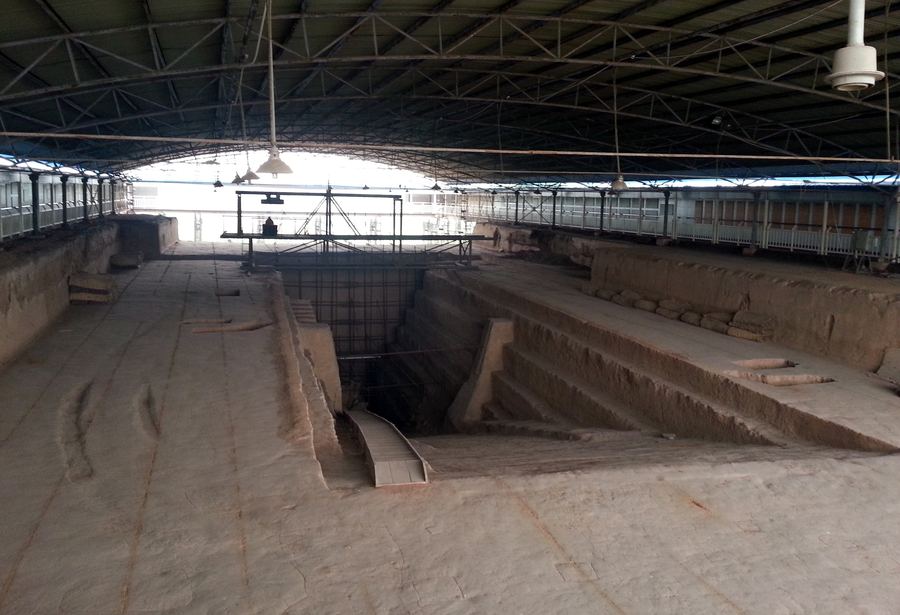
In 2009, archaeologists excavated a large tomb at Xigaoxue (西高穴) village. Inscribed stone tablets found inside read “King Wu of Wei”, and the excavators identified the tomb as Cao Cao’s. Some scholars dispute the identification, and the debate continues. Whether or not the bones are his, the argument is fitting: eighteen centuries after his death, Cao Cao is still being fought over.
Summary
Cao Cao was the ablest man of a violent age: the general who conquered the north, the statesman who fed it, and the poet who wrote about ambition between campaigns. He came closer than anyone of his generation to reuniting China, and failed at the last river. The novel made him a villain, and the villain has proved hard to shake. But the history remembers something else: a man who held an empire together with his own hands, and never once sat on its throne.
Read more: Chinese Dynasty Timeline